
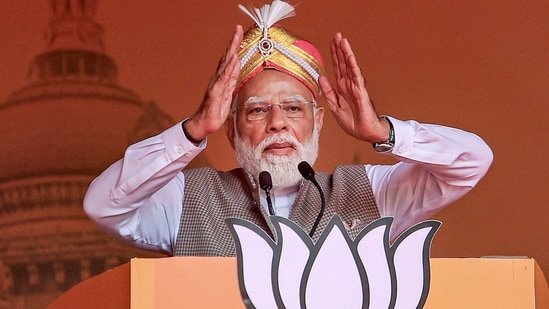
‘Parasitic Congress’: PM Modi's sharp attack as Rahul Gandhi attends Vijay's swearing-in
# PM Modi Slams ‘Parasitic’ Congress In TN
**By Political Correspondent, National News Desk, May 10, 2026**
Prime Minister Narendra Modi launched a scathing attack on the Congress party on Sunday, labeling it a “parasitic” organization following its dramatic split from its longtime Tamil Nadu ally, the Dravida Munnetra Kazhagam (DMK). The sharp critique came just as senior Congress leader Rahul Gandhi attended the historic swearing-in ceremony of actor-turned-politician Vijay, who recently secured a major electoral victory to become Tamil Nadu’s Chief Minister. Modi accused the Congress of opportunistically abandoning regional partners to cling to power, marking a significant escalation in political rhetoric as southern India undergoes a massive electoral realignment. [Source: Hindustan Times].
## The Swearing-In That Shook the South
The political landscape of Tamil Nadu witnessed a tectonic shift this weekend as Vijay, leader of the Tamilaga Vettri Kazhagam (TVK), took the oath of office in Chennai. The ceremony was attended by a sea of supporters and prominent national figures, most notably Rahul Gandhi. Gandhi’s presence on the dais served as a highly visible confirmation of a new political axis in the state, officially sealing the end of the long-standing alliance between the Indian National Congress and the DMK.
For decades, Tamil Nadu politics has been dominated by the two Dravidian majors: the DMK and the All India Anna Dravida Munnetra Kazhagam (AIADMK). National parties have traditionally been forced to play second fiddle, riding on the coattails of these regional giants to secure parliamentary seats. The emergence of TVK as a dominant force and Congress’s swift realignment to support Vijay’s newly formed government highlights a pragmatic, if controversial, strategy by the national opposition party to stay relevant in a rapidly changing environment.
Rahul Gandhi’s attendance was framed by the Congress as a gesture of support for “new democratic voices” and a unified front against the ruling Bharatiya Janata Party (BJP) at the center. However, the optics of the move provided ample ammunition for the BJP leadership, who seized the opportunity to highlight what they characterize as the Congress party’s inherent unreliability as an alliance partner.
## PM Modi’s ‘Parasitic’ Remark Explained
Addressing a massive public rally shortly after the swearing-in ceremony in Chennai, Prime Minister Narendra Modi delivered a blistering critique of the Congress. He accused the grand old party of surviving solely by draining the political capital of stronger regional entities, only to discard them when a better opportunity arises.
“The Congress is a parasitic entity in Indian politics,” the Prime Minister stated forcefully. “For years, they rode on the back of the DMK in Tamil Nadu, sharing power and utilizing the hard work of regional cadres. The moment they sensed a shift in the political winds, they turned on their own partners without hesitation.” [Source: Hindustan Times].
**Key elements of the Prime Minister’s critique included:**
* **Accusations of Betrayal:** Modi framed the Congress’s departure from the DMK as a betrayal of a decade-long partnership that weathered multiple national and state elections.
* **Ideological Bankruptcy:** The Prime Minister alleged that Congress lacks a core ideology or organic grassroots strength in the state, relying entirely on “borrowed wings” to maintain its electoral presence.
* **Warning to New Allies:** In a thinly veiled message directed at newly sworn-in CM Vijay, Modi cautioned that the Congress has a historical track record of destabilizing regional governments once its internal demands are not met.
The use of the term “parasitic” marks an escalation in the BJP’s national messaging against the Congress, aiming to sow distrust among regional parties within the broader national opposition bloc, traditionally known as the INDIA alliance. By highlighting the Congress’s willingness to switch sides in Tamil Nadu, the BJP hopes to isolate its primary national rival ahead of upcoming state and general elections.
## The Collapse of the DMK-Congress Alliance
To understand the gravity of the Prime Minister’s statements, one must look at the deep historical ties between the Congress and the DMK. The two parties have been allies for the majority of the past two decades, navigating the complex waters of both the United Progressive Alliance (UPA) era and the recent formation of the INDIA bloc.
The alliance began to fray in late 2025 as anti-incumbency sentiments against the DMK government grew. Concurrently, the meteoric rise of TVK, which campaigned heavily on anti-corruption and systemic reform, began siphoning off key voter demographics—particularly the youth and first-time voters—that traditionally leaned toward the DMK-Congress combine.
Internal sources within the Congress suggested that the party felt stifled by the DMK’s dominant “big brother” attitude during seat-sharing negotiations. As TVK emerged as a viable alternative, Congress strategists reportedly viewed an alliance with the actor-politician as a strategic necessity to avoid electoral decimation. The formal break occurred just weeks before the assembly polls, with Congress citing “irreconcilable differences on governance principles,” a move that deeply embittered the DMK leadership. [Source: Historical Political Analysis / Public Domain].
## Actor Vijay’s Meteoric Political Rise
The central catalyst for this political upheaval is the unprecedented rise of Vijay’s Tamilaga Vettri Kazhagam (TVK). Launched in February 2024, TVK spent two years building a formidable grassroots network, largely leveraging the actor’s massive fan base, reorganized into disciplined political cadres.
Unlike previous actor-turned-politicians in the state who often relied solely on cinematic charisma, Vijay’s campaign focused heavily on actionable policy, social justice, and a strong departure from the alleged dynastic politics of the DMK and the factional infighting of the AIADMK.
### Tamil Nadu Political Realignment (2021 vs. 2026)
| Political Entity | 2021 Election Status | 2026 Election Status | Strategic Shift |
| :— | :— | :— | :— |
| **DMK** | Ruling Party (Majority) | Main Opposition | Lost major allies (Congress); faced severe anti-incumbency. |
| **AIADMK** | Main Opposition | Marginalized | Weakened by internal splits and TVK’s rise. |
| **Congress** | Junior DMK Ally | Junior TVK Ally | Severed DMK ties; aligned with TVK for survival. |
| **TVK (Vijay)** | Non-existent | Ruling Party | Swept youth vote; successfully courted national allies. |
| **BJP** | Marginal Presence | Expanding Base | Capitalizing on DMK/AIADMK decline to build independent base. |
The table above illustrates the sheer velocity of the political transformation. Vijay’s swearing-in is not merely a transfer of power; it is the disruption of a deeply entrenched bi-polar political system. Rahul Gandhi’s presence at the ceremony indicates Congress’s acknowledgment of this new reality, prioritizing immediate electoral relevance over historical loyalties.
## Expert Perspectives on National Implications
Political analysts are closely monitoring the fallout from the Congress-DMK split and the BJP’s aggressive rhetorical response. The developments in Tamil Nadu are expected to have ripple effects across the national political spectrum, particularly concerning the stability of coalition governments.
“The Congress party’s pivot to TVK represents a calculated, albeit highly risky, survival strategy,” notes Dr. V. Ramanathan, a Chennai-based political scientist specializing in Dravidian politics. “However, Prime Minister Modi’s ‘parasitic’ label is strategically designed to cause anxiety among other regional parties across India. The message from the BJP is clear: if Congress can abandon its most steadfast ally in the South, it can abandon anyone in the North or East.” [Source: Independent Political Analysis].
Furthermore, experts argue that the Congress faces a delicate balancing act. While aligning with Vijay provides a temporary lifeline in Tamil Nadu, it damages the party’s credibility as a stable anchor for the national opposition. The DMK was a cornerstone of the INDIA bloc, and its alienation could complicate national seat-sharing agreements in future general elections.
## BJP’s Strategic Calculus in Tamil Nadu
While PM Modi’s speech primarily targeted the Congress, it also served the BJP’s long-term strategic goals in Tamil Nadu. Historically, the BJP has struggled to establish a dominant foothold in the state, often facing resistance due to language politics and the strong ideological roots of the Dravidian movement.
Under the aggressive leadership of its state unit, the BJP has been actively attempting to carve out a third space in Tamil Nadu politics. By pointing out the opportunistic alliance-hopping of the Congress and highlighting the perceived failures of the DMK, the BJP aims to position itself as the only stable, ideologically consistent national alternative.
Modi’s critique of Congress also aims to quietly court disillusioned voters from both the AIADMK and the DMK. While TVK has captured the immediate anti-incumbency wave, the BJP is playing a longer game, hoping that an inherently unstable coalition between the newly formed TVK and a “parasitic” Congress will eventually falter, leaving a vacuum that the BJP is prepared to fill.
## Conclusion: Key Takeaways and Future Outlook
The political theater surrounding Vijay’s swearing-in ceremony has fundamentally redrawn the battle lines in southern India.
**Key Takeaways:**
1. **End of an Era:** The formidable DMK-Congress alliance has effectively collapsed, altering the arithmetic of Tamil Nadu’s electoral politics.
2. **Rise of a New Power:** Actor Vijay’s TVK has successfully transitioned from a nascent political startup to the ruling power, ending decades of exclusive DMK-AIADMK dominance.
3. **Aggressive BJP Posturing:** Prime Minister Modi’s framing of the Congress as a “parasitic” entity signifies a sharp national campaign strategy aimed at portraying the primary opposition as unreliable and opportunistic.
Looking ahead, the immediate challenge for Chief Minister Vijay will be managing the high expectations of the electorate while handling an experienced, albeit much-criticized, coalition partner in the Congress. For the Congress, the gamble in Tamil Nadu must yield substantial governance dividends to offset the loss of the DMK’s national support. Meanwhile, the BJP, led by PM Modi’s aggressive campaigning, will continue to apply pressure, waiting to capitalize on any administrative or coalition missteps in this newly formed political order. The coming months will test whether this new alliance can provide stable governance or if Modi’s dire warnings will resonate with the broader Indian electorate.





