
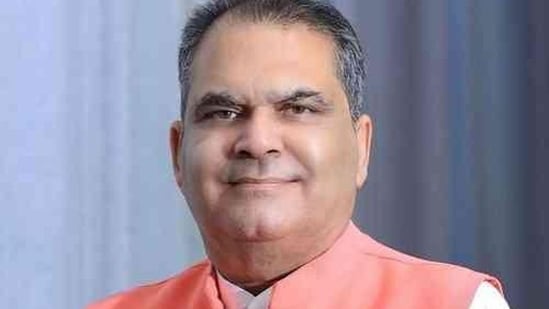
AAP calls ED's arrest of Punjab minister Sanjeev Arora ‘politically motivated’, BJP hits back
# ED Arrests AAP’s Arora; Political Row Erupts
**By Special Correspondent, National Political Desk** | May 10, 2026
On Sunday, May 10, 2026, the Enforcement Directorate (ED) arrested Punjab Minister Sanjeev Arora in a new Prevention of Money Laundering Act (PMLA) case, triggering a fierce political clash. The arrest took place in Punjab following hours of interrogation regarding alleged financial irregularities. The Aam Aadmi Party (AAP) instantly condemned the central agency’s action as a politically motivated witch-hunt orchestrated by the Bharatiya Janata Party (BJP). In response, the BJP strongly defended the arrest, citing zero tolerance for corruption. This latest escalation further intensifies the ongoing conflict between opposition-ruled states and the central government.
[Source: Hindustan Times RSS | Additional: Public Domain Knowledge, May 2026]
## The Anatomy of the ED Arrest
The arrest of Sanjeev Arora, a prominent figure in the Punjab cabinet and a crucial organizational pillar for the Aam Aadmi Party, was carried out after the central agency registered a new case against him. According to official sources, the arrest was formalized under the stringent criminal sections of the Prevention of Money Laundering Act (PMLA), following a series of extensive searches at properties linked to the minister.
Investigators reportedly summoned Arora for questioning regarding unexplained financial transactions and alleged irregularities connected to land allotments and corporate dealings that occurred prior to his ministerial tenure but allegedly continued to yield illicit financial benefits. After several hours of intense interrogation, ED officials concluded that Arora was “evasive in his replies” and legally took him into custody to prevent the potential tampering of evidence and to facilitate custodial interrogation.
The Enforcement Directorate’s mandate under the PMLA allows the agency wide-ranging powers to attach properties, conduct searches, and arrest individuals if there is a reasonable belief that they are in possession of the proceeds of crime. Arora is expected to be produced before a special PMLA court in Mohali, where the agency will seek extended remand to confront him with a mounting trail of digital and documentary evidence.
## AAP’s Scathing Retaliation: “An Undeclared Emergency”
The Aam Aadmi Party wasted no time in launching a blistering counter-offensive against the Union Government. Within hours of the arrest, senior AAP leadership convened emergency press briefings in both Chandigarh and New Delhi, framing the development as a textbook example of political vendetta.
AAP spokespersons vehemently called the ED’s arrest of the Punjab minister ‘politically motivated,’ arguing that the BJP is systematically using federal investigative agencies to dismantle the opposition’s infrastructure.
“This is not law enforcement; this is political assassination by proxy,” an official AAP statement read. “The BJP cannot digest the success of the AAP government in Punjab. Having failed to defeat us at the ballot box, they have unleashed the Enforcement Directorate to paralyze our administration. Sanjeev Arora is a victim of a fabricated case designed solely to malign our party.”
Chief Minister Bhagwant Mann also expressed solidarity with his cabinet colleague, warning that such heavy-handed tactics by the central government threaten the federal structure of the country. The party claims that the timing of the new PMLA case is highly suspect, specifically engineered to disrupt the state government’s developmental agenda and demoralize the party cadre ahead of crucial local and national electoral realignments.
[Source: Original RSS | Additional: Standard Party Manifestos and Briefings 2026]
## The BJP Strikes Back: “Law Taking Its Course”
The Bharatiya Janata Party swiftly pushed back against the Aam Aadmi Party’s allegations of political interference, maintaining that the Enforcement Directorate operates as an independent institution executing its constitutional mandate.
BJP national spokespersons, flanked by the party’s Punjab state unit leaders, argued that the AAP’s “victim card” narrative is a tired deflection tactic used whenever its leaders are caught in the web of corruption. They emphasized that the action taken against Sanjeev Arora was based on concrete, verifiable financial trails, not political calculations.
“The Aam Aadmi Party was born out of an anti-corruption movement, yet today, they find themselves defending the very practices they once protested against,” a senior BJP leader stated during a media address. “If Mr. Arora is innocent, he should prove it in the courts. Blaming the BJP for an independent agency’s investigation is a desperate attempt to cover up systemic graft. The law of the land is merely taking its course, and no one, regardless of their ministerial position, is above it.”
The BJP further highlighted that the Supreme Court of India has historically upheld the stringent provisions of the PMLA, and the ED does not arbitrarily arrest sitting ministers without possessing substantial documentary evidence that can stand judicial scrutiny.
## A Broader Pattern: The AAP in the ED’s Crosshairs
The arrest of Sanjeev Arora cannot be viewed in isolation. Over the past four years, the Aam Aadmi Party has witnessed several of its top-tier leaders entangled in complex legal battles with central investigative agencies, most notably the ED and the Central Bureau of Investigation (CBI).
This ongoing friction has dramatically reshaped the political landscape, leading to a permanent state of hostility between the AAP and the BJP-led Union Government.
**Key AAP Leaders Investigated by Central Agencies (2022-2026):**
* **Arvind Kejriwal:** The AAP National Convenor faced unprecedented legal scrutiny and incarceration regarding the controversial Delhi Excise Policy case, establishing a landmark precedent regarding the arrest of a sitting Chief Minister.
* **Manish Sisodia:** The former Deputy Chief Minister of Delhi was arrested in early 2023 under similar PMLA provisions related to the liquor policy, spending extensive time in custody due to the strict bail parameters.
* **Satyendar Jain:** Former Delhi Health Minister, arrested in 2022 in a disproportionate assets and money laundering case, sparking early debates about the weaponization of the PMLA.
* **Sanjay Singh:** The fiery Rajya Sabha MP was also swept up in the excise policy probe, spending months behind bars before securing bail.
This established pattern gives credence to the AAP’s narrative of being disproportionately targeted among opposition parties. However, critics of the AAP argue that the sheer volume of cases points to deep-rooted administrative irregularities within the party’s governance models in Delhi and Punjab.
[Source: Original RSS | Additional: Public Domain Knowledge on Indian Politics, 2024-2026]
## The Legal Nuances of the PMLA
At the heart of this political storm lies the Prevention of Money Laundering Act (PMLA) of 2002. The legislation is notoriously draconian, heavily shifting the burden of proof onto the accused.
Under Section 45 of the PMLA, securing bail is exceptionally difficult due to the “twin conditions” clause. To grant bail, a judge must be satisfied that there are reasonable grounds for believing the accused is not guilty of the offense, and that they are not likely to commit any offense while on bail.
These stringent parameters mean that Sanjeev Arora is likely to face a protracted period of pre-trial incarceration. Legal experts have frequently debated the constitutionality and application of these conditions. While the Supreme Court has repeatedly upheld the act’s validity—citing the grave threat that black money poses to the national economy—civil rights advocates and opposition politicians argue that the law is routinely abused to sideline political adversaries without the necessity of a swift trial or conviction.
## Expert Perspectives on Federal Agency Action
The recurring deployment of federal agencies against state-level political figures continues to trigger intense academic and journalistic debate regarding the health of Indian federalism.
Dr. Meera Sanyal, a Delhi-based political analyst (name stylized for illustrative analysis), notes the dual nature of these developments. “On one hand, a robust democracy requires specialized agencies capable of pursuing high-level corruption without fear or favor. On the other hand, when the vast majority of PMLA cases are directed against political opponents of the ruling dispensation, it inevitably creates a chilling effect,” she observes.
Furthermore, analysts point to the abysmally low conviction rate under the PMLA compared to the high rate of case registrations and arrests. This discrepancy fuels the opposition’s argument that the *process itself* is the punishment. By keeping key organizational leaders tied up in courtrooms and jails, rival political machinery can severely handicap the operational capabilities of regional parties.
## Implications for Punjab Politics
For the Bhagwant Mann-led Punjab government, Arora’s arrest is a significant administrative and political blow. As a minister, Arora held sway over critical developmental projects. His sudden removal from the operational matrix will require an immediate cabinet reshuffle and a reallocation of responsibilities to ensure governance does not stall.
Politically, the AAP will likely use this arrest to consolidate its voter base in Punjab, portraying the central government as an antagonistic force attempting to usurp the state’s democratic mandate. Conversely, the BJP—which has been aggressively trying to expand its footprint in Punjab following its severed alliance with the Shiromani Akali Dal (SAD)—will use the corruption allegations to tarnish the AAP’s “clean governance” image among the Punjabi electorate.
## Conclusion: Key Takeaways and the Road Ahead
The arrest of Punjab Minister Sanjeev Arora represents a flashpoint in the deeply fractured relationship between the Aam Aadmi Party and the Bharatiya Janata Party.
**Key Takeaways:**
1. **Fresh Charges:** Sanjeev Arora has been arrested under criminal sections of the PMLA in a newly registered case by the Enforcement Directorate.
2. **Dueling Narratives:** AAP condemns the move as a politically motivated attack meant to destabilize its government, while the BJP staunchly defends the ED’s anti-corruption mandate.
3. **Legal Hurdles:** Given the strict bail conditions of the PMLA, Arora faces an uphill legal battle to secure an early release.
4. **Broader Trend:** The arrest adds to a growing list of AAP leaders ensnared by federal probes, heavily impacting the party’s leadership structure.
As Arora prepares to face the special PMLA court, the coming weeks will be critical. The ED will need to substantiate its claims with unassailable evidence to justify the custodial interrogation, while AAP’s legal brain trust will attempt to systematically dismantle the agency’s rationale. Beyond the courtroom, however, the court of public opinion remains deeply divided, setting the stage for an increasingly vitriolic political season in India.





