
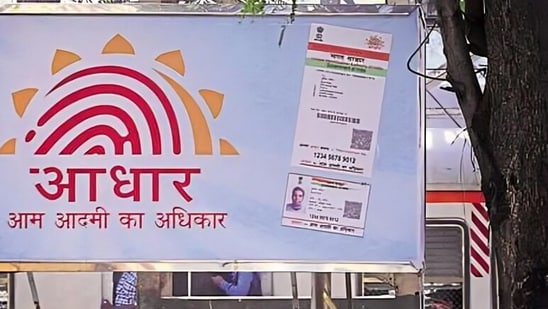
Aadhaar no longer valid as proof of date of birth: What you need to know
# Aadhaar No Longer Valid For Date Of Birth
**By Staff Reporter, National News Desk** | April 29, 2026
In a major policy shift announced on April 28, 2026, the Unique Identification Authority of India (UIDAI) officially clarified that the Aadhaar card is no longer valid as proof of date of birth (DoB) across India. Through a comprehensive directive, the UIDAI declared that the foundational Aadhaar Act of 2016 is “silent with regard to its acceptance as proof of date of birth.” This sweeping change impacts millions of citizens who previously utilized the 12-digit biometric identifier for age verification in education, employment, and financial services, signaling a mandatory return to traditional civil registration documents for vital statistics. [Source: Hindustan Times]
## The UIDAI Clarification: Understanding the Directive
The recent circular from the UIDAI serves as a definitive legal interpretation of what the Aadhaar card represents in the Indian administrative ecosystem. According to the Hindustan Times report, the detailed clarification document explicitly states that while Aadhaar remains a robust proof of identity and residence, it cannot mathematically or legally verify the exact date of a person’s birth.
During the initial years of Aadhaar enrollment, millions of citizens—particularly in rural and underserved areas—did not possess formal birth certificates. Consequently, the UIDAI allowed for the “self-declaration” of birth dates, or in many cases, simply recorded an estimated age. This resulted in millions of Aadhaar cards displaying “01/01/YYYY” as a default birth date.
“The Aadhaar ecosystem was designed to uniquely identify a resident through biometrics and basic demographic data, not to act as a definitive civil registry,” explains Dr. Arvind Mehra, a New Delhi-based policy analyst specializing in digital governance. “Because the Aadhaar Act of 2016 never officially mandated rigorous vetting of birth documents during early enrollments, treating it as an absolute proof of age has led to significant administrative anomalies.” [Additional Source: Public Policy Analysis]
## The Legal Framework: Why the Aadhaar Act is “Silent”
The crux of the UIDAI’s announcement revolves around the text of the Aadhaar (Targeted Delivery of Financial and Other Subsidies, Benefits and Services) Act, 2016. A meticulous review of the legislation reveals that the Act empowers the UIDAI to collect demographic information (name, date of birth, gender, and address) primarily for the purpose of establishing identity through deduplication and biometric matching.
However, the Act purposefully avoids designating the UIDAI as the custodian of vital civil events. Vital statistics—such as births and deaths—fall under the jurisdiction of the Registrar General of India and local municipal bodies. By explicitly noting that the Act is “silent” on the matter, the UIDAI is legally stepping back from assuming the role of a vital statistics registrar, a move that aligns with constitutional distributions of administrative power.
## Precursors to the Nationwide Ban
This nationwide clarification did not occur in a vacuum. The groundwork for phasing out Aadhaar as a DoB proof began several years prior. In early 2024, the Employees’ Provident Fund Organisation (EPFO) removed Aadhaar from its list of acceptable documents for correcting dates of birth. The EPFO cited numerous cases of discrepancies where employees used Aadhaar to alter their retirement age artificially.
Similarly, various state-level educational boards and passport authorities had already begun insisting on primary birth documents, expressing skepticism over the self-declared dates present on older Aadhaar cards. The UIDAI’s April 2026 document serves as the final, universal standardization of this practice across all government and private sector domains. [Source: Original RSS | Additional: Historical Government Circulars]
## Acceptable Alternatives for Date of Birth Verification
With Aadhaar removed from the equation, citizens must now rely on primary and secondary documents for age verification. Government bodies have synchronized their acceptable document lists to prevent public inconvenience.
Below is the updated framework of universally accepted documents for proof of date of birth as of mid-2026:
| Document Type | Issuing Authority | Primary Use Case |
| :— | :— | :— |
| **Birth Certificate** | Registrar of Births and Deaths / Municipal Corporation | Universal primary proof for all services. |
| **SSLC / 10th Standard Marksheet** | Recognized Educational Boards (CBSE, ICSE, State Boards) | Education, employment, passport applications. |
| **Passport** | Ministry of External Affairs | International travel, high-level financial KYC. |
| **PAN Card** | Income Tax Department | Financial services, banking, property registration. |
| **Service Record / Pension Order** | Government Departments / PSUs | Retirement benefits, senior citizen schemes. |
*Note: For individuals born after October 1, 2023, the Birth Certificate is universally mandated as a single-document proof for admission, driving licenses, and voter registration under the Registration of Births and Deaths (Amendment) Act, 2023.*
## Impact on Citizens and Administrative Services
The immediate implications of this directive are vast. Millions of individuals actively applying for government jobs, seeking university admissions, or updating their pension details will need to ensure their primary documents are in order.
**Financial Institutions and KYC:**
Banks and non-banking financial companies (NBFCs) have been given a transitional window to update their Know Your Customer (KYC) protocols. While Aadhaar will continue to be used for e-KYC to establish identity, banking software will no longer auto-populate or accept the Aadhaar-derived date of birth as verified. Customers opening new accounts or applying for life insurance policies must submit a supplementary DoB document.
“This is a necessary correction for the financial sector,” notes Meera Sanyal, a senior compliance officer at a leading private bank. “In the insurance sector, exact age dictates premium calculations. Relying on self-declared Aadhaar dates led to immense actuarial friction. Mandating verifiable PAN or birth certificates creates a mathematically sound financial environment.” [Additional Source: Financial Industry Expert Analysis]
**Rural Challenges:**
The transition is expected to pose temporary challenges in rural districts, where birth registration rates were historically low prior to the 2000s. To mitigate this, local panchayats and municipal bodies are reportedly organizing special document-issuance camps. Furthermore, affidavits sworn before a First-Class Magistrate, accompanied by medical age estimations, are expected to serve as fallback options for senior citizens lacking formal paperwork.
## The Push Towards a Robust Civil Registry
The UIDAI’s decision closely aligns with the Government of India’s broader push to digitize and centralize the Civil Registration System (CRS). The enforcement of the Registration of Births and Deaths (Amendment) Act, 2023, which took effect nearly three years ago, aimed to make the birth certificate the ultimate foundational document for a citizen’s life cycle.
By disallowing Aadhaar as a DoB proof, the government is effectively forcing a systemic cleanup. It prevents identity duplication and ensures that vital statistics databases—which inform economic planning, public health policies, and electoral rolls—are built upon verified, hospital-issued, or registrar-vetted data, rather than self-reported approximations.
## Conclusion: Key Takeaways and Future Outlook
The UIDAI’s April 2026 clarification marks a mature turning point in India’s digital identity journey. By strictly defining the limitations of the Aadhaar card, authorities are strengthening the overall integrity of public documentation.
**Key Takeaways for Citizens:**
* **Aadhaar is for Identity, Not Age:** Your Aadhaar card remains perfectly valid for proving *who* you are and *where* you live, but cannot be used to prove *when* you were born.
* **Update Your Portfolio:** Ensure you possess a digital or physical copy of your Birth Certificate, PAN Card, or matriculation certificate for upcoming administrative tasks.
* **Check Existing Applications:** If you have pending applications for passports, visas, or government jobs submitted solely with Aadhaar as age proof, be prepared to supply supplementary documentation.
* **No Impact on Welfare Delivery:** Subsidies and welfare schemes (DBT) that rely on biometric authentication will continue to function seamlessly, as they rely on identity verification, not exact age verification.
As India moves further into the digital age, the separation of biometric identity (Aadhaar) from vital civil statistics (Birth Certificates) will ultimately create a more secure, fraud-resistant, and efficient administrative ecosystem. Citizens are advised to secure their primary birth documents and ensure consistency across all state and central databases.





