
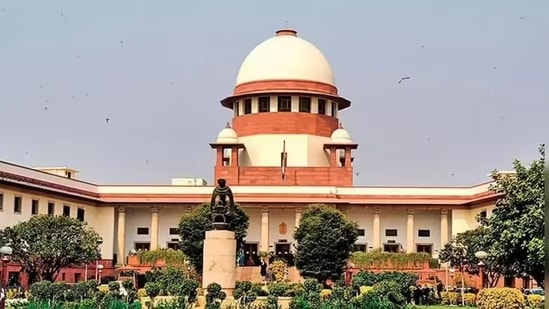
Petition filed in Supreme Court for ‘urgent' removal of IPS Ajay Pal Sharma from Bengal over ‘partisan conduct’
# SC Plea Seeks IPS Sharma Bengal Exit
**By Siddharth Narayan, Senior Political Correspondent, The Electoral Monitor | April 29, 2026**
A crucial petition was filed in the Supreme Court on Wednesday demanding the urgent removal of Uttar Pradesh cadre Indian Police Service (IPS) officer Ajay Pal Sharma from his election duties in West Bengal. The Election Commission of India (ECI) recently deployed Sharma as the police observer for the highly sensitive South 24 Parganas district ahead of the critical 2026 West Bengal Assembly elections. Petitioners allege that Sharma, widely dubbed an “encounter specialist” in his home cadre, has demonstrated “partisan conduct,” raising severe apprehensions about his ability to ensure a free, fair, and neutral electoral process in one of the state’s most politically volatile regions. [Source: Hindustan Times | Additional: Supreme Court Public Docket]
## The Supreme Court Petition Explained
The writ petition, brought before the apex court by a coalition of civil rights advocates and political representatives, challenges the administrative discretion of the Election Commission in appointing officers with allegedly polarized track records to highly sensitive electoral zones. According to the filing, the deployment of IPS Ajay Pal Sharma threatens the democratic integrity of the polling process in South 24 Parganas.
The petitioners base their legal argument on the foundational principle that free and fair elections are a part of the basic structure of the Indian Constitution. They argue that a police observer must not only be entirely neutral but must also be widely perceived as such by the electorate and participating political factions.
**Key demands outlined in the Supreme Court petition include:**
* **Immediate recall:** An urgent interim injunction preventing Sharma from assuming or continuing his duties as the police observer in South 24 Parganas.
* **Re-evaluation of EC deployment protocols:** A directive compelling the Election Commission to disclose its vetting process for appointing police observers in Category-A sensitive districts.
* **Appointment of a neutral replacement:** The swift deployment of an alternative officer from a non-adjacent, politically neutral cadre with a proven track record of peaceful election management.
Legal representatives for the petitioners argue that Sharma’s history in Uttar Pradesh—a state governed by a rival political party to the incumbent West Bengal government—creates an inherent conflict of interest. They allege that his past administrative actions reflect a partisan alignment that disqualifies him from unbiased election oversight. [Source: Hindustan Times | Additional: Constitutional Law Analysis]
## The Critical Role of a Police Observer
To understand the gravity of the petition, one must examine the immense authority vested in an ECI Police Observer. During the Model Code of Conduct (MCC), the Election Commission effectively takes over the administrative and security apparatus of the state to ensure level playing fields.
Police Observers are senior IPS officers deployed to states outside their home cadres. They act as the eyes and ears of the ECI, tasked with overseeing the deployment of Central Armed Police Forces (CAPF), monitoring local police conduct, and ensuring that area-domination exercises are carried out without political bias.
In South 24 Parganas, a district characterized by dense populations, riverine borders, and historical instances of poll-related clashes, the police observer holds the keys to democratic stability. The observer has the power to recommend the transfer of local police chiefs, direct raids against illegal arms, and dictate the movement of central forces on polling day. Consequently, any shadow of doubt regarding the observer’s impartiality can severely undermine the legitimacy of the election results in that constituency.
## Who is IPS Ajay Pal Sharma?
Ajay Pal Sharma is a 2011-batch Indian Police Service officer from the Uttar Pradesh cadre. Over the past decade, he has held several high-profile postings, including stints as Senior Superintendent of Police (SSP) in districts like Noida, Rampur, and Prayagraj.
Sharma garnered significant media attention—and the moniker of “encounter specialist”—due to his involvement in numerous anti-crime operations in Uttar Pradesh. While his supporters credit him with breaking the back of organized crime syndicates in western UP, civil liberties groups have frequently criticized the aggressive policing tactics utilized under his command, raising concerns regarding adherence to due process.
The crux of the Supreme Court petition does not strictly focus on his anti-crime record, but rather on the political context of his actions. In Uttar Pradesh, the police force operates under the administration of the Bharatiya Janata Party (BJP). The petitioners allege that Sharma’s rapid rise and operational style align too closely with the political objectives of his home state’s ruling party, which is currently the principal opposition challenging the Trinamool Congress (TMC) in West Bengal. [Source: Original RSS | Additional: Public Service Records]
## South 24 Parganas: A Geopolitical Flashpoint
The deployment of a controversial officer to South 24 Parganas is particularly explosive due to the district’s demographic and political makeup. As West Bengal’s largest district by area, wrapping around the southern fringes of Kolkata and extending deep into the Sundarbans, it holds 31 Assembly constituencies.
Historically, South 24 Parganas has been an impenetrable fortress for the ruling Trinamool Congress. However, the BJP has poured immense resources into the region for the 2026 elections, aiming to capitalize on anti-incumbency sentiments and localized grievances.
**Why South 24 Parganas is Classified as ‘Hyper-Sensitive’:**
1. **Voter Density:** The sheer volume of the electorate makes crowd control and polling booth security a logistical nightmare.
2. **Geography:** The riverine terrain of the Sundarbans makes rapid deployment of security forces difficult, putting heavy reliance on pre-poll area domination.
3. **Historical Volatility:** Past local and state elections have witnessed skirmishes, allegations of booth capturing, and voter intimidation.
Given these factors, the local populace and political stakeholders are highly sensitive to the presence of central forces and outside observers. The perception that an observer might use central forces to disproportionately target one political demographic could lead to widespread unrest, a scenario the ECI is desperate to avoid.
## The Election Commission’s Constitutional Mandate
The Election Commission of India derives its sweeping powers to conduct elections from **Article 324** of the Indian Constitution. The ECI has historically maintained that its selection of observers is based entirely on seniority, availability, and administrative competence, completely insulated from political considerations.
When deploying officers, the ECI utilizes a randomized computer-generated allotment system to match officers from the national pool to various poll-bound districts. The Commission has previously argued in various courts that questioning the integrity of an officer solely based on their home cadre sets a dangerous precedent that could paralyze the entire observer ecosystem.
“The ECI’s stance has always been that an IPS officer is an officer of the Union, not a political agent of the state they serve in,” explains Dr. R. K. Viswanathan, a senior constitutional lawyer and former ECI consultant. “However, the Supreme Court has also noted in past judgments that justice must not only be done but must be seen to be done. If an officer’s presence creates a credible threat to the perception of neutrality, the Court may ask the ECI to exercise its discretionary powers to replace them.” [Source: Independent Legal Analysis]
## Expert Perspectives and Political Fallout
The petition has triggered a fierce war of words in West Bengal’s charged political arena. Leaders of the incumbent TMC have welcomed the petition, framing Sharma’s appointment as a “backdoor attempt” by the central government to intimidate local administration and sway the election machinery. Conversely, the BJP has dismissed the petition as a preemptive excuse by the ruling party, arguing that the TMC fears a strict, no-nonsense police observer who will prevent electoral malpractices.
Political analyst Smita Ray notes the broader implications of this legal battle: “This isn’t just about Ajay Pal Sharma. It’s about the increasing polarization of the bureaucracy. When political battles become this fierce, civil servants end up bearing the brunt of the mistrust. If the Supreme Court intervenes and removes Sharma, it will be a massive victory for the opposition. If it refuses, the ECI will feel vindicated, but the ground-level tension in South 24 Parganas will undoubtedly escalate.”
The debate also touches on the ethics of the “encounter specialist” culture in Indian policing. Human rights advocates have long argued that officers celebrated for extrajudicial actions should not be entrusted with delicate democratic exercises like election monitoring, where patience, de-escalation, and strict adherence to the rule of law are paramount.
## Future Outlook: Awaiting the Apex Court’s Direction
As the Supreme Court prepares to hear the urgent petition, the outcome will likely hinge on whether the petitioners can provide concrete, documented evidence of “partisan conduct” by IPS Ajay Pal Sharma, rather than relying on media monikers and guilt by association with his home cadre’s political leadership.
**Key Takeaways:**
* The Supreme Court’s decision will establish a critical precedent regarding the limits of the Election Commission’s absolute authority under Article 324.
* A ruling in favor of the petitioners could trigger a wave of similar objections against other central observers, potentially disrupting the ECI’s logistical planning for the 2026 state elections.
* South 24 Parganas will remain under a heavy national spotlight, with the conduct of the local police and central forces being scrutinized by all political factions.
The controversy underscores a growing challenge in Indian electoral democracy: maintaining the fragile trust between regional political parties and central electoral mechanisms. As West Bengal braces for what promises to be a fiercely contested election, the Supreme Court’s impending decision on Ajay Pal Sharma will set the tone for the complex interplay of law, politics, and law enforcement in the world’s largest democracy.





