
Amarnath Yatra 2026 schedule: All you need to know about dates, registration, routes| India News
# Amarnath Yatra 2026: Dates, Routes, Registration
By Special Correspondent, India News Desk, April 12, 2026
The Shri Amarnathji Shrine Board (SASB) has officially announced the comprehensive schedule for the 2026 Amarnath Yatra, an annual Hindu pilgrimage to the revered cave shrine situated at an altitude of 3,888 meters in the Himalayas of Jammu and Kashmir. Advance registrations for the spiritually significant journey will begin nationwide on April 15. This year, the pilgrimage will span a duration of 57 days—commencing in early July and officially concluding on August 28, coinciding with the auspicious festivals of Shravan Purnima and Raksha Bandhan. With hundreds of thousands of devotees preparing to navigate the rugged mountainous terrain, the union territory’s administration has rolled out stringent health protocols, a streamlined registration process, and highly upgraded security grids to ensure the safety and seamless movement of all pilgrims. [Source: Hindustan Times | Additional: Shri Amarnathji Shrine Board Public Notifications].
## Essential Dates and the Registration Process
The 2026 Amarnath Yatra demands rigorous planning from prospective pilgrims due to the extreme geographical and climatic conditions of the region. As announced, **advance registrations will open on April 15, 2026**. Prospective yatris must secure their permits well in advance to avoid last-minute logistical hurdles.
The 57-day duration makes the 2026 pilgrimage one of the longer schedules in recent years, designed to accommodate a higher influx of devotees while preventing dangerous overcrowding on the narrow mountain passes. Calculating backward from the **August 28 conclusion date**, the first batch of pilgrims will be flagged off from the Bhagwati Nagar base camp in Jammu on July 2, with the actual ascent beginning on July 3.
**Key Steps for Registration:**
* **Designated Bank Branches:** Registration will be facilitated through over 500 designated branches of the Punjab National Bank (PNB), State Bank of India (SBI), YES Bank, and the Jammu and Kashmir Bank across the country.
* **Online Portal:** Devotees can also register via the official SASB website or the specialized Amarnath Yatra mobile application, providing a digital alternative for the tech-savvy demographic.
* **Compulsory Health Certificate (CHC):** No registration will be granted without a valid CHC. These certificates must be issued by authorized doctors and medical institutions recognized by the state or union territory governments.
* **Biometric Verification:** Aadhaar-based biometric authentication will be mandatory at the time of registration to ensure the authenticity of the pilgrims and to integrate them into the central tracking system. [Source: Hindustan Times | Additional: Ministry of Health and Family Welfare Guidelines].
“The extension of the yatra to 57 days this year is a strategic decision,” noted Dr. Rajesh Sharma, a senior logistics coordinator for Himalayan pilgrimages. “It allows for a more distributed flow of pilgrims, which drastically reduces the pressure on our base camps, medical facilities, and the fragile ecological infrastructure of the region.”
## Navigating the Twin Routes: Pahalgam vs. Baltal
Pilgrims undertaking the Amarnath Yatra have the option of choosing between two distinct routes, each offering a unique set of challenges and breathtaking landscapes. The SASB carefully regulates the daily intake of pilgrims on both axes to maintain a safe carrying capacity.
**The Traditional Pahalgam Route (Nunwan Base Camp):**
Situated in the Anantnag district, the Pahalgam route is the older, traditional path to the holy cave. Stretching approximately **48 kilometers**, this route generally takes pilgrims four to five days to complete (round trip). While it is significantly longer, the ascent is comparatively gradual, making it the preferred choice for elderly pilgrims and families. The trek passes through stunning locations such as Chandanwari, Pissu Top, Sheshnag, and Panchtarni before reaching the holy cave.
**The Baltal Route (Ganderbal District):**
For those seeking a shorter but much more strenuous journey, the Baltal route is the alternative. This axis is only **14 kilometers** long, allowing fit pilgrims to complete the round trip in a single day or two days. However, the path is notorious for its steep inclines and narrow, winding tracks alongside sheer drops. It requires a high level of physical fitness and stamina.
For the elderly and those with physical limitations, **helicopter services** will be available from both Pahalgam and Baltal to Panchtarni, which is located just 6 kilometers from the shrine. Booking for these aviation services is strictly regulated and tied to the individual’s Yatra permit to prevent black-market scalping. [Source: Hindustan Times | Additional: Directorate of Tourism, Jammu and Kashmir].
## Advanced Security and RFID Tracking
Given the sensitive geopolitical nature of Jammu and Kashmir, security remains the paramount concern for the government during the Amarnath Yatra. The 2026 pilgrimage will witness a multi-tier security blanket, integrating human intelligence with cutting-edge technology.
A massive deployment comprising the Central Reserve Police Force (CRPF), the Jammu and Kashmir Police, the Border Security Force (BSF), and the Indian Army will secure the national highways, base camps, and the treacherous trekking routes.
One of the most critical technological interventions is the mandatory use of **Radio Frequency Identification (RFID) tags**. Introduced in recent years and perfected for the 2026 yatra, these tags are issued to every registered pilgrim.
“The RFID tracking system is the backbone of our disaster management and security protocols,” explained an official from the Jammu and Kashmir Home Department, speaking on the condition of anonymity. “In the event of sudden weather anomalies—such as the tragic cloudbursts we have seen in the past—these tags allow our command-and-control centers to pinpoint the exact location of every single pilgrim on the mountain, facilitating immediate and targeted rescue operations.”
Furthermore, drone surveillance, CCTV networks at all vital transit camps, and bomb disposal squads will be on standby 24/7 throughout the 57-day period.
## Health Guidelines and High-Altitude Acclimatization
The trek to the Amarnath cave takes pilgrims to an altitude of nearly 13,000 feet, where the oxygen level is considerably lower than at sea level. Consequently, the SASB enforces strict health and age restrictions. **Children below the age of 13, elderly individuals above 70 years, and women more than six weeks pregnant are strictly prohibited from undertaking the pilgrimage.**
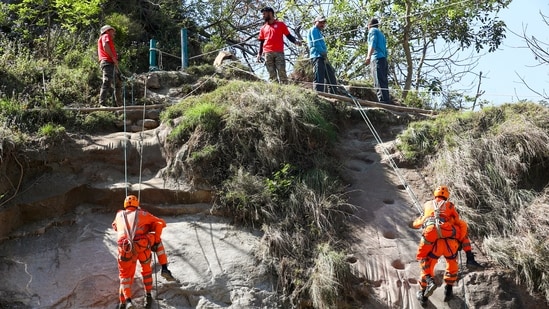
Acute Mountain Sickness (AMS), High Altitude Pulmonary Edema (HAPE), and High Altitude Cerebral Edema (HACE) are lethal risks for the unprepared. To mitigate these dangers, the administration has set up a comprehensive medical grid. Fully equipped medical camps, oxygen booths, and emergency helipads are stationed at every two-kilometer interval along both the Baltal and Pahalgam routes.
Dr. Anjali Verma, a pulmonologist who has volunteered at the Sheshnag medical camp for three consecutive years, advises thorough preparation. “Pilgrims must start physical training—specifically cardiovascular exercises like brisk walking and breathing routines—at least four to six weeks before their scheduled yatra. More importantly, once they arrive in Jammu and Kashmir, they must spend at least 48 hours acclimatizing at the base camps before beginning the ascent. Ignoring the body’s warning signs at 12,000 feet is a fatal mistake,” she warned. [Source: Hindustan Times | Additional: High Altitude Medical Research Center Data].
## Environmental Sustainability: Pushing for a Greener Pilgrimage
With millions of footsteps traversing the fragile Himalayan ecosystem over two months, the environmental impact of the Amarnath Yatra is a growing concern. The 2026 schedule brings with it a renewed, aggressive push toward a “Zero-Waste Yatra.”
The Shri Amarnathji Shrine Board, in collaboration with the local municipal bodies and environmental NGOs, has instituted a **total ban on single-use plastics** along the yatra routes. Pilgrims are subjected to thorough luggage checks at the base camps, and any plastic water bottles, polythene bags, or non-biodegradable food wrappers are confiscated.
To compensate, the government has installed numerous reverse osmosis (RO) water dispensers along the track, encouraging pilgrims to carry reusable metal or insulated flasks. Additionally, thousands of eco-friendly bio-toilets have been installed to prevent the contamination of local water bodies, particularly the Lidder River in Pahalgam and the Sindh River in Baltal. A dedicated army of sanitation workers, known locally as *Swachhagrahis*, will be deployed around the clock to ensure the routes remain pristine.
## Economic Impact on Jammu and Kashmir
Beyond its profound religious significance, the Amarnath Yatra is an essential economic engine for the union territory of Jammu and Kashmir. The 57-day schedule for 2026 is expected to inject millions of rupees into the local economy, providing a vital livelihood for the local Muslim populations who have historically acted as hosts, guides, and facilitators for the Hindu pilgrims.
From the hoteliers and restaurant owners in Srinagar, Jammu, and Anantnag to the thousands of ponywalas (horsemen), palanquin bearers, and porters, the yatra is a season of peak employment. Transport syndicates operating buses and taxis from the Jammu railway station to the base camps rely heavily on this two-month window.
“The Amarnath Yatra is the ultimate symbol of Kashmir’s syncretic culture,” stated a representative of the Baltal Tent Owners Association. “For 57 days, our entire community mobilizes to serve the yatris. When the yatra is extended, as it is this year until August 28, it means prolonged economic stability for thousands of local families whose primary income is generated during this brief summer window.” [Source: Hindustan Times | Additional: J&K Chamber of Commerce and Industry Reports].
## Future Outlook and Final Takeaways
As the April 15 registration date rapidly approaches, prospective pilgrims are urged to finalize their travel plans, initiate their physical fitness routines, and secure their Compulsory Health Certificates. The 2026 Amarnath Yatra—continuing for 57 days and concluding on August 28—promises to be a highly organized, spiritually fulfilling, and safe experience, provided devotees adhere strictly to the guidelines established by the SASB.
The integration of robust RFID technology, enhanced medical infrastructure, and an unyielding commitment to environmental preservation highlights how India’s traditional pilgrimages are evolving in the 21st century. By marrying ancient spiritual devotion with modern administrative efficiency, the authorities are ensuring that the holy journey to the Amarnath cave remains accessible and secure for generations to come.
Devotees are advised to regularly monitor the official website of the Shri Amarnathji Shrine Board for any dynamic updates regarding weather alerts, route diversions, or procedural changes as the yatra commencement date draws nearer.





