
Mobile internet suspension extended in parts of ethnic violence-hit Manipur| India News
# Manipur Internet Ban Extended Amid New Clashes
**By Special Correspondent, The Asian Desk | April 12, 2026**
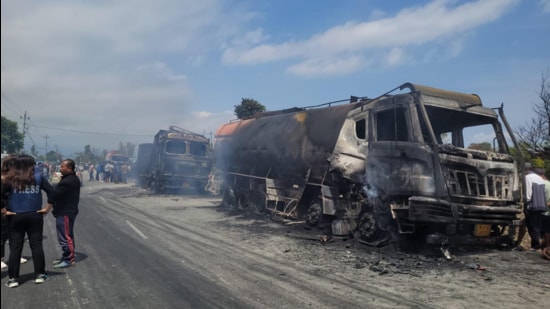
The state government of Manipur has extended the suspension of mobile internet services across multiple districts following renewed ethnic violence that left two people dead and 29 injured on Tuesday. Strict curfews remain enforced in vulnerable zones as security forces work to restore order. The extension, announced officially on Sunday, April 12, 2026, aims to curb the spread of inflammatory disinformation and prevent the mobilization of armed groups. This latest escalation underscores the deeply fragile security situation in the northeastern Indian state, which has been grappling with a protracted and devastating ethnic conflict for nearly three years. [Source: Hindustan Times].
## The Trigger for the Latest Digital Blackout
The immediate catalyst for this extended internet blackout was a severe flare-up of violence on Tuesday. While the state had seen a relative, albeit tense, lull in major skirmishes over the preceding weeks, sudden clashes erupted along the borders of the hill and valley districts. Authorities confirmed that the crossfire resulted in two fatalities and left 29 individuals with varying degrees of injuries, requiring immediate medical evacuations under heavy security cover. [Source: Hindustan Times].
In response to the deteriorating law and order situation, the state’s Home Department issued an emergency directive to telecom service providers. The order mandated the continued suspension of mobile internet data services, internet/data services through broadband (in specific flagged areas), and mobile VSATs. Concurrently, district magistrates in the affected regions imposed Section 144, effectively enforcing a strict curfew that restricts the assembly of unauthorized individuals.
State officials maintain that these sweeping measures are an absolute necessity. “The suspension of internet services is a preventive measure aimed at stopping the spread of rumors, fake news, and hate speech through social media platforms, which have historically exacerbated the violence,” a senior state police official noted in a press briefing following the Tuesday clashes.
## Historical Context: A State Divided
To understand the persistent use of internet suspensions, one must look at the roots of the current crisis. The ethnic conflict in Manipur ignited in early May 2023, fundamentally driven by deep-seated tensions between the majority Meitei community, who primarily reside in the Imphal Valley, and the Kuki-Zo tribal communities, who inhabit the surrounding hill districts. The initial spark was a controversial court directive regarding Scheduled Tribe (ST) status, which quickly spiraled into a statewide conflagration. [Additional: Public historical records, 2023-2026].
Three years later, the state remains heavily polarized. “Buffer zones,” manned by Central Armed Police Forces (CAPF) and the Indian Army, separate the warring communities. Despite numerous peace initiatives led by the central government and civil society organizations, complete normalization remains elusive.
The underlying grievances—revolving around land rights, political representation, and resource allocation—have not been fully resolved. Consequently, any isolated incident, such as Tuesday’s tragedy, has the potential to reignite widespread conflict, prompting the government to rely heavily on digital communication blackouts as a primary tool for riot control.
## The Cost of Digital Isolation
While the government defends the internet ban as a life-saving security measure, the collateral damage to the daily lives of millions of citizens is profound. In an increasingly digital-first India, stripping a state of its internet connectivity effectively paralyses its economy, education system, and healthcare infrastructure.
Dr. Meenakshi Singh, a political sociologist focusing on Northeast India, highlights the dual-edged nature of such policies. “The weaponization of information is a real and present threat in conflict zones. However, broad internet blackouts serve as a blunt instrument. They often harm the most vulnerable populations by cutting them off from essential emergency services, financial networks, and critical real-time information about safe zones,” Dr. Singh explains.
For local businesses, the impact has been catastrophic. The gig economy, e-commerce deliveries, and small-scale vendors who rely on the Unified Payments Interface (UPI) for daily transactions find themselves entirely sidelined. Students preparing for national competitive exams are unable to access online study materials or submit applications, putting an entire generation of Manipuri youth at a distinct disadvantage compared to their peers in other states.
## Disinformation vs. The Right to Information
The debate over internet suspensions in India frequently centers on the legal frameworks governing digital rights. Under the Temporary Suspension of Telecom Services (Public Emergency or Public Safety) Rules, 2017, the government holds the authority to restrict connectivity. However, the landmark Supreme Court ruling in the *Anuradha Bhasin* case (2020) established that indefinite internet bans are unconstitutional, mandating that suspensions must be temporary, targeted, and subject to regular review. [Additional: Legal precedents, Indian Supreme Court].
Digital rights advocates argue that the persistent extensions in Manipur test the limits of these legal guidelines. Rohan Desai, a legal researcher specializing in internet governance, notes, “While the immediate aftermath of violence may justify a brief pause in mobile data to halt coordinated attacks, rolling extensions create an information vacuum. When people cannot access verified news, panic and paranoia often fill the void, sometimes leading to the very unrest the government seeks to prevent.”
Furthermore, the lack of internet impedes the work of journalists and human rights monitors trying to report on the ground realities. Getting accurate casualty figures, documenting property damage, and holding authorities accountable becomes a logistical nightmare when digital communications are severed.
## Economic Fallout and Sectoral Impact
The prolonged periods of digital darkness over the past three years have left deep scars on Manipur’s economic landscape. To illustrate the breadth of the disruption, industry analysts have compiled data on the sectors most affected by the recurring blackouts.
**Key Sectors Impacted by Digital Suspensions:**
* **Digital Payments & Banking:** With mobile internet down, UPI transactions, mobile banking apps, and ATM networks frequently face severe disruptions, leading to cash shortages.
* **Healthcare:** Telemedicine services are rendered useless. Supply chain logistics for critical medicines and the coordination of emergency ambulance services are heavily delayed.
* **Education:** Online classes, which became a staple during times of curfew, cannot function. Access to educational portals, exam results, and remote learning tools is blocked.
* **Local Commerce:** Local entrepreneurs and MSMEs that rely on social media marketing and digital marketplaces report revenue drops of up to 70% during blackout periods.
* **Aviation and Transport:** Booking flight tickets, checking train statuses, and coordinating freight transport face significant administrative hurdles.
“We cannot process payments, track incoming shipments, or communicate with our suppliers in neighboring states,” says Prakash Kumar, a local supply chain operator based in Imphal. “Every time the internet is cut, the local economy takes weeks to recover from the backlog.”
## Security Measures and Law Enforcement Challenges
On the ground, maintaining order in the deeply fragmented geography of Manipur remains a monumental challenge for law enforcement. The Tuesday clashes that left 29 injured required an immediate, coordinated response from the state police, the Assam Rifles, and the Central Reserve Police Force (CRPF).
Security forces are currently engaged in extensive area domination exercises. Checkpoints have been heavily fortified, and night-vision equipped drone surveillance is being utilized to monitor the volatile buffer zones. However, the rugged terrain of the hill districts and the densely populated valley areas present unique tactical difficulties.
The imposition of curfews has helped clear the streets, but authorities are acutely aware that curfews are a temporary fix. “The physical separation of communities prevents immediate bloodshed, but it does not foster peace,” a retired Army officer who served in the region remarked. “The internet ban is essentially a digital curfew. It buys time for the security apparatus to stabilize the physical environment, but that time must be utilized by political leaders to engage in meaningful dialogue.”
## Political Repercussions and the Path Forward
The central government in New Delhi continues to monitor the situation closely, having dispatched multiple high-level delegations to broker peace over the years. Yet, the recent violence indicates that trust deficits between the communities remain alarmingly high.
Civil society organizations from both the Meitei and Kuki-Zo communities have repeatedly appealed for peace, urging both the state and central governments to address the root causes of the conflict rather than relying solely on militarized responses and digital blackouts. There is a growing consensus among moderate voices that a sustainable resolution requires a comprehensive political dialogue, transparent justice for victims of the violence, and a clear framework for equitable resource distribution.
The recurring internet suspensions have also drawn international attention, with global human rights organizations pointing out the friction between India’s vision of “Digital India” and the reality of internet shutdowns in its conflict-prone regions. The state government faces mounting pressure to find alternative methods of crowd control and anti-disinformation campaigns that do not require blanketing entire districts in digital silence.
## Conclusion
The extension of the mobile internet suspension in Manipur is a stark reminder of the volatile and unresolved nature of the state’s ethnic conflict. The tragic loss of two lives and the injury of 29 others on Tuesday underscore the immediate necessity for robust security interventions. [Source: Hindustan Times]. However, as the region navigates this latest crisis, the widespread collateral damage caused by digital blackouts cannot be ignored.
While the government’s priority is undoubtedly the preservation of life and the prevention of further riots, the long-term socio-economic and psychological impacts on the citizens of Manipur are profound. Moving forward, authorities face the difficult task of balancing acute security imperatives with the fundamental rights of citizens to access information, conduct business, and remain connected to the modern digital world. Until a comprehensive political solution addresses the deep-seated ethnic divisions, the citizens of Manipur will likely continue to find themselves caught in the crossfire—both physical and digital.





