
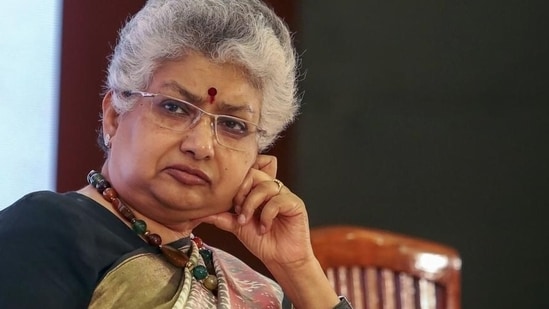
Arbitration, mediation as integral to modern justice system as litigation: Justice Nagarathna| India News
# ADR Key to Modern Justice: Justice Nagarathna
**By Legal Affairs Correspondent, Indian Legal Chronicle, April 11, 2026**
**New Delhi** — Supreme Court Justice B.V. Nagarathna declared Saturday that arbitration and mediation can no longer be viewed as mere secondary options, but are now as integral to India’s modern justice system as traditional courtroom litigation. Speaking at a national symposium on judicial reforms in the capital, Justice Nagarathna emphasized that mainstreaming Alternative Dispute Resolution (ADR) is essential to resolving the nation’s severe judicial backlog. Her remarks highlight a definitive systemic shift within the Indian judiciary, moving from adversarial battles toward collaborative dispute resolution to ensure timely, accessible, and affordable justice for millions of citizens across the country. [Source: Hindustan Times].
## Redefining the ‘Alternative’ in Dispute Resolution
For decades, the Indian legal framework treated Alternative Dispute Resolution mechanisms as peripheral tools—optional avenues explored only when traditional litigation reached a standstill. Justice Nagarathna’s recent address fundamentally challenges this archaic perspective. By asserting that arbitration and mediation are “integral,” she is advocating for a dual-pillar justice system where out-of-court settlements hold the same structural importance as trial proceedings.
“The word ‘alternative’ in ADR is becoming a misnomer,” Justice Nagarathna noted during her address. “These mechanisms are the primary avenues for dispute resolution in a rapidly developing economy. They preserve relationships, save time, and most importantly, they save the mental peace of the litigants.”
This philosophical shift aligns with global judicial trends. Jurisdictions like Singapore, the United Kingdom, and the United States have long integrated mediation into their core legal frameworks. For India, a country witnessing unprecedented economic growth and complex commercial engagements, mirroring this integration is no longer optional but imperative.
Legal experts point out that Justice Nagarathna, who is slated to become India’s first female Chief Justice in 2027, is laying the ideological groundwork for her upcoming tenure. Her vocal support for ADR signals to lower courts, practitioners, and lawmakers that the highest echelons of the judiciary prioritize pragmatic resolution over prolonged procedural battles. [Source: Additional knowledge, Supreme Court Bar Association archives].
## The Pendency Crisis and the ADR Relief Valve
The context of Justice Nagarathna’s statement is inextricably linked to the staggering volume of cases pending in Indian courts. As of early 2026, data from the National Judicial Data Grid (NJDG) indicates that over 52 million cases are pending across various courts in India, with the vast majority languishing in district and subordinate courts.
**Key statistics driving the push toward ADR include:**
* **Decade-long Delays:** A significant percentage of civil disputes take an average of 10 to 15 years to reach a final verdict.
* **Resource Strain:** The judge-to-population ratio in India remains significantly lower than the global average, severely straining judicial resources.
* **Economic Bottlenecks:** Billions of dollars are tied up in stalled commercial litigation, deterring foreign investment and stifling domestic economic velocity.
Litigation inherently operates on an adversarial model—creating winners and losers—which often results in endless cycles of appeals. Mediation, conversely, focuses on consensus. By facilitating dialogue, mediation unclogs the appellate pipelines. When parties co-create their settlements, compliance rates soar, and the likelihood of post-resolution challenges drops dramatically.
“The judicial system is akin to a vital organ in the democratic body,” explains Dr. Meera Sanyal, a senior researcher at the Centre for Legal Policy. “Right now, that organ is operating under immense stress. Justice Nagarathna’s push for arbitration and mediation is essentially advocating for a necessary bypass surgery to keep the system functioning efficiently.”
## Legislative Milestones: The Impact of the Mediation Act
The judicial push championed by Justice Nagarathna is deeply supported by recent legislative transformations, most notably the implementation of the Mediation Act, 2023. By 2026, the ripple effects of this landmark legislation are highly visible across India’s legal landscape.
The Act institutionalized pre-litigation mediation for a wide array of civil and commercial disputes, compelling parties to attempt mediation before stepping into a courtroom. It also established the Mediation Council of India, which has spent the last three years standardizing the training and certification of mediators.
This legislative backing ensures that mediated settlements carry the same legal weight as court decrees, assuaging fears that ADR processes lack ‘teeth.’ Justice Nagarathna’s remarks serve to validate these legislative efforts, urging the legal fraternity to embrace the spirit of the law rather than merely adhering to its technical requirements. [Source: Ministry of Law and Justice reports, 2024-2026].
## Corporate India’s Paradigm Shift
Nowhere is the shift toward arbitration and mediation more pronounced than in the corporate sector. As India solidifies its position as a global manufacturing and technological hub, the need for swift, confidential, and specialized dispute resolution has skyrocketed.
Traditional litigation is public, slow, and often presided over by judges who may lack specialized knowledge of complex, modern commercial transactions. Arbitration offers businesses the autonomy to choose their arbitrators—often retired judges or industry experts—ensuring that decisions are informed, precise, and rendered within a strictly defined timeframe.
“Corporate India has recognized that litigation is a sunk cost,” notes Arvind Mehta, Senior Corporate Counsel at a leading multinational conglomerate. “The prolonged uncertainty of court battles destroys shareholder value. We now insert mandatory multi-tiered dispute resolution clauses into all our contracts, prioritizing negotiation, then mediation, and finally arbitration. Court is the absolute last resort.”
Institutions like the Delhi International Arbitration Centre (DIAC) and the Mumbai Centre for International Arbitration (MCIA) have reported a 40% surge in caseloads over the past two years, reflecting a growing trust in institutional arbitration over ad-hoc processes.
## ODR: The Technological Frontier of Mediation
Justice Nagarathna’s vision for a modern justice system is also intertwined with the rise of Online Dispute Resolution (ODR). The integration of technology into the legal framework has democratized access to justice in unprecedented ways.
By utilizing video conferencing, secure document-sharing portals, and even AI-assisted negotiation algorithms, ODR platforms are resolving consumer disputes, e-commerce grievances, and small-claim financial disputes at scale. A citizen in rural Karnataka can now mediate a banking dispute with an institution in Mumbai without ever traveling, spending thousands on legal fees, or waiting years for a court date.
“ODR is the force multiplier for mediation,” states Rohan Verma, CEO of ResolveTech, an Indian legal-tech startup. “When a Supreme Court Justice states that ADR is integral to the modern system, she is validating the digital infrastructure we are building. Technology strips away the geographical and financial barriers that have traditionally made justice inaccessible to the common man.”
## Roadblocks: Enforcement and Capacity Building
Despite the optimistic outlook, the transition to an ADR-centric justice system is not without its hurdles. While Justice Nagarathna highlighted the potential of these mechanisms, the reality on the ground requires robust administrative support.
One of the primary challenges remains the enforcement of arbitral awards. Losing parties often exploit legal loopholes to challenge arbitration awards under Section 34 of the Arbitration and Conciliation Act, dragging the dispute back into the traditional court system and defeating the purpose of ADR.
Furthermore, the quality of mediation relies entirely on the skill of the mediator. “The bottleneck is no longer the willingness to arbitrate, but the availability of world-class, neutral arbitrators and mediators,” observes Dr. Sunita Rao, a leading ADR researcher. “If mediation is to be integral to our justice system, we must treat mediator training with the same rigor as we treat judicial training.”
There is also a cultural barrier within the legal profession itself. Many traditional litigators view mediation as a threat to their billable hours, leading to reluctance in advising clients to settle out of court. Judicial leaders like Justice Nagarathna play a crucial role in dismantling these cultural barriers, urging lawyers to transition from ‘warriors’ to ‘problem solvers.’
## The Path Toward 2030 and Beyond
Justice Nagarathna’s declaration on April 11, 2026, will likely be viewed as a definitive marker in India’s legal evolution. As she prepares to potentially lead the judiciary in 2027, her philosophy points toward a strategic bifurcation of the justice system.
In this envisioned future, traditional courts will be reserved for complex constitutional questions, severe criminal trials, and cases establishing critical jurisprudence. Meanwhile, the vast majority of civil, familial, and commercial disputes will be seamlessly routed through institutionalized arbitration and mediation networks.
This approach not only promises to clear the historical backlog but also restores public faith in the legal system’s ability to deliver timely outcomes.
## Conclusion: A New Era of Collaborative Justice
The core takeaway from Justice Nagarathna’s address is clear: the era of viewing courts as the sole purveyors of justice is over. By declaring arbitration and mediation as integral to the modern justice system as litigation, the Supreme Court is signaling a permanent paradigm shift.
For the average citizen, this means faster resolutions, lower costs, and less adversarial stress. For the corporate world, it guarantees a stable, predictable environment for dispute resolution, essential for global economic integration. As India moves toward 2030, the true measure of its justice system will no longer be how many cases are decided in court, but how effectively disputes are resolved before they ever reach a judge’s bench. The foundation for this collaborative future is now firmly in place, driven by legislative action, technological innovation, and visionary judicial leadership.





