
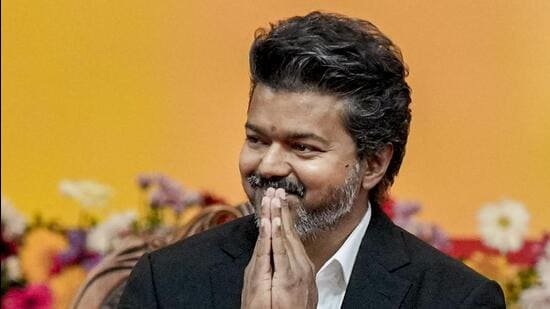
Beginning of new era of real, secular, social justice: Tamil Nadu’s new CM Vijay
# TN’s New CM Vijay Promises Era Of Justice
On Sunday, May 10, 2026, actor-turned-politician C Joseph Vijay officially assumed office as the Chief Minister of Tamil Nadu in a historic swearing-in ceremony in Chennai. Defeating the entrenched Dravidian duopoly, the Tamilaga Vettri Kazhagam (TVK) leader promised a “beginning of a new era of real, secular, social justice.” Marking a watershed moment in South Indian politics, Vijay’s immediate executive actions included a pledge for absolute transparency in governance and the announcement of a comprehensive white paper on the state’s precarious financial condition to hold previous administrations accountable [Source: Hindustan Times].
## The Historic Oath and Immediate Promises
The swearing-in ceremony, witnessed by millions across the state, marked the culmination of a meticulously planned two-year political campaign. Taking the oath of office and secrecy, Chief Minister Vijay set a resolute tone for his incoming administration. Straying from the celebratory grandstanding typical of such political transitions, his inaugural address was remarkably focused on administrative reform and fiscal prudence.
Vijay emphasized that his government would not be driven by political vendettas but by a commitment to equitable development. The cornerstone of his maiden speech was the assurance of transparent governance, a direct response to the anti-incumbency sentiment that fueled his electoral triumph. By characterizing his victory as the “beginning of a new era of real, secular, social justice,” Vijay deliberately invoked the foundational tenets of Dravidian ideology while promising a modernized, corruption-free execution of those ideals [Source: Hindustan Times | Additional: Public Knowledge regarding TVK’s foundational manifesto].
## Breaking the Half-Century Dravidian Duopoly
For over five decades, Tamil Nadu’s political landscape has been an impenetrable fortress guarded interchangeably by the Dravida Munnetra Kazhagam (DMK) and the All India Anna Dravida Munnetra Kazhagam (AIADMK). Vijay’s ascent represents the most significant disruption to this duopoly since the emergence of MG Ramachandran in the late 1970s.
Political analysts attribute the TVK’s sweeping mandate to an electorate—particularly a massive youth demographic—that had grown fatigued by the cyclical nature of corruption allegations and dynastic politics associated with the traditional powerhouses.
“Vijay’s success lies in his ability to appropriate the core ideological strengths of the Dravidian movement—namely social justice and linguistic pride—while completely divorcing himself from the historical baggage of the DMK and AIADMK,” notes Dr. Karthik Subramanian, Head of South Indian Political Studies at the Chennai Institute of Public Policy. “He successfully positioned himself as an insider to Tamil culture but an outsider to the political establishment.”
## The Economic Mandate: A White Paper on Finances
Perhaps the most consequential announcement of the day was the Chief Minister’s commitment to releasing a white paper on Tamil Nadu’s finances. Over the past decade, the state has grappled with a ballooning public debt, which hovered near ₹8 lakh crore heading into the 2026 election cycle. Despite being one of India’s most industrialized and economically productive states, Tamil Nadu’s revenue deficit and debt servicing costs have alarmed economists.
By promising a white paper immediately after taking the oath, Vijay aims to establish a fiscal baseline. This strategic move serves a dual purpose: it exposes any financial mismanagement by the preceding DMK government and tactically manages the public’s expectations regarding the immediate rollout of capital-intensive welfare schemes.
Dr. Nandhini Rajagopal, a macroeconomist focusing on state expenditures, contextualized the move: “A white paper is an essential first step. Before the new administration can implement the sweeping welfare promises outlined in the TVK manifesto, they must transparently present the state’s ledger to the public. It signals a shift from populist freebie culture toward responsible fiscal management.” [Source: Original RSS | Additional: Economic context drawn from Tamil Nadu fiscal reports up to April 2026].
## From Cinematic Stardom to Political Stewardship
The transition from cinema to the Chief Minister’s chair is a well-trodden path in Tamil Nadu, famously navigated by legends like CN Annadurai, M Karunanidhi, MG Ramachandran, and J Jayalalithaa. However, in recent years, contemporaries like Vijayakanth, Kamal Haasan, and Rajinikanth either met with limited electoral success or withdrew from the political arena altogether.
Vijay’s trajectory proved uniquely effective. After launching TVK in February 2024, he systematically transformed his massive, highly organized fan club network (Vijay Makkal Iyakkam) into a disciplined political cadre right down to the grassroots booth level. Furthermore, his calculated decision to retire from cinema at the absolute peak of his acting career demonstrated a level of commitment that resonated deeply with skeptical voters who had previously dismissed actor-politicians as part-time hobbyists.
His moniker, “Thalapathy” (Commander), has now shed its cinematic origins, morphing into a genuine political title for millions of his supporters who view him as the commander of a new social revolution.
## Defining “Real, Secular, Social Justice”
The specific phrasing used during his oath—promising “real, secular, social justice”—is a carefully calibrated ideological stance. In the context of Tamil Nadu, “social justice” has historically equated to robust reservation policies, anti-caste initiatives, and equitable wealth distribution. By appending the word “real,” Vijay implicitly critiqued the preceding governments, suggesting their application of social justice was merely performative or vote-bank driven.
Furthermore, his explicit emphasis on a “secular” agenda sends a strong message at both the state and national levels. As national politics becomes increasingly polarized, Vijay is reaffirming Tamil Nadu’s historical resistance to majoritarian communal politics. The TVK government is expected to prioritize minority welfare and fiercely protect the secular fabric of the state, ensuring that development initiatives remain fundamentally religion-blind [Source: Hindustan Times | Additional: TVK ideological framework].
## Policy Roadmap: Welfare, Development, and Governance
Looking beyond the swearing-in, the TVK administration faces the immediate challenge of translating campaign rhetoric into actionable policy. Based on Vijay’s initial directives, political observers anticipate a governance model focused on three pillars:
1. **Administrative Transparency:** The establishment of digital dashboards accessible to the public, tracking the progress of infrastructure projects and the disbursement of state funds.
2. **Educational Reform:** Moving away from rote learning metrics and focusing on skill development to increase youth employability, a key demand of Vijay’s primary voter base.
3. **Industrial Expansion:** Ensuring that foreign direct investment (FDI) and manufacturing hubs are decentralized from Chennai and Coimbatore, spreading industrial wealth to the southern and delta districts of the state.
However, the new Chief Minister must navigate the complex machinery of state bureaucracy. The transition from a charismatic leader dictating terms on a movie set to a consensus-building administrator dealing with union strikes, agrarian distress, and water-sharing disputes with neighboring states will test his political acumen.
## Implications for National Politics
Vijay’s victory is sending shockwaves far beyond the borders of Tamil Nadu. In the grand chessboard of national politics, an independent, fiercely regional, yet highly popular Chief Minister in one of India’s most crucial states alters the calculus for both the ruling National Democratic Alliance (NDA) and the opposition INDIA bloc.
Neither national coalition can claim credit for Vijay’s rise. His administration is expected to maintain an arm’s-length, issue-based relationship with the central government in New Delhi. He will likely be a vocal advocate for state autonomy, pushing back against centralization efforts while fighting for Tamil Nadu’s rightful share of GST revenues—a persistent friction point under previous administrations.
As the country looks toward the 2029 general elections, Vijay’s performance over the next few years will dictate whether his TVK party remains a regional powerhouse or scales up to become a national kingmaker.
## Conclusion: The Dawn of the TVK Era
The swearing-in of C Joseph Vijay as the Chief Minister of Tamil Nadu is undeniably a historic pivot point. By shattering a 50-year-old political binary, he has proven that the electorate is hungry for systemic change. His immediate promises of a white paper on state finances and a commitment to transparent governance indicate a serious, methodical approach to the colossal task of statecraft.
However, the euphoria of the election victory will soon fade into the grueling reality of daily administration. The people of Tamil Nadu, having placed unprecedented faith in their ‘Thalapathy’, will expect rapid, tangible results. Whether Vijay can successfully architect this “new era of real, secular, social justice” will depend not just on his unyielding charisma, but on his ability to foster inclusive growth, enforce bureaucratic accountability, and navigate the complex financial realities of modern governance.
**Byline:** By Staff Reporter, The India Chronicle, May 10, 2026





