
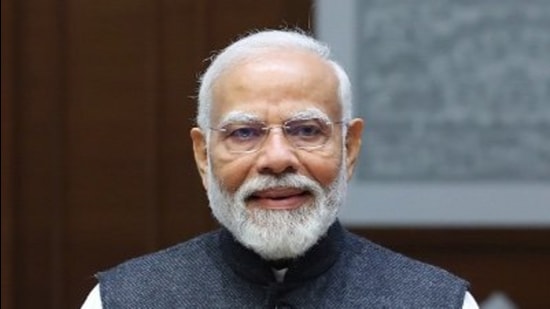
BJP issues whip as Modi seeks support across party lines for women quota rollout| India News
# Modi Pushes Women Quota Rollout Amid Row
On April 12, 2026, the ruling Bharatiya Janata Party (BJP) issued a strict three-line whip to its Members of Parliament, mandating their presence as Prime Minister Narendra Modi seeks cross-party consensus for the immediate rollout of the Women’s Reservation quota. The sudden convening of a special parliamentary sitting in New Delhi to operationalize the 33% legislative reservation has triggered sharp political polarization. Congress President Mallikarjun Kharge vehemently questioned the sudden timing of the session, criticizing the government for bypassing standard parliamentary protocols and failing to take the opposition into confidence. As the government attempts to fast-track this historic democratic reform, the friction sets the stage for a highly contentious legislative showdown.
## The Parliamentary Mandate and Bipartisan Pitch
The issuance of a three-line whip by the BJP is the strongest parliamentary instrument available to a political party in India, effectively compelling its members to be present in the House and vote in accordance with the party line. The whip underscores the critical importance the Modi administration is placing on this special sitting.
According to parliamentary sources, Prime Minister Narendra Modi intends to use this session to formulate a bipartisan framework to operationalize the Nari Shakti Vandan Adhiniyam (Women’s Reservation Act), which was constitutionally passed in late 2023. At the time of its passage, the implementation of the 33% reservation for women in the Lok Sabha and State Legislative Assemblies was tethered to a future delimitation exercise and the publication of the next decennial census.
However, political corridors have been buzzing with the possibility of an accelerated rollout mechanism. The Prime Minister’s appeal for support “across party lines” suggests an awareness of the complex constitutional amendments that might be required to decouple the quota from the delayed delimitation process, allowing for an earlier implementation than the originally projected 2029 timeline.
[Source: Hindustan Times | Additional: Constitutional Law and Parliamentary Records]
## Opposition Backlash: Procedural and Political Concerns
While the principle of women’s reservation enjoys broad rhetorical support across the Indian political spectrum, the mechanics and timing of this special sitting have drawn immense ire from the opposition.
Congress chief Mallikarjun Kharge became the vocal epicenter of this resistance, releasing a statement that questioned the government’s opaque decision-making process. Kharge pointed out that convening a special sitting of Parliament without a prior all-party meeting violates the established democratic ethos of the country.
“The suddenness of this special sitting, convened without taking the opposition into confidence, is deeply problematic,” Kharge noted. His concerns echo a broader anxiety within the opposition INDIA bloc that the ruling dispensation is utilizing a universally sensitive and important issue as a sudden political weapon to catch rival parties off-guard.
The opposition’s primary grievance is not the quota itself—which the Congress party has historically championed since the UPA era—but the lack of transparency regarding *how* the government plans to bypass the delimitation freeze mandated until 2026 under Article 82 of the Constitution.
## Unpacking the Delimitation and Census Roadblock
To understand the current political deadlock, one must examine the legal scaffolding of the Nari Shakti Vandan Adhiniyam. When Parliament cleared the monumental bill in September 2023, Clause 5 of the legislation explicitly stated that the reservation would come into effect only after an exercise of delimitation is undertaken based on the relevant figures of the first census taken after the commencement of the Act.
This clause created a timeline that essentially pushed the actual seating of 33% women legislators to the 2029 general elections, as the 2021 census had been indefinitely delayed due to the COVID-19 pandemic and subsequent administrative hurdles.
If the current special sitting intends to force an immediate rollout, the government must present a legal workaround. Legal scholars suggest two potential avenues:
1. **De-linking Delimitation:** Passing a constitutional amendment to sever the tie between the quota and the delimitation exercise, applying the 33% reservation to the existing 543 Lok Sabha constituencies.
2. **Accelerated Delimitation:** Announcing an expedited census and delimitation process focused solely on establishing women’s constituencies.
Both avenues require extensive constitutional maneuvering and, consequently, a two-thirds majority in Parliament, explaining the BJP’s desperate push for cross-party support and the issuance of the rigid parliamentary whip.
## Demographic Shift: The Rise of the Female Voter
The aggressive push for the quota’s operationalization in 2026 is deeply intertwined with changing electoral demographics in India. Over the last decade, the gender gap in voter turnout has not only closed but inverted in several states. Women are now a decisive, independent voting bloc, often characterized as the “silent voters” who have consistently rewarded governments that deliver targeted welfare schemes (the *Labharthi* class).
**Key factors driving the political urgency:**
* **Turnout Parity:** Female voter turnout surpassed male turnout in the 2019 general elections and has remained robustly high in subsequent state and national polls.
* **Welfare Politics:** Schemes targeting women—ranging from subsidized cooking gas to direct cash transfers—have yielded massive electoral dividends for the ruling party. Fast-tracking the legislative quota is viewed as the ultimate capstone to solidify this demographic’s loyalty.
* **Global Optics:** Enhancing female political representation aligns with India’s projected image on the global stage as a modern, progressive democracy, drastically improving its standing in global gender parity indices.
[Source: Hindustan Times | Additional: Election Commission of India Demographic Data]
## Evolution of Women’s Legislative Quota in India
The journey to female legislative representation has been historically fraught with patriarchal resistance and complex caste-based political calculus. Below is a brief timeline of the struggle:
| Year | Milestone | Outcome |
| :— | :— | :— |
| **1992** | 73rd and 74th Constitutional Amendments | Successfully mandated a 33% quota for women in Panchayati Raj Institutions (local rural and urban bodies). |
| **1996** | First Introduction in Lok Sabha | Bill lapsed due to immense opposition from regional parties demanding sub-quotas for marginalized castes. |
| **2010** | Passage in Rajya Sabha | The UPA government successfully passed the bill in the Upper House, but it was never tabled in the Lok Sabha due to coalition pressures. |
| **2023** | Nari Shakti Vandan Adhiniyam Passed | Historic passage with near-unanimous support in both Houses, but tied to future census and delimitation. |
| **2026** | Special Sitting for Rollout | Current scenario: Government attempts to operationalize the quota ahead of schedule amidst opposition protests over procedure. |
## Regional Party Dynamics and Sub-Quotas
While the Congress questions the procedural timing, regional political heavyweights bring entirely different demands to the table, complicating PM Modi’s quest for cross-party support.
Parties grounded in social justice ideologies—such as the Samajwadi Party (SP) in Uttar Pradesh and the Rashtriya Janata Dal (RJD) in Bihar—have historically demanded a “quota within a quota.” They argue that a blanket 33% reservation for women will disproportionately benefit upper-caste, urban women at the expense of women from Other Backward Classes (OBC) and minority communities.
While the 2023 Act includes reservations for Scheduled Caste (SC) and Scheduled Tribe (ST) women within their existing constitutional quotas, it remains silent on OBC women. If the special sitting attempts a premature rollout without addressing the OBC sub-quota, regional alliances are highly likely to disrupt the parliamentary proceedings, regardless of the BJP’s whip.
## Expert Analysis on Legislative Impact
Political scientists and constitutional experts are closely monitoring the developments, noting that the ramifications of a 2026 rollout would permanently alter the landscape of Indian politics.
“The government’s decision to initiate this rollout now is a high-stakes constitutional gamble,” says Dr. Neerja Rao, a New Delhi-based political scientist and author on gender politics. “If they successfully decouple the reservation from the delimitation process, it is a masterstroke that neutralizes the opposition’s long-standing critique about the delay. However, Mallikarjun Kharge’s procedural objections are legally valid; forcing such a monumental change without an all-party consensus risks judicial review and operational chaos.”
Amitabh Desai, a constitutional lawyer, highlights the logistical nightmare of an immediate rollout. “Allocating which 33% of constituencies will be reserved for women requires a rigorous, non-partisan Delimitation Commission. If the government proposes to do this through an executive or fast-tracked legislative mechanism, it will undoubtedly lead to accusations of gerrymandering and political bias.”
## Conclusion: A Milestone Plagued by Friction
The issuance of the whip by the BJP and PM Modi’s push for cross-party consensus marks a definitive turning point in India’s legislative history. The intent to fast-track the 33% women’s reservation quota is a testament to the undeniable power of the female electorate and the political capital associated with championing women-led development.
However, as Congress chief Mallikarjun Kharge’s sharp pushback illustrates, the path to legislative equity is mired in procedural disputes and mutual distrust. By keeping the opposition out of the initial confidence loop, the administration has ensured that the special sitting will be characterized by intense political theater.
Whether this maneuver results in the historic seating of hundreds of women in the lower house before the decade ends, or dissolves into a prolonged legal and constitutional quagmire over delimitation and sub-quotas, remains to be seen. What is unequivocally clear is that the discourse around women’s political representation in India has shifted from ‘if’ to ‘when’ and, most contentiously, ‘how’.
***
By Vikram Sethi, National Political Desk, 12 April 2026





