
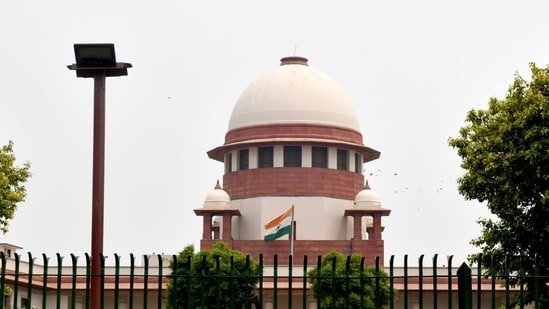
Cabinet approves expansion of Supreme Court strength from 33 to 37 judges to tackle case backlog
# Cabinet Clears Supreme Court Expansion
By Senior Legal Correspondent, Independent News Desk | May 06, 2026
**New Delhi:** In a decisive move to address the nation’s mounting judicial backlog, the Union Cabinet on Wednesday approved a critical proposal to increase the sanctioned strength of the Supreme Court of India from 33 to 37 judges. The decision, officially announced on May 6, 2026, paves the way for the introduction of the Supreme Court (Number of Judges) Amendment Bill, 2026, in the upcoming session of Parliament. This expansion—the first since 2019—aims to expedite case disposals, reduce an alarming pendency rate that has crossed the 80,000 mark, and ensure swifter access to justice for litigants navigating the apex court. [Source: Hindustan Times].
## The Genesis of the Amendment Bill 2026
The Union Cabinet’s clearance of the Supreme Court (Number of Judges) Amendment Bill, 2026, comes after months of deliberation between the Ministry of Law and Justice and the higher judiciary. Under Article 124(1) of the Constitution of India, the power to increase the number of judges in the Supreme Court rests exclusively with Parliament.
Currently, the Supreme Court functions with a sanctioned strength of 34 judges—comprising the Chief Justice of India (CJI) and 33 puisne judges. Once the new amendment is passed by both Houses of Parliament and receives the President’s assent, the total sanctioned strength will rise to 38 (the Chief Justice plus 37 judges).
The proposal was reportedly fast-tracked following a comprehensive internal audit of the Supreme Court’s docket, which highlighted a severe bottleneck in the disposal of constitutional bench matters and special leave petitions (SLPs). By expanding the bench, the Chief Justice will have greater flexibility in constituting multiple five-judge and seven-judge constitution benches without disrupting the daily hearing of regular appellate matters. [Source: Hindustan Times | Additional: Public Legal Records].
## Understanding the Judicial Backlog Crisis
The primary catalyst for this legislative action is the unprecedented backlog of cases burdening India’s highest judicial forum. Despite numerous technological advancements—including the implementation of e-filing, artificial intelligence-assisted translation tools, and hybrid hearing models—the influx of new cases continues to outpace disposal rates.
By early 2026, the pendency at the Supreme Court had breached historical highs. A large portion of this backlog consists of routine appeals from various High Courts, effectively transforming the Supreme Court into a regular court of appeal rather than a specialized constitutional court.
**Supreme Court Case Pendency Trends (2014 – 2026)**
| Year | Approximate Pending Cases | Major Contributing Factors |
| :— | :— | :— |
| **2014** | 62,000 | Rising Special Leave Petitions (SLPs) |
| **2019** | 69,000 | Infrastructure limits, judicial vacancies |
| **2023** | 80,000 | Post-pandemic litigation surge |
| **2026** | 83,000+ | Statutory appeals, complex constitutional queries |
*Note: Data approximates based on National Judicial Data Grid (NJDG) historical trends up to early 2026.*
The addition of four new judges is projected to allow the court to clear an estimated 4,000 to 5,000 additional cases annually, provided that the new vacancies are filled promptly by the Supreme Court Collegium and the Union Government.
## Historical Context of Supreme Court Expansion
The expansion of the Supreme Court is not a novel phenomenon but rather a continuing historical process designed to keep pace with India’s growing population and the corresponding rise in legal disputes.
When the Supreme Court of India was established on January 28, 1950, it began with a modest strength of just eight judges, including the Chief Justice. The framers of the Constitution left it to Parliament to regulate this number as the nation evolved. Over the decades, Parliament has stepped in multiple times to amend the Supreme Court (Number of Judges) Act, 1956:
* **1956:** Increased from 8 to 11
* **1960:** Increased from 11 to 14
* **1978:** Increased from 14 to 18
* **1986:** Increased from 18 to 26
* **2009:** Increased from 26 to 31
* **2019:** Increased from 31 to 34
* **2026 (Proposed):** Increase from 34 to 38
Each of these increments was historically driven by a singular, persistent challenge: the mounting arrears of cases. The 2026 amendment follows exactly seven years after the last expansion, reflecting the rapid growth in litigation stemming from heightened legal awareness, economic expansion, and the proliferation of specialized tribunals whose decisions are frequently appealed to the apex court. [Source: General Legal Knowledge].
## Expert Perspectives on the Cabinet’s Move
The legal fraternity has largely welcomed the Cabinet’s decision, though many experts caution that numerical expansion alone cannot act as a panacea for systemic judicial inefficiencies.
“Increasing the bench strength to 37 judges is a necessary and pragmatic step by the Union Cabinet,” notes Dr. Rajesh Venugopal, a senior legal policy researcher based in New Delhi. “However, the real test lies in the timely appointment of judges. If the collegium and the government engage in protracted standoffs over judicial appointments, these new positions will remain vacant, rendering the amendment functionally useless.”
Senior Advocate Meera Sanyal echoes a similar sentiment, emphasizing the need for procedural reform alongside structural expansion. “Adding four judges will certainly help in forming more division benches. Yet, to truly tackle the 83,000-case backlog, the Supreme Court must stringently regulate its jurisdiction under Article 136. The court must fiercely guard its role as a constitutional court and limit its intervention in mundane appellate matters that should conclude at the High Court level.”
These expert insights highlight a broader consensus within the legal community: while expanding the court’s strength is a welcome administrative measure, it must be coupled with rigorous docket management and self-restraint by the judiciary.
## Beyond Numbers: Infrastructure and Administrative Challenges
An increase in judicial strength inherently demands a proportional upgrade in infrastructure. Currently, the Supreme Court complex in New Delhi operates with highly optimized, yet strained, spatial resources.
The addition of four new judges will necessitate the immediate creation of new courtrooms, specialized chambers, and the hiring of highly trained secretarial and registry staff. Furthermore, it requires adequate residential accommodations for the newly elevated judges in the national capital.
Fortunately, the government and the judiciary have been partially preempting this need. Recent expansions in the Supreme Court’s administrative blocks and the push towards “paperless courts” have freed up physical space. The integration of advanced virtual hearing platforms means that administrative limitations are less rigid than they were a decade ago. Nevertheless, the Ministry of Law and Justice will need to allocate specific budgetary grants in the upcoming fiscal cycle to ensure the seamless onboarding of the expanded bench.
## The Appellate Burden and Structural Reforms
The expansion also reignites the long-standing debate regarding the foundational structure of India’s judicial system and the potential establishment of a National Court of Appeal.
Currently, the Supreme Court is tasked with a dual burden: interpreting the Constitution and acting as the final court of appeal for civil and criminal disputes originating from lower courts. Legal scholars have long argued that this dual role is the root cause of the insurmountable backlog.
While the Supreme Court (Number of Judges) Amendment Bill, 2026, offers immediate relief, it does not address the structural debate. Law Commission reports in the past have suggested dividing the Supreme Court into a specialized Constitutional Bench in Delhi and establishing regional appellate benches (Cassation Courts) in the North, South, East, and West.
Although the current Cabinet decision does not go as far as restructuring the court, legal analysts view the expansion as an interim measure to stabilize the docket while broader, more complex constitutional reforms remain under theoretical consideration.
## Conclusion and Future Outlook
The Union Cabinet’s approval to expand the Supreme Court’s strength from 33 to 37 judges marks a critical milestone in India’s ongoing quest for judicial efficiency. As the Supreme Court (Number of Judges) Amendment Bill, 2026, prepares for its parliamentary debut, it is expected to receive bipartisan support given the universal acknowledgment of the judicial backlog crisis.
**Key Takeaways:**
* **Legislative Action:** The bill will amend the 1956 Act, increasing the maximum number of Supreme Court judges (excluding the CJI) from 33 to 37.
* **Targeting Pendency:** The move is a direct response to a backlog exceeding 80,000 cases, heavily populated by Special Leave Petitions.
* **Infrastructure Demands:** The expansion will trigger an immediate need for proportional upgrades in courtroom infrastructure and registry staffing.
* **Next Steps:** The prompt elevation of qualified High Court Chief Justices and senior advocates by the Collegium will be crucial once the bill becomes law.
Ultimately, while the addition of four judges is a vital administrative remedy, the long-term health of the Indian judiciary relies on a multifaceted approach. Sustained technological integration, rigorous self-regulation regarding case admissions, and the timely filling of vacancies will be the true determinants of whether the class of 2026 can finally turn the tide on India’s judicial backlog.





