
Census 2027 begins: Over 700 officials to conduct door-to-door survey, Delhi areas divided into blocks| India News
# Delhi Begins Census 2027: 700 Staff Deployed
**By Staff Reporter, The National Chronicle** | **April 16, 2026**
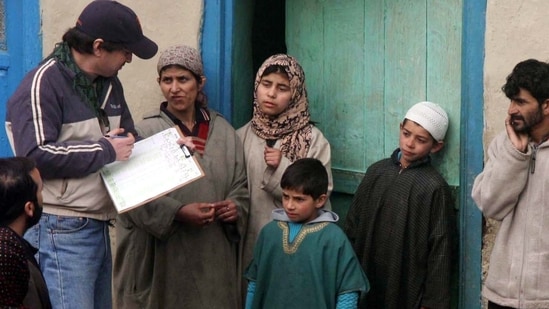
On Thursday, the foundational groundwork for India’s highly anticipated Census 2027 officially commenced in the national capital. Over 700 trained officials have initiated a massive door-to-door house-listing survey across the New Delhi Municipal Council (NDMC) and Delhi Cantonment Board (DCB) jurisdictions. To streamline this colossal demographic exercise, local administrative authorities have systematically divided these critical urban zones into 560 dedicated blocks. With each block carefully mapped to encompass approximately 180 households, this initial phase aims to establish an accurate geographical and structural baseline ahead of the primary population enumeration slated for next year. [Source: Hindustan Times].
## The Strategic Blueprint of the Delhi Survey
The commencement of the house-listing phase marks a critical milestone in India’s decadal demographic assessment. The NDMC and DCB areas, which house some of the nation’s most vital political, diplomatic, and military infrastructures, require meticulous planning. By breaking down these regions into **560 house-listing blocks**, the Office of the Registrar General and Census Commissioner has ensured a highly manageable and targeted approach.
Each block has been capped at around **180 households**. This specific numeric threshold is a calculated administrative decision designed to balance the workload of individual enumerators. It ensures that officials can dedicate adequate time to each household, minimizing data entry errors and preventing enumerator fatigue. The current phase is not yet about counting individuals; rather, it focuses on recording the physical structures, the amenities available to households (such as drinking water sources, electricity, and sanitation facilities), and identifying the head of the household.
This structural mapping provides the essential geographical canvas upon which the actual population enumeration of Census 2027 will be painted. Accurate house-listing guarantees that when the final headcount begins, no residential unit, informal settlement, or commercial building functioning as a dwelling is overlooked. [Additional Source: Office of the Registrar General of India public guidelines].
## Technological Integration in Modern Demographics
Unlike previous iterations of the Indian Census, the 2027 exercise represents a monumental leap toward digitalization. The 700 officials deployed in the NDMC and DCB areas are not relying solely on traditional paper booklets. Instead, they are equipped with secure, government-issued tablets and mobile applications integrated with real-time GPS tracking.
This **digital-first methodology** allows enumerators to log structural data directly into a centralized secure server. The mobile application features built-in validation checks, which immediately flag contradictory data entries—for instance, if a dwelling is marked as having no electricity but reports owning a functional air conditioning unit.
Furthermore, the integration of geospatial technology maps the exact coordinates of each listed house. This prevents duplication, ensures enumerators are physically visiting the assigned locations, and creates a dynamic, layered digital map of the capital’s core districts. The swift synchronization of data reduces the processing time from years to mere months, setting a new benchmark for national statistical operations.
## The Role of the 700 Enumerators
The backbone of this massive bureaucratic endeavor is the cadre of over **700 ground-level officials**. Drawn primarily from government schools, municipal offices, and local administrative bodies, these enumerators have undergone rigorous, multi-tiered training over the past three months.
Their training covered the nuances of operating the digital census application, understanding the revised legal definitions of a “household” versus a “dwelling unit,” and mastering interpersonal communication to handle hesitant or uncooperative residents.
“Our primary focus during this house-listing phase is comprehensive coverage. We are mapping everything from independent bungalows in Lutyens’ Delhi to staff quarters in the cantonment,” stated a senior nodal officer overseeing the NDMC jurisdiction. “The 180-household limit per block allows our officers to be thorough, ensuring absolute accuracy in recording vital civic amenities.”
To support these officials, a network of supervisory officers has been established. For every six to eight enumerators, a supervisor is tasked with conducting random field verifications to uphold the integrity of the data collected.
## Historical Context: A Delayed Decadal Exercise
The significance of today’s launch cannot be overstated, given the prolonged delay of the national census. Originally scheduled for 2021, the decadal census—a tradition India has maintained unbroken since 1881—was postponed indefinitely due to the unforeseen global disruption of the COVID-19 pandemic.
The subsequent years saw further delays due to logistical restructuring and the transition to a fully digital platform. The launch of the house-listing phase in 2026 for **Census 2027** finally breaks the statistical drought.
**Timeline of the Census Restructuring:**
* **2020:** Initial house-listing for Census 2021 halted due to pandemic lockdowns.
* **2022-2024:** Development and beta-testing of the new digital census portal and mobile applications.
* **Late 2025:** Finalization of the revised geographic boundaries and administrative blocks.
* **April 2026:** Commencement of the Phase 1 House-listing survey in pilot districts, including New Delhi’s NDMC and DCB areas.
* **February – March 2027:** Scheduled Phase 2 (Population Enumeration) nationwide.
## Expert Perspectives on Data and Governance
The absence of fresh demographic data over the last 15 years has posed severe challenges for economic planners, sociologists, and policymakers. Government schemes ranging from the Public Distribution System (PDS) to urban housing initiatives have been operating on extrapolated projections based on the 2011 Census.
Dr. Ananya Rao, a senior demographer and public policy analyst based in New Delhi, emphasizes the urgency of the current exercise. “The commencement of Census 2027’s groundwork is a monumental relief for the policy sector,” Dr. Rao explains. “India’s urban landscape, particularly in metropolitan areas like Delhi, has transformed dramatically since 2011. Migration patterns, household sizes, and access to digital amenities have fundamentally shifted. We cannot effectively target welfare schemes or plan urban infrastructure for a 2026 reality using 2011 data.”
The house-listing phase will yield critical insights into the living standards of citizens. By cataloging the materials used for roofs and walls, the primary source of lighting, and access to latrines, the government will generate a multi-dimensional poverty index that is highly localized.
## Urban Challenges in New Delhi’s Core
While mapping 560 blocks might seem mathematically straightforward, the ground reality of the NDMC and DCB zones presents unique urban challenges.
The **NDMC area** encompasses Lutyens’ Delhi, home to the Parliament, central ministries, foreign embassies, and residences of high-ranking government officials. Gaining access to these highly secure, gated compounds requires specialized security clearances and coordinated appointments, slowing down the traditional door-to-door approach.
Conversely, the **Delhi Cantonment Board (DCB)** area features a complex mix of restricted military zones and dense civilian pockets. Enumerators operating here must navigate stringent Ministry of Defence protocols. Additionally, identifying and classifying floating populations, temporary service staff quarters, and multi-family structures within single compounds requires acute attention to detail.
To mitigate these hurdles, local authorities have launched extensive civic awareness campaigns. Resident Welfare Associations (RWAs) have been briefed to facilitate smooth entry for credentialed census officials, ensuring that privacy concerns are addressed and the legal mandate of the census is clearly communicated.
## Implications for National Policy and Future Planning
The successful completion of the house-listing phase in New Delhi will serve as a crucial barometer for the rest of the country. As the 700 officials refine their digital data collection methods, the lessons learned will help iron out technical glitches before the exercise scales up to cover India’s vast rural hinterlands and mega-cities.
Beyond immediate urban planning, the data generated from Census 2027 carries profound political and economic implications.
**1. Delimitation of Constituencies:** The upcoming population figures will be the bedrock for the deeply debated delimitation exercise, which will redraw the boundaries of parliamentary and assembly constituencies. Accurate demographic representation is vital for the equitable distribution of political power.
**2. Welfare Re-calibration:** The data will allow the central and state governments to recalibrate the beneficiaries of the National Food Security Act (NFSA). Millions of eligible citizens who were previously excluded due to outdated 2011 population caps will finally be integrated into the social safety net.
**3. Infrastructure Development:** Post-pandemic realities, including the rise of remote work, have altered power and water consumption patterns in urban centers. The amenity data collected now will dictate the flow of municipal funding for the next decade, ensuring that utility upgrades are directed where they are most critically needed.
## Conclusion and Future Outlook
The deployment of over 700 officials across the NDMC and DCB areas to map 560 specialized blocks is much more than a bureaucratic routine; it is the awakening of India’s statistical apparatus. By meticulously logging the details of roughly 100,000 households in these central Delhi zones, the government is laying a robust, digitized foundation for Census 2027.
As enumerators knock on doors over the coming weeks, their digital tablets will capture the evolving story of the nation’s capital. With cooperation from citizens and the seamless functioning of new geospatial technologies, this initial phase promises to usher in an era of data-driven governance, ultimately ensuring that India’s policies are precisely aligned with the realities of its people.





