
Intersection between India’s democracy and demography| India News
# India’s Democracy & Demography Clash
In April 2026, India faces a defining constitutional crisis as the decades-old freeze on parliamentary seat distribution finally expires. Originally intended to be dynamic, the allocation of Lok Sabha seats has remained static since 1976. Now, the looming delimitation process threatens to fracture the nation along a sharp North-South demographic divide. Southern states, having successfully managed their populations, fear severe political marginalization, while Northern states rightfully demand equitable representation based on their surging demographics. How the Union government navigates this volatile collision between federal fairness and democratic proportionality will reshape India’s legislative landscape for generations to come.
## The Constitutional Mandate and the Historic Freeze
When the framers of the Indian Constitution drafted **Article 81**, they enshrined a fundamental democratic principle: proportionality. The state-wise distribution of seats in Parliament was not meant to be cast in stone when the Constitution was adopted. It was designed to be recalibrated after every decadal census to ensure that the ratio of citizens to parliamentary representatives remained broadly uniform across the country.
However, this democratic ideal collided with developmental policy in the 1970s. During the Emergency, the **42nd Amendment Act of 1976** froze the allocation of seats based on the 1971 Census. The rationale was clear: states aggressively implementing the national family planning program should not be penalized with a reduction in their parliamentary representation compared to states that failed to control their population growth.
This freeze was meant to last until the year 2000. Yet, as the new millennium dawned, the demographic disparities between the North and the South had only widened. To avoid a political rupture, the **84th Amendment Act of 2001** extended the freeze for another 25 years, explicitly stating that seat allocation would only be adjusted based on the first census published after the year 2026. As the calendar now hits this crucial deadline, the political can has reached the end of the road.
## The Approaching Demographic Divide
India’s demographic transition has been profoundly asymmetrical. Over the last fifty years, Southern states—primarily Kerala, Tamil Nadu, Andhra Pradesh, Telangana, and Karnataka—invested heavily in female education, healthcare infrastructure, and family planning. Consequently, their Total Fertility Rates (TFR) plummeted below the replacement level of 2.1 decades ago.
Conversely, the densely populated Hindi heartland states, particularly Uttar Pradesh, Bihar, Rajasthan, and Madhya Pradesh, experienced much slower demographic transitions. While their TFRs are declining today, the sheer momentum of their massive populations has resulted in explosive growth since 1971.
| Region / State | 1971 Population Share | Estimated 2026 Population Share | Current TFR (Approx) |
| :— | :— | :— | :— |
| **Uttar Pradesh & Bihar** | 25.5% | 30.2% | 2.4 – 2.9 |
| **Southern States (Combined)** | 24.8% | 19.5% | 1.5 – 1.7 |
| **Maharashtra & Gujarat** | 14.1% | 15.0% | 1.7 – 1.9 |
*Data representation based on demographic projections leading up to 2026.*
If delimitation is carried out purely on current population figures, the political center of gravity will shift drastically northward. Projections suggest that Uttar Pradesh and Bihar could collectively gain dozens of seats, while the Southern states could face an absolute reduction in their parliamentary footprint.
## The Penalty for Progress: Southern States’ Dilemma
For India’s southern peninsula, the impending delimitation feels like a betrayal of the federal compact. Regional leaders argue that they are facing a “penalty for progress.” Having aligned with the central government’s socio-economic goals to stabilize the national population, they now risk losing their voice in the national legislature.
“The bedrock of federalism is mutual trust. If states that outperformed the national average in human development indices are rewarded with political marginalization, it shatters that trust,” explains Dr. Hariharan Swaminathan, a senior political analyst based in Chennai. “We are looking at a scenario where the states that contribute disproportionately to the national GDP and tax revenues will find themselves systematically outvoted in the Lok Sabha on critical national policies.”
This anxiety is not just political; it is deeply economic. Southern states already express dissatisfaction with the devolution of funds by successive Finance Commissions, arguing that their tax contributions heavily subsidize the development of the northern states. A loss of political representation would essentially leave them with taxation but diluted representation, a historically volatile combination in any democracy.
## The Northern Perspective: One Person, One Vote
However, preserving the status quo is increasingly untenable from a democratic and constitutional standpoint. The essence of a representative democracy is captured in the principle of “one person, one vote, one value.”
Currently, the electoral value of an Indian citizen varies wildly depending on their geography. An MP from Rajasthan represents nearly 3 million citizens, whereas an MP from Kerala represents roughly 1.8 million. For voters in the Hindi belt, the freezing of seats is a severe democratic disenfranchisement.
“Democracy cannot permanently suspend equal representation under the guise of demographic management,” notes constitutional lawyer Anjali Sharma in New Delhi. “The Constitution did not foresee an indefinite suspension of Article 81. The citizens of Uttar Pradesh and Bihar are legally entitled to their rightful share of representation. You cannot tell a young voter in Patna that their democratic voice matters less simply because of state-level fertility rates that occurred before they were even born.”
For policymakers in New Delhi, this is the crux of the crisis. To deny the North its seats is to mock the democratic principle of equal representation; to grant them is to risk a severe federal rupture with the South.
## Expanding the House: The 888-Seat Solution
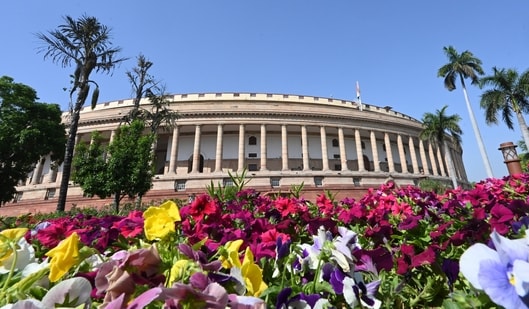
The central government has not been blind to this impending collision. The inauguration of the **new Parliament building in 2023** offered a physical manifestation of a potential solution. The new Lok Sabha chamber was built with a seating capacity of 888 members, significantly larger than the current strength of 543.
Political strategists anticipate that the government’s primary mechanism to soften the delimitation blow will be to expand the total number of seats in the Lok Sabha. By increasing the size of the pie, the absolute number of seats held by Southern states could be preserved or slightly increased, even as Northern states receive a massive influx of new seats to match their populations.
While this prevents an absolute loss of seats for the South, it does not solve the problem of *proportional* power. Even in an expanded house, the percentage of voting power held by the Southern block would still diminish considerably. Furthermore, managing an 888-member legislative body introduces logistical and procedural complexities that could further dilute meaningful parliamentary debate.
## Alternative Models for Federal Harmony
As 2026 progresses, constitutional scholars are proposing various hybrid models to balance democracy with federalism. Some of the leading propositions include:
* **Bicameral Rebalancing:** Empowering the Rajya Sabha (Upper House) to act as a true federal counterweight. Currently, Rajya Sabha seats are also allocated by population. A constitutional amendment could alter this to provide equal representation to all states, akin to the United States Senate, giving Southern states a veto mechanism against majoritarian regional policies.
* **The Devolution Compromise:** Tying delimitation to a new fiscal pact. If the South is to concede political power in the Lok Sabha, the Constitution could be amended to guarantee a higher, fixed proportion of tax revenues returning to the states that generated them, protecting their economic autonomy.
* **Weighted Demography:** Adjusting the delimitation formula so that population acts as only one variable. Giving constitutional weightage to demographic transition milestones, geographic area, and ecological conservation could blunt the sharpest edges of the North-South seat shift.
## Conclusion: A Test of National Unity
The intersection of India’s democracy and demography has evolved from an academic debate into an imminent policy challenge. As the 2026 timeline initiates the mechanisms for delimitation, the Indian state is faced with a profound test of its federal elasticity.
The original intent of the Constitution—that parliamentary seats should dynamically reflect the populace—must eventually be honored to maintain the legitimacy of the electoral process. However, enforcing this mandate in a vacuum, without acknowledging the immense sacrifices and developmental successes of the Southern states, could fracture national unity.
The resolution to this crisis will require unparalleled political statesmanship, bipartisan consensus, and likely, a complex constitutional amendment. India must find an innovative formula that upholds the fundamental democratic right of every citizen to an equal voice, while concurrently protecting the federal rights of states that have successfully charted the nation’s path toward sustainable development.
***
**Citations:**
* [Source: Hindustan Times – Original RSS Snippet “Intersection between India’s democracy and demography”](https://www.hindustantimes.com/india-news/intersection-between-india-s-democracy-and-demography-101776307454611.html)
* [Additional Source: Constitutional framework based on Articles 81, 82, and the 42nd & 84th Constitutional Amendment Acts of India]
* [Additional Source: National Family Health Survey (NFHS-5) Demographic Trends]
*By Senior Political Editor, Democratic Observer, April 16, 2026*





