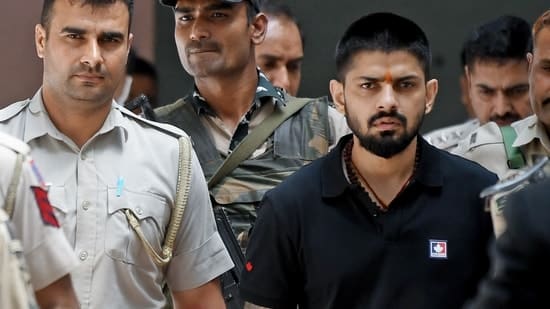
Centre asks ZEE5 to halt ‘Lawrence of Punjab’ release over concerns of glorifying Lawrence Bishnoi| India News
# Centre Halts ZEE5 Lawrence Bishnoi Series
By Senior Correspondent, India News Desk, April 25, 2026.
New Delhi: In a decisive move to curb the romanticization of organized crime on digital platforms, the Central Government has officially asked the streaming giant ZEE5 to halt the release of its upcoming original series, ‘Lawrence of Punjab.’ Issued on Saturday, the Ministry of Information and Broadcasting’s advisory cited severe concerns over the potential glorification of incarcerated gangster Lawrence Bishnoi. The directive mandates that all over-the-top (OTT) platforms must exercise “due caution and discretion” when producing documentaries or biopics based on high-profile criminals. This intervention has sparked a renewed national debate regarding content regulation, public order, and creative freedom in India’s booming streaming industry. [Source: Hindustan Times]
## Anatomy of the Centre’s Advisory
The official advisory issued by the Ministry of Information and Broadcasting (MIB) represents a significant escalation in the government’s oversight of digital streaming platforms. According to the directive, streaming platforms must carefully evaluate the societal impact of their content, particularly when it centers on individuals currently involved in the criminal justice system. The government noted that portraying living criminals in a cinematic format—often complete with stylized dramatic re-enactments, gripping background scores, and charismatic lead actors—risks elevating them to the status of anti-heroes.
The Centre’s communication emphasized that while creative expression is a fundamental right, digital platforms must exercise “due caution and discretion” while producing biopics or documentaries on criminals. The advisory subtly warned that failing to adhere to these self-regulatory principles could result in stricter actions under the Information Technology (Intermediary Guidelines and Digital Media Ethics Code) Rules, 2021. The primary concern is that such portrayals could disrupt public order and inadvertently serve as a recruitment tool for criminal syndicates. [Source: Hindustan Times | Additional: Ministry of Information and Broadcasting Guidelines, Public Domain]
## The Lawrence Bishnoi Context
To understand the gravity of the Centre’s intervention, one must examine the subject of the halted series. Lawrence Bishnoi is currently one of India’s most notorious incarcerated figures. Despite being lodged in high-security prisons for several years, his alleged criminal syndicate has been repeatedly linked by law enforcement agencies to a string of high-profile extortions, transnational criminal networks, and targeted assassinations—most notably the tragic 2022 killing of Punjabi musician Sidhu Moose Wala.
The state’s apprehension stems from Bishnoi’s already alarming cult following on social media. Various unverified social media accounts continually post updates, stylized videos, and sympathetic narratives about him, attempting to paint the syndicate leader as a modern-day vigilante. Law enforcement agencies in Punjab, Haryana, and Delhi have frequently cited the “Bishnoi phenomenon” as a dangerous catalyst for youth radicalization into gang violence. In this volatile context, a mainstream OTT platform releasing a high-budget series titled ‘Lawrence of Punjab’ was viewed by authorities as a potential match thrown into a powder keg. [Source: Public Police Records and National Security Analyses up to 2026]
## True Crime, Ethics, and the OTT Boom
The exponential growth of the true-crime genre in India’s digital streaming ecosystem has created a complex paradigm for both creators and regulators. Over the past five years, audiences have consumed thousands of hours of investigative docu-series, dramatized biopics, and gritty crime thrillers. Platforms like ZEE5, Netflix, and Amazon Prime Video have found immense commercial success by tapping into the public’s fascination with the dark underbelly of society.
However, the commercial success of this genre frequently intersects with sensitive legal and moral boundaries. “The line between documenting crime for public awareness and idolizing the criminal for viewership is notoriously thin,” explains Dr. Ananya Sharma, a media sociologist and professor at a prominent New Delhi university. “When platforms invest millions of rupees into production, the narrative inherently adopts cinematic tropes. The criminal subject becomes the protagonist. For a young, impressionable viewer, the distinction between a cautionary tale and an aspirational lifestyle becomes entirely blurred.”
The controversy surrounding ‘Lawrence of Punjab’ highlights a critical ethical dilemma for streaming giants: How does a platform responsibly document active, living subjects whose alleged criminal enterprises continue to challenge state law enforcement? When the artistic endeavor collides directly with public policy and national security, the debate shifts from creative freedom to corporate responsibility.
## Legal Perspectives and the Free Speech Debate
The Centre’s directive has inevitably triggered a robust debate within legal and entertainment circles regarding Article 19(1)(a) of the Indian Constitution, which guarantees the freedom of speech and expression. Critics of the advisory argue that halting a series before its release amounts to pre-censorship.
“There is a legitimate argument to be made about public order, but blanket advisories that halt content prior to public viewing challenge the foundational principles of creative liberty,” notes Vikramaditya Singh, a media rights advocate. “The IT Rules of 2021 established a three-tier grievance redressal mechanism specifically to handle these issues post-publication. Bypassing this to issue a direct halt advisory sets a concerning precedent for future biographical projects.”
Conversely, proponents of the government’s move argue that freedom of expression is not absolute and is subject to reasonable restrictions under Article 19(2), specifically concerning public order and the incitement to an offense. Given the active nature of the Bishnoi syndicate and the documented real-world violence associated with it, legal experts leaning towards the state’s perspective argue that preemptive caution is not just justified, but legally necessary to prevent the incitement of youth. [Source: Constitutional Law Framework | Additional: IT Rules 2021 Public Framework]
## Societal Repercussions: The Threat of Gang Glamorization
The socio-psychological angle of the Centre’s advisory cannot be overstated. In recent years, northern Indian states have witnessed a disturbing trend of gang glamorization. Music videos, social media reels, and localized pop culture have occasionally romanticized the “gun culture” and the outlaw lifestyle. Law enforcement agencies have repeatedly raised alarms about teenagers from affluent and marginalized backgrounds alike being lured into criminal networks by the promise of infamy and power.
The MIB’s advisory aligns closely with ongoing efforts by state police departments to scrub social media of accounts that glorify gangsters. If a major, globally accessible OTT platform were to release a high-quality production centered on Bishnoi, authorities fear it would effectively legitimize his status. It would transform a subject of national security concern into a pop-culture icon, thereby severely undermining the efforts of the police and the judiciary to demystify and dismantle such syndicates.
## ZEE5’s Position and Industry Implications
As of the current reporting, ZEE5 has not issued a combative public rebuttal. Industry insiders suggest that the streaming platform is likely conducting an extensive internal legal review of the series. Standard corporate protocol in such instances involves pausing all promotional activities, withdrawing trailers, and consulting with external legal counsel and government liaisons to determine if re-editing the content could satisfy the MIB’s concerns, or if the project must be shelved entirely.
The ripple effects of this advisory are already being felt across the wider Indian entertainment industry. Writers’ rooms and production houses are reportedly reassessing their slates of true-crime documentaries and biopics.
“This is going to create a palpable chilling effect on the true-crime genre in India,” remarked an anonymous Mumbai-based OTT content strategist. “Moving forward, any pitch involving a contemporary, living criminal will likely be rejected by legal compliance teams before it even reaches the scripting stage. Platforms will pivot heavily toward historical crimes, closed cases, or purely fictional thrillers to avoid regulatory friction.”
## Conclusion: A Precarious Balancing Act
The Centre’s directive to halt ‘Lawrence of Punjab’ serves as a definitive watershed moment for India’s digital streaming sector. It underscores a fundamental clash between the lucrative, audience-driven demand for true-crime narratives and the state’s imperative to maintain public order and prevent the lionization of criminal figures.
**Key Takeaways:**
* **Preemptive Regulatory Action:** The government is increasingly willing to intervene before content is published if it perceives a direct threat to public order or societal well-being.
* **Shift in Content Strategy:** OTT platforms operating in India will need to implement far more stringent internal vetting processes, particularly regarding projects based on active, contemporary criminal cases.
* **The Burden of Responsibility:** The incident highlights the growing consensus that digital platforms hold a profound socio-cultural responsibility, requiring them to balance profit-driven storytelling with ethical considerations.
As the lines between digital entertainment, social media influence, and real-world law enforcement continue to blur, the resolution of the ‘Lawrence of Punjab’ controversy will likely set the definitive legal and creative boundaries for India’s streaming industry for years to come. Whether this leads to more responsible filmmaking or an era of excessive self-censorship remains the critical question facing creators and audiences alike.