PM Modi best representative of Sangh, says RSS gen secy Dattatreya Hosabale| India News
# Modi Best Envoy of RSS Values: Hosabale
**By Senior Correspondent, National Politics Desk, April 25, 2026**
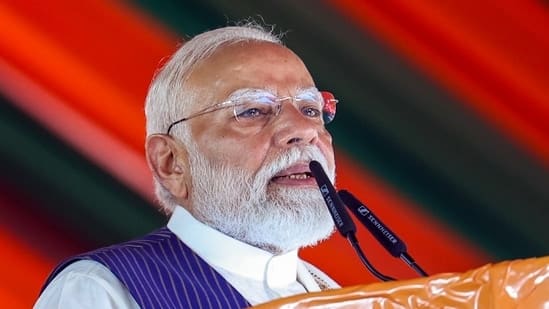
On Saturday, Rashtriya Swayamsevak Sangh (RSS) General Secretary Dattatreya Hosabale unequivocally praised Prime Minister Narendra Modi, describing him as the “best representative” of the Sangh’s core values. Speaking at a crucial juncture following the RSS’s historic centenary celebrations, Hosabale emphasized that PM Modi propagates the organization’s ethos in highly innovative and unique ways through his national governance model. This public endorsement, reported widely in New Delhi on April 25, 2026, reaffirms the unbreakable ideological synergy between the ruling Bharatiya Janata Party (BJP) and its foundational parent organization, signaling deep structural unity as India navigates its complex future political landscape. [Source: Hindustan Times].
## The Core of Hosabale’s Endorsement
The statements made by Dattatreya Hosabale, who serves as the Sarkaryavah (General Secretary) and is second-in-command only to Sarsanghchalak Mohan Bhagwat, carry immense political and structural weight. Hosabale noted that Prime Minister Modi does not merely pay lip service to the Sangh’s ideology of cultural nationalism and social upliftment; rather, he operationalizes these philosophies into sweeping national policies.
“PM Modi propagates RSS values in unique ways. He is the best representative of the Sangh,” Hosabale remarked, highlighting how the Prime Minister has successfully bridged the gap between grassroots ideological work and the complexities of modern statecraft. [Source: Hindustan Times].
This statement is particularly significant because the RSS is traditionally meticulous in maintaining a nominal distance from direct day-to-day partisan politics, preferring to act as a moral and ideological compass for the BJP. By openly declaring the Prime Minister as the ultimate envoy of its values, the RSS leadership has essentially validated the current administration’s trajectory as the purest political manifestation of its century-old vision.
## From Pracharak to Premier: A Lifelong Synergy
To understand the depth of Hosabale’s commentary, one must examine Prime Minister Modi’s formative years. Long before he became the Chief Minister of Gujarat or the Prime Minister of India, Modi was a dedicated *pracharak* (full-time worker) for the RSS.
His journey began in the localized *shakhas* (branches) of Gujarat, where he absorbed the Sangh’s foundational tenets: *Shakha* discipline, *Hindutva* (cultural nationalism), and *Antyodaya* (the upliftment of the last person in the line). The rigorous training, extensive travel across the country, and grassroots organizing he undertook during his decades as a *pracharak* deeply informed his worldview.
According to political observers, this is exactly what Hosabale referenced when speaking of “unique ways.” Modi has not abandoned his roots upon reaching the zenith of political power; instead, he has utilized the vast machinery of the Indian state to amplify the very values he championed as a young volunteer. [Additional Source: Public Historical Archives].
## Translating Ideology into State Policy
The assertion that PM Modi represents the RSS’s ethos is most visible in the policy landscape of the last decade. Several core ideological demands of the RSS, which languished as mere electoral promises for decades, have been systematically realized under Modi’s leadership. Key examples include:
* **Abrogation of Article 370:** The integration of Jammu and Kashmir was a foundational goal for the RSS since the days of Syama Prasad Mookerjee. The Modi government’s decisive action in August 2019 fulfilled this historic mandate.
* **Cultural Renaissance:** The consecration of the Ram Mandir in Ayodhya, the development of the Kashi Vishwanath Corridor, and the Mahakal Lok project reflect the Sangh’s desire to decolonize Indian public spaces and restore civilizational pride.
* **New Education Policy (NEP):** The introduction of an education system that emphasizes vernacular languages, Indian knowledge systems, and value-based learning aligns perfectly with the RSS-affiliated Shiksha Mandal’s long-standing demands.
* **Welfare as Antyodaya:** Massive social welfare schemes—ranging from free grain distribution to housing and sanitation projects—are framed not just as economic policy, but as the realization of Deendayal Upadhyaya’s philosophy of Integral Humanism.
By successfully implementing these policies without derailing the broader economic engine of the country, Modi has demonstrated to the RSS leadership that civilizational goals and modern governance are not mutually exclusive.
## The Post-Centenary RSS Vision (1925-2025)
Context is critical in analyzing Hosabale’s statements. The RSS officially completed its centenary in 2025, marking 100 years since its founding by Dr. K.B. Hedgewar in Nagpur. As the organization steps into its second century, it is actively attempting to shed outdated perceptions and present itself as a modern, inclusive, and globally relevant force.
In this context, PM Modi serves as the perfect bridge. He provides the Sangh with a contemporary face. While the RSS has historically focused on *Samajik Samarasata* (social harmony) to bridge caste divides, Modi’s electoral strategies have successfully united diverse demographic groups under a broad developmental and cultural umbrella. Hosabale’s praise acknowledges that Modi’s political success has fundamentally expanded the RSS’s social footprint, bringing its ideology into households that previously had no contact with the organization.
## Globalizing the Civilizational State
Another layer to Hosabale’s assertion of Modi’s “unique ways” is the globalization of the RSS worldview. Traditionally a domestically focused organization, the RSS has watched approvingly as the Modi administration projects India as a *Vishwa Mitra* (global friend) and a civilizational state on the world stage.
From successfully advocating for the International Day of Yoga at the United Nations to integrating Ayurveda into global health discussions, and leveraging the massive Indian diaspora as cultural ambassadors, the Prime Minister has taken the localized ethos of the RSS and projected it globally. This soft-power diplomacy ensures that the Sangh’s vision of India as a culturally assertive, self-reliant global power (*Atmanirbhar Bharat*) is recognized internationally.
## Expert Analysis on the Nagpur-Delhi Axis
Political analysts view Hosabale’s statement as a strategic reaffirmation of the symbiotic relationship between Nagpur (the RSS headquarters) and New Delhi.
“Dattatreya Hosabale’s comments act as a unifying clarion call for the expansive Sangh Parivar cadre,” notes Dr. Meenakshi Ramanathan, a senior political analyst and author on Indian socio-political movements. “Occasionally, policy compromises required in coalition or national politics create minor frictions between the hardline ideological base and the government. By emphatically backing the Prime Minister, the RSS top brass is sending a clear message down the ranks: Modi’s path is the Sangh’s path.”
Rajesh Kulkarni, a researcher specializing in right-wing political structures in South Asia, adds: “What makes Modi the ‘best representative’ in the eyes of the RSS is his unapologetic ownership of his ideological roots. Unlike previous leaders who sometimes felt the need to downplay their RSS connections to appear centrist, Modi has shifted the center of Indian politics toward the RSS ideology.” [Additional Source: Expert Commentary].
## Future Political Implications for the BJP
The timing of this endorsement in April 2026 carries significant weight for the BJP’s internal dynamics and its future electoral battles. As India progresses through a heavy election cycle, the seamless coordination between the RSS and the BJP is critical. The RSS provides the silent, meticulous ground-level mobilization—often referred to as the “boots on the ground”—that is vital for voter turnout.
Hosabale’s public commendation ensures that the millions of *swayamsevaks* (volunteers) across the country remain highly motivated and aligned with the government’s objectives. It also quashes any speculative reports of a rift or ideological divergence between the BJP’s political imperatives and the RSS’s cultural mandates.
Furthermore, as the party eventually contemplates long-term leadership transitions in the distant future, Hosabale has effectively set the benchmark. Any future leadership within the BJP will be measured against the “Modi standard”—the ability to seamlessly blend hardcore ideological commitment with mass electoral appeal and global statesmanship.
## Conclusion
Dattatreya Hosabale’s characterization of Prime Minister Narendra Modi as the best representative of the RSS is more than just political praise; it is a historic validation of a governance model that has successfully mainstreamed a once-marginalized ideology. By asserting that Modi propagates the Sangh’s values in “unique ways,” the RSS leadership acknowledges that the rigid, traditional methods of ideological dissemination have evolved into sophisticated, state-led initiatives under Modi’s stewardship.
As India moves forward in 2026, the ideological bond between the RSS and the BJP appears more robust than ever. The implications are clear: the overarching vision of the RSS will continue to serve as the bedrock of India’s domestic and foreign policy, guided by a Prime Minister whom the parent organization views not just as a political leader, but as the ultimate ambassador of its civilizational mission.