
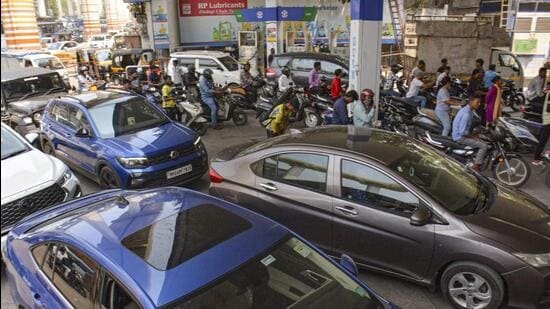
Centre weighs fuel price hikes, WFH mandates
# India Weighs Fuel Hikes & 50% WFH Rule
**By Rohan Desai, Economic Affairs Correspondent, May 12, 2026**
The Government of India is actively considering a stringent set of demand-compression measures—including steep hikes in the retail prices of petrol and diesel alongside a mandatory 50% work-from-home (WFH) policy for corporate organizations. Driven by an urgent need to curb surging domestic fuel consumption amidst a volatile global energy landscape, these proposed directives aim to alleviate mounting pressure on the nation’s import bill and foreign exchange reserves. As of Tuesday, May 12, 2026, high-level discussions within the petroleum and corporate affairs ministries suggest that these drastic interventions may be rolled out in a phased manner if global crude prices continue their relentless upward trajectory.
## Global Energy Pressures Force Domestic Rethink
India, which imports over 85% of its crude oil requirements, has found itself uniquely vulnerable to the macroeconomic shocks of early 2026. Prolonged supply chain bottlenecks, compounded by deep production cuts by OPEC+ and escalating geopolitical frictions in key oil-producing regions, have kept Brent crude prices hovering at uncomfortable premiums throughout the first quarter of the year.
The Centre’s strategy to consider fuel price hikes is not primarily aimed at revenue generation, but rather at “demand destruction”—an economic concept where making a commodity significantly more expensive forces consumers to alter their behavior and use less of it. Currently, India’s daily fuel consumption has hit record highs, driven by a robust post-pandemic economic expansion and a surge in personal vehicle usage.
According to reports citing government insiders, raising the pump prices of petrol and diesel would serve as a primary deterrent to non-essential travel. [Source: Hindustan Times | Additional: Ministry of Petroleum and Natural Gas Data, 2026]. If implemented, Oil Marketing Companies (OMCs) like Indian Oil Corporation (IOCL), Bharat Petroleum (BPCL), and Hindustan Petroleum (HPCL) could be permitted to pass the accumulated under-recoveries directly to the retail consumer, effectively ending the prolonged period of price freezes.
## The 50% Work-From-Home Directive
Perhaps the most disruptive proposal on the Centre’s drawing board is the mandate for organizations to implement a 50% work-from-home model. Unlike the WFH mandates of 2020 and 2021, which were driven by public health emergencies and pandemic containment, the 2026 proposal is entirely rooted in energy conservation and economic prudence.
The draft proposal reportedly suggests that private and public sector organizations with a workforce exceeding a certain threshold (likely 100 employees) would be required to keep half of their staff off the roads on any given workday. This measure directly targets the urban commuting crisis. In major metropolitan hubs like Bengaluru, Mumbai, Delhi-NCR, and Pune, peak-hour traffic significantly exacerbates fuel guzzling due to prolonged idling and congestion.
By keeping 50% of the workforce at home, the government estimates a potential reduction in urban vehicular fuel consumption by up to 20-25%. Furthermore, this would decrease the energy load required to power massive corporate tech parks and commercial real estate complexes, providing secondary relief to the national power grid ahead of the peak summer months.
## Corporate Sector Prepares for Disruption
The reaction from Corporate India to the rumored 50% WFH mandate has been a mix of cautious acceptance and logistical anxiety. While the IT and ITeS (Information Technology Enabled Services) sectors have largely institutionalized hybrid work models over the past five years, a rigid government mandate poses new compliance challenges.
For manufacturing, retail, and healthcare sectors, implementing a strict 50% WFH policy is functionally impossible. Government sources indicate that these essential sectors, along with emergency services and logistics, would receive blanket exemptions. However, for the millions employed in finance, tech, consulting, and administrative roles, a return to the home office could become legally binding.
“We have operated on a 3-day-in-office model since 2024, which already affords us a degree of flexibility,” noted Manish Chawla, a fictional Senior Director of Human Resources at a leading multinational tech firm in Hyderabad. “However, a rigid 50% daily cap means we must completely overhaul our rostering algorithms, rethink our leased real estate footprints, and re-evaluate our employee transport budgets. While we understand the macroeconomic necessity, the transition requires clear, unambiguous guidelines from the Centre.” [Source: Industry Analysis, May 2026].
## Economic and Inflationary Pressures
While the proposed measures aim to stabilize India’s trade deficit by curbing crude imports, they carry significant inflationary risks. Diesel is the lifeblood of the Indian economy, powering the transport trucks that move agricultural produce, FMCG goods, and industrial raw materials across the subcontinent.
If diesel prices are hiked significantly, the cascading effect on freight rates will be immediate. This, in turn, threatens to push up the Wholesale Price Index (WPI) and the Consumer Price Index (CPI).
**Projected Impacts of Fuel Price Hikes:**
* **Logistics & Freight:** Estimated 8-12% increase in interstate transport costs.
* **FMCG Sector:** Potential 3-5% rise in retail prices of daily consumer goods due to higher distribution costs.
* **Aviation:** Sustained high Aviation Turbine Fuel (ATF) prices leading to increased passenger ticket fares.
* **Agriculture:** Higher input costs for mechanized farming, tractors, and diesel-powered irrigation pumps.
The Reserve Bank of India (RBI), which has fought a bitter battle to keep retail inflation within its 4% (±2%) tolerance band, will be watching these developments closely. A sudden spike in pump prices could force the central bank to maintain a hawkish monetary policy stance, delaying any anticipated interest rate cuts and thereby affecting the broader credit market.
## Environmental Byproducts of Demand Reduction
While the primary catalyst for these proposed measures is economic, the environmental implications are profoundly positive. India’s major cities consistently rank among the most polluted globally, with vehicular emissions constituting a massive percentage of urban particulate matter (PM 2.5 and PM 10).
A 50% reduction in white-collar commuter traffic would dramatically slash tailpipe emissions. Environmentalists point to the clear skies witnessed during the 2020 lockdowns as evidence of how rapidly urban air quality can improve when traffic is halved. Furthermore, a reduction in traffic congestion improves fuel efficiency for the vehicles that remain on the road, creating a compounding positive effect on overall fuel consumption and air quality.
The move also aligns, albeit inadvertently, with India’s long-term COP26 commitments to reduce the emissions intensity of its GDP. By forcing a behavioral shift toward remote work and penalizing unnecessary combustion engine usage, the government could accelerate the societal transition necessary for a greener economy.
## Industry Experts Weigh In
Economists and policy analysts are deeply divided on the efficacy of using price hikes and WFH mandates as blunt instruments for macroeconomic management.
Dr. Arundhati Sen, a senior energy economist based in New Delhi, views the strategy as a necessary evil. “India cannot afford to burn through its foreign exchange reserves to subsidize urban traffic jams,” Sen explains. “When global crude crosses a certain threshold, the domestic consumer must feel the pinch. Artificial price suppression only leads to fiscal disaster. The WFH mandate is an innovative, non-fiscal tool to suppress demand without entirely halting economic output.” [Source: Independent Economic Commentary, 2026].
Conversely, retail sector analysts worry about the dampening effect on urban consumption. “A 50% WFH mandate doesn’t just save fuel; it kills footfall in malls, restaurants, and local urban markets,” argues Vikram Desai, a retail strategy consultant. “The micro-economies that survive on corporate office workers—from cafeteria vendors to auto-rickshaw drivers—will face severe income shocks. The government must balance macro-energy savings against micro-level livelihood losses.”
## Conclusion: A Delicate Balancing Act
As the Centre deliberates on these consequential measures, the coming weeks will be critical for the Indian economy. The twin strategy of raising fuel prices and enforcing a 50% work-from-home mandate represents a bold, unorthodox approach to navigating a global energy crisis. [Source: Hindustan Times].
**Key Takeaways:**
1. **Energy Security Over Convenience:** The government is prioritizing fiscal stability and forex conservation over consumer convenience and political popularity.
2. **Corporate Paradigm Shift:** A legislated WFH mandate would shift the narrative of remote work from an employee perk to a national economic imperative.
3. **Inflationary Tightrope:** Policymakers will have to carefully manage the inevitable inflationary spikes in essential goods resulting from higher diesel costs.
Looking ahead, if the government officially rolls out these mandates, the success of the initiative will hinge on clear communication, targeted exemptions for essential sectors, and the agility of corporate India to adapt overnight. Whether these measures will serve as a temporary band-aid or catalyze a permanent shift in how India works and commutes remains to be seen. What is certain, however, is that the era of cheap, unrestricted fossil fuel consumption in the world’s most populous nation is facing its most severe stress test yet.





