
Chandy Oommen blames SIR for ‘loss of around 10,000 votes’| India News
# Oommen Claims SIR Flaws Cost Him 10K Votes
By Senior Political Correspondent, The National Desk | April 10, 2026
Sitting Member of Legislative Assembly (MLA) from Puthuppally, Chandy Oommen, has leveled serious allegations against the electoral administration, claiming that critical flaws in the systematic voter revision process cost him approximately 10,000 votes in the latest assembly elections. Speaking to reporters on Friday shortly after polling concluded, the Congress leader expressed profound disappointment, stating that thousands of his core supporters arrived at their designated polling booths only to discover their names had been inexplicably struck from the electoral rolls. Oommen blamed the Systematic Identification and Removal (SIR) mechanism for the mass deletions. This development has sparked a fierce debate regarding electoral transparency and administrative accountability in Kerala’s fiercely contested political landscape. [Source: Hindustan Times].
## The Core of the Disenfranchisement Allegations
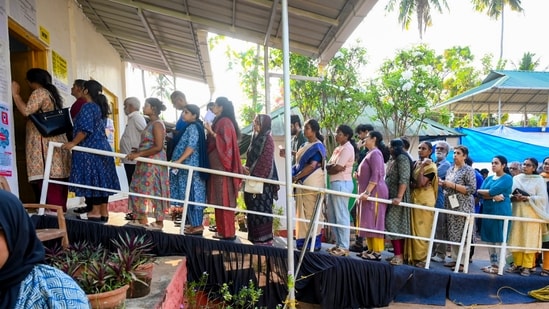
The issue came to light as voting progressed across the Puthuppally constituency, a region historically known for its high voter turnout and intense political engagement. Throughout the day, reports began trickling in of voters being turned away by presiding officers because their names did not appear on the finalized polling station lists.
According to Oommen, the scale of the discrepancy is alarmingly high. He noted that many constituents personally reached out to him and his campaign managers, expressing their frustration. “Many people told me they wanted to vote for me, but upon reaching polling booths, found their names missing,” Oommen stated, articulating the widespread distress among the electorate. [Source: Hindustan Times].
The sudden disenfranchisement of long-time residents—many of whom possessed valid Voter ID cards and had cast ballots in the 2023 by-election without any hurdles—has raised urgent questions about the methodology used to update the 2026 electoral rolls. Oommen estimates that this administrative failure has alienated up to 10,000 voters, a figure large enough to heavily sway electoral margins in a densely populated assembly segment.
## Understanding the ‘SIR’ Controversy and Electoral Roll Revision
At the heart of Oommen’s grievance is the SIR process—often referring to the Systematic Identification and Removal protocols utilized during the Election Commission’s Special Summary Revision (SSR). In an effort to maintain “purified” electoral rolls, election authorities deploy data analytics and algorithmic software to identify demographic shifts, duplicate entries, deceased voters, and individuals who have relocated.
However, the aggressive implementation of these deduplication and roll-cleaning protocols frequently leads to false positives. When software flags a voter for potential removal, local Booth Level Officers (BLOs) are mandated to conduct physical verification before striking the name via Form 7.
“What we are witnessing in Puthuppally appears to be a systemic failure of the physical verification mandate,” explains Dr. Meena Warrier, an independent election observer based in Thiruvananthapuram. “If algorithms flag 15,000 names for verification and the local administration simply rubber-stamps the deletions without field visits, you get mass disenfranchisement. The technology meant to safeguard the vote ends up suppressing it.” [Source: Additional Expert Commentary].
## The High Stakes in the Puthuppally Bastion
To understand the gravity of Oommen’s claims, one must look at the historical and emotional weight of the Puthuppally constituency. For over half a century (53 years), the seat was an impenetrable fortress for the late Oommen Chandy, a towering figure in Kerala politics and a two-time Chief Minister. Following his demise, his son Chandy Oommen contested the 2023 by-election, securing a massive victory with a record-breaking margin of over 37,000 votes.
The 2026 assembly election marks Chandy Oommen’s first regular electoral test. Transitioning from a sympathy-driven by-election to a standard political battle requires consolidating every possible vote. If the United Democratic Front (UDF) candidate has indeed lost 10,000 guaranteed votes to administrative errors, it represents a substantial 25% erosion of his previous winning margin.
For the rival Left Democratic Front (LDF) and the National Democratic Alliance (NDA), Puthuppally remains a high-value target. While Oommen’s victory is widely anticipated given his family’s deep-rooted connection to the constituency, a drastically reduced margin could be weaponized by political opponents as a sign of waning influence.
## Electoral Data: A Closer Look at Puthuppally’s Demographics
Evaluating the potential impact of 10,000 missing votes requires a breakdown of Puthuppally’s standard electoral demographics. During the previous election cycle, the constituency demonstrated robust voter engagement.
**Table: Puthuppally Constituency Electoral Snapshot (Approximate Base)**
| Metric | Voter Count / Percentage |
| :— | :— |
| **Total Registered Voters** | ~1,76,000 |
| **Male Voters** | ~86,500 |
| **Female Voters** | ~89,500 |
| **Average Voter Turnout** | 72% – 75% |
| **Estimated Deletions (Claimed)** | 10,000 |
| **Impact on Total Electorate** | ~5.6% of Registered Voters |
*Note: Data represents historical baseline metrics for the Puthuppally assembly segment prior to the 2026 revisions.* [Source: General State Election Commission Data Guidelines].
Losing nearly 5.6% of the total registered voter base to unexpected deletions is a statistical anomaly that warrants immediate investigation. If clustered in specific polling booths known to lean heavily toward the Indian National Congress (INC), this could indicate either targeted political mischief or concentrated administrative negligence.
## Responses from Political Opponents and Authorities
Oommen’s assertions have inevitably triggered reactions across the political spectrum. Leaders from the ruling CPI(M)-led LDF have cautiously distanced themselves from the controversy, pointing out that the preparation of electoral rolls falls squarely under the jurisdiction of the independent Election Commission.
Some political detractors have suggested that Oommen might be laying the groundwork for a lower-than-expected victory margin. “When a candidate senses that the ground reality does not match the hype, blaming the EVMs or the voter list is a standard defense mechanism,” remarked a local LDF campaign manager, requesting anonymity.
However, reports of missing names were not exclusive to Congress supporters. Scattered complaints from various parts of Kottayam district indicate that the roll revision process may have been broadly flawed, affecting voters across party lines. Former State Election Commission official T. R. Balakrishnan notes, “The issue of missing voters is an administrative failure, not a partisan conspiracy. The software used to weed out dead or relocated voters lacks the nuanced understanding of local geography, leading to the collateral damage of genuine voters.”
## The Psychological Impact of Voter Disenfranchisement
Beyond the mathematics of the election, the emotional and psychological toll on the disenfranchised voters cannot be overstated. Kerala boasts one of the most politically aware electorates in India. Citizens view voting not merely as a right, but as a deeply ingrained civic duty.
When a voter takes the time to travel to a booth, stand in the sweltering April heat, and is subsequently turned away by the presiding officer holding a red-lined register, it breaches the social contract between the state and the citizen. The frustration expressed by Oommen on behalf of his constituents reflects a broader disillusionment with the digitisation of public services when human oversight is removed from the equation.
“It is heartbreaking to see elderly voters, who have voted in this exact booth for forty years, being told they no longer exist in the system,” Oommen expressed to local media channels earlier in the day. This sentiment resonates deeply in a constituency that values its traditional, personal connection to its elected representatives.
## Navigating the Grievance Redressal Mechanism
The immediate question facing the Election Commission is how to address such massive discrepancies post-polling. Under current electoral laws, once the polling has concluded, retroactive voting for those wrongly deleted is not permissible. The finality of the electoral roll, published weeks before the election date, is legally binding.
Election authorities continually urge citizens to verify their names on the voter portal well in advance of polling day. Campaigns like the Systematic Voters’ Education and Electoral Participation (SVEEP) are designed specifically to encourage voters to check their status. However, reliance on digital literacy in rural and semi-urban pockets remains a challenge. Many legacy voters assume their presence on the list is permanent, only discovering the deletions at the 11th hour.
To prevent future occurrences, electoral reform advocates are pushing for a stricter audit trail for Form 7 deletions. Proposals include mandatory SMS or postal notifications to voters whose names are slated for removal, giving them a statutory 30-day window to contest the deletion before the local Electoral Registration Officer (ERO).
## Looking Ahead: The Counting and Future Outlook
As the EVMs are sealed and transported to strong rooms, the true impact of the alleged 10,000 missing votes remains to be seen. If the contest in Puthuppally yields a sweeping victory for Chandy Oommen, the grievance may be relegated to an administrative footnote. However, if the margins are uncomfortably tight, the Congress party is likely to escalate the issue, demanding a comprehensive audit of the district’s electoral roll management system.
The incident serves as a critical warning for election administrators nationwide. As India increasingly relies on data integration and software algorithms to manage its colossal electorate of nearly one billion people, the human element of verification must not be bypassed. The integrity of the democratic process hinges not just on the counting of votes, but on ensuring that every eligible citizen is granted the opportunity to cast one.
For Chandy Oommen and the people of Puthuppally, the wait for the final tally begins, heavily shadowed by the reality that thousands of voices were silenced before the voting machines were even turned on.





