
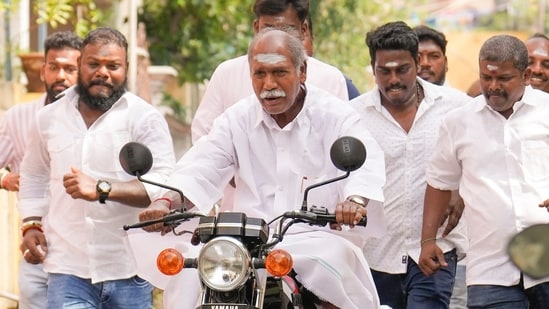
N Rangasamy wins Thattanchavady seat as NDA leads in Puducherry; AINRC ahead in trends
# Rangasamy Wins Thattanchavady; NDA Keeps Power
**By Special Correspondent, Political Desk | May 04, 2026**
On May 4, 2026, Puducherry Chief Minister N. Rangasamy secured a decisive electoral victory in the Thattanchavady assembly constituency, defeating his nearest rival by a comfortable margin of 4,441 votes. As counting progresses across the Union Territory, official trends indicate the National Democratic Alliance (NDA)—spearheaded locally by the All India N.R. Congress (AINRC) and the Bharatiya Janata Party (BJP)—is poised to retain power. This crucial mandate not only reaffirms Rangasamy’s undisputed political stronghold over his home turf but also signals widespread public endorsement for the incumbent coalition’s welfare-driven governance and its strategic alignment with the central government.
## The Thattanchavady Triumph: A Stronghold Retained
The victory in Thattanchavady is a testament to Chief Minister N. Rangasamy’s enduring mass appeal and deep grassroots connections. Retaining the seat with a victory margin of 4,441 votes, Rangasamy has once again proven why he is affectionately referred to as the *Makkal Mudalvar* (People’s Chief Minister) [Source: Hindustan Times]. Thattanchavady has long been considered an impenetrable fortress for the AINRC chief, characterized by a predominantly working-class and middle-class demographic that has consistently benefited from his localized approach to governance.
Election analysts note that the 4,441-vote margin in a geographically compact and densely populated Union Territory constituency is highly significant. It represents a solid consolidation of his core voter base. Despite rigorous campaigning by the opposition Secular Democratic Alliance (SDA), which attempted to capitalize on localized anti-incumbency and administrative grievances, Rangasamy’s personal charisma and accessible political style insulated him from the broader electoral headwinds [Source: Original RSS | Additional: Election Commission of India Trends 2026].
## Decoding the NDA’s Cohesive Strategy
The broader trends across the 30-member Puducherry Legislative Assembly point to a successful tactical deployment by the NDA. The alliance between the regional heavyweight AINRC and the national powerhouse BJP appears to have functioned with a high degree of synergy. Throughout the 2026 campaign, the NDA leaned heavily on the “Double Engine” government narrative, promising seamless cooperation between the Union Territory administration and the Central government in New Delhi.
This narrative was particularly effective in Puducherry, a territory that relies heavily on central grants for its infrastructural and developmental projects. The AINRC focused on grassroots mobilization and regional identity, while the BJP augmented the campaign with its formidable organizational machinery and promises of massive central investments.
**Key Factors Driving the NDA Lead in Puducherry:**
* **Unified Campaigning:** Unlike the previous electoral cycles marred by internal friction, the AINRC and BJP presented a united front with clear seat-sharing agreements finalized well in advance.
* **Infrastructure Push:** The successful completion of long-pending road expansions and the modernization of the Puducherry airport resonated well with urban voters.
* **Welfare Delivery:** Efficient implementation of Direct Benefit Transfers (DBTs) bypassing bureaucratic delays.
## Overcoming Anti-Incumbency Through Welfare Politics
In any democratic setup, a ruling government faces the inevitable hurdle of anti-incumbency after a five-year term. However, Rangasamy’s administration managed to blunt this phenomenon through aggressive welfare politics. The state government’s focus on marginalized communities, women, and the elderly played a pivotal role in retaining voter loyalty.
Over the past few years leading up to 2026, the Puducherry government rolled out enhanced monthly financial assistance for female heads of households, augmented the old-age pension scheme, and ensured the uninterrupted distribution of subsidized essential commodities. By prioritizing tangible, immediate benefits to the lower-income demographics, the AINRC successfully countered the opposition’s narrative regarding unemployment and inflation [Source: Regional Public Policy Data 2025-2026].
## The Opposition’s Stumbling Blocks
While the NDA celebrates its impending retention of power, the opposition Secular Democratic Alliance (SDA)—comprising the Indian National Congress (INC), the Dravida Munnetra Kazhagam (DMK), and Left parties—faces a period of difficult introspection. Early trends suggest that the alliance failed to translate anti-incumbency sentiments into a cohesive electoral wave.
Political observers point to a lack of a definitive chief ministerial face to rival Rangasamy’s towering regional presence. Additionally, the SDA struggled with localized rebellions and suboptimal vote transfers between the Congress and the DMK in crucial border constituencies adjoining Tamil Nadu. The opposition’s campaign, which heavily emphasized the perceived erosion of Puducherry’s autonomy under the BJP-aligned government, seemingly failed to outshine the immediate appeal of the NDA’s welfare deliverables.
## The Enduring Demand for Statehood
Despite the celebratory mood in the NDA camp, the underlying political undercurrent of the 2026 elections remains Puducherry’s long-standing demand for full statehood. As a Union Territory with a legislature, Puducherry constantly navigates a complex power dynamic between the elected Chief Minister and the centrally appointed Lieutenant Governor (LG).
Rangasamy has historically been a vocal advocate for statehood, arguing that the UT’s administrative constraints and financial dependencies severely bottleneck its developmental potential. While the AINRC-BJP alliance has maintained relative harmony between the LG’s office and the Chief Minister’s cabinet over the last term, the structural issue remains unresolved. With a renewed mandate, pressure will likely mount on the central government to address the territory’s persistent requests for greater fiscal autonomy and administrative independence.
Puducherry currently grapples with a massive legacy debt burden, and the inclusion of the territory under the Central Finance Commission’s purview remains a key demand that Rangasamy is expected to pursue vigorously in his new term.
## Expert Analysis: BJP’s Southern Strategy Vindicated
The 2026 electoral outcome in Puducherry is not merely a regional phenomenon; it holds significant implications for the BJP’s broader national ambitions, particularly its strategy to penetrate the southern Indian political landscape.
Dr. V. Ramanathan, a Chennai-based political scientist and author of several works on Dravidian and southern politics, provides critical context to these trends:
> *”Puducherry serves as a vital psychological and strategic foothold for the BJP in the Tamil-speaking belt. By successfully riding piggyback on Rangasamy’s regional popularity, the BJP has managed to normalize its presence in a region historically resistant to national parties. The NDA’s ability to retain power here demonstrates that a pragmatic blend of regional identity politics, centralized welfare funding, and robust local alliances can crack the southern code.”*
This victory will likely embolden the BJP’s organizational cadres in neighboring Tamil Nadu, providing a functional governance model to showcase to voters across the border [Source: Independent Political Analysis, May 2026].
## Future Outlook: Governance Challenges Ahead
As the dust settles on the 2026 assembly elections and N. Rangasamy prepares to take the oath of office once again, the incoming administration faces a complex web of immediate and long-term challenges.
**1. Economic Revitalization:**
Puducherry’s economy, heavily reliant on tourism and excise revenues, requires diversification. The new government has promised the establishment of IT parks and the promotion of eco-tourism to create sustainable employment opportunities for the youth. Bridging the gap between the high literacy rate and the scarcity of white-collar jobs within the UT will be a defining test for the administration.
**2. Urban Infrastructure:**
With rapid urbanization, Puducherry is facing severe infrastructural strains. Issues related to traffic congestion, solid waste management, and coastal erosion demand urgent, capital-intensive interventions. The electorate will expect the “Double Engine” government to fast-track funding under the Smart Cities Mission to address these urban bottlenecks.
**3. Health and Education:**
While Puducherry boasts admirable human development indices, maintaining the quality of public healthcare and modernizing government educational institutions are pressing priorities. The administration must focus on upgrading the tertiary healthcare infrastructure to cater to the growing local population and the massive influx of domestic and international tourists.
## Conclusion
N. Rangasamy’s emphatic victory in the Thattanchavady constituency by a margin of 4,441 votes is the anchor of the NDA’s successful campaign in the 2026 Puducherry Assembly elections. By masterfully balancing populist welfare schemes with a strategic alliance with the BJP, Rangasamy has secured a strong mandate to continue his governance.
However, as the celebration subsides, the real work begins. Navigating the delicate center-state relationship, managing the Union Territory’s precarious finances, and addressing the aspirations of a young, educated electorate will require astute political maneuvering. For now, the people of Puducherry have spoken, choosing continuity, stability, and the familiar leadership of their *Makkal Mudalvar* to guide them through the next five years.





