
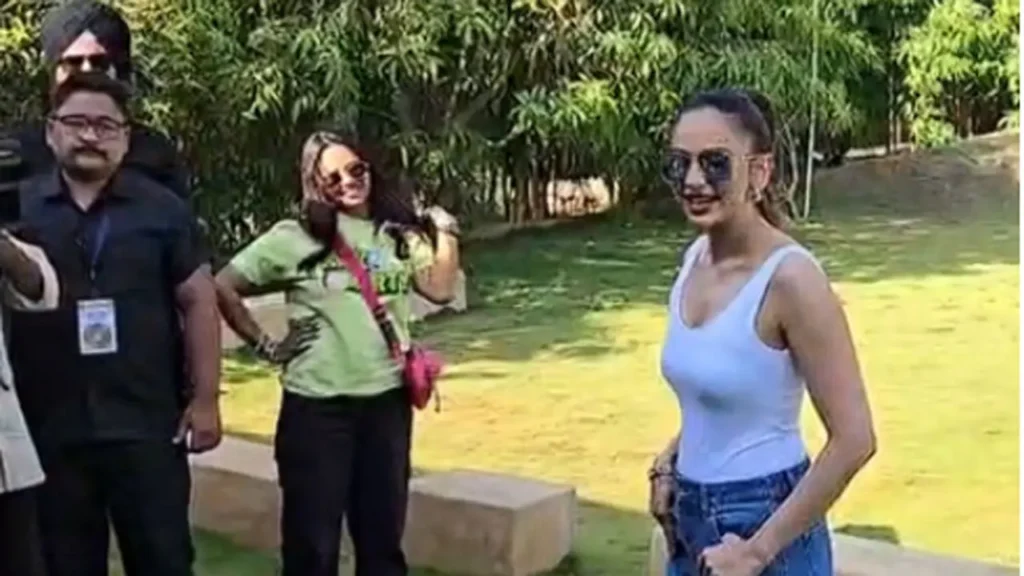
Gir Forest offers clarification after Rakul Preet Singh walks in restricted area
Rakul Preet Singh Gir National Park Video Clarification Settles Public Concern
A recent social media ripple turned into a wave of public discussion following the viral circulation of a video featuring actress Rakul Preet Singh near Gir National Park. The clip, which showed the popular personality in a vehicle amidst what appeared to be a natural, wild setting, quickly sparked concerns among wildlife enthusiasts and the general public about potential breaches of the park’s strict entry regulations. However, swift action and clear communication from the Gir Forest Department have now put the speculation to rest, affirming that no rules were violated.
The incident underscores the growing public vigilance towards wildlife conservation and the rapid spread of information—and sometimes, misinformation—in the digital age. As Omni 360 News diligently reports on stories that resonate with local communities and broader environmental concerns, this particular event serves as a crucial reminder of how vital accurate reporting and official clarifications are in preventing unnecessary alarm.
The Viral Clip and Initial Public Reaction
The video in question depicted Rakul Preet Singh in what looked like an open-top safari vehicle, often associated with wildlife tours, with lush greenery and a seemingly untamed environment in the background. Without immediate context, many viewers naturally assumed the actress was deep within the protected zones of Gir National Park, a renowned sanctuary for the Asiatic lion and a beacon of biodiversity in Gujarat.
The assumption triggered an immediate online discourse. Questions arose about VIP access, whether standard protocols for tourists were bypassed, and if the visit was conducted in areas designated as restricted to protect the fragile ecosystem and its inhabitants. Social media platforms buzzed with calls for investigation and adherence to environmental guidelines, reflecting a genuine concern for the preservation of India’s natural heritage. These concerns, while rooted in a commendable protective instinct for wildlife, were based on an incomplete understanding of the geographical context.
Gir Forest Department’s Prompt Clarification
Understanding the potential for misunderstanding and the importance of maintaining public trust in conservation efforts, the Gir Forest Department issued a timely and unambiguous clarification. Local forest officials, after reviewing the video and cross-referencing visitor logs and entry points, confirmed that the footage was indeed captured outside the legally designated restricted perimeter of Gir National Park.
According to statements released by department spokespersons, the area where the video was shot falls within the buffer zone or is part of the public roads and peripheral regions that adjoin the national park. These areas, while often exhibiting natural landscapes and sometimes even glimpses of wildlife, are not subject to the same stringent access controls as the core forest areas or the official safari routes within the park. Tourists and local residents frequently traverse these regions.
Forest officials elaborated that the visual cues in the video, such as the type of foliage or the specific road, were consistent with locations outside the critical wildlife habitat. They emphasized that all visitors, including celebrities, are expected to adhere to the established rules and regulations when entering the designated tourism zones within the park itself. The department’s clarity ensured that the integrity of their conservation efforts was upheld and public concerns were adequately addressed.
Understanding Park Boundaries and Buffer Zones
This incident brings to light an important distinction many people might not be fully aware of: the difference between a national park’s core protected area, its buffer zones, and the surrounding public lands. National parks and wildlife sanctuaries are meticulously demarcated, with core zones strictly regulated to minimize human disturbance to wildlife. Entry into these areas typically requires permits, guides, and adherence to specific routes and timings.
Buffer zones, on the other hand, are transitional areas surrounding the core. They serve to absorb some of the human activities and pressures that might otherwise directly impact the core habitat. While still important for conservation, the regulations in buffer zones might be less restrictive than in the core. Furthermore, many public roads, villages, and private lands exist in the vicinity of national parks. It is entirely possible to capture footage that appears “wild” while still being outside any restricted forest land. The location where Rakul Preet Singh’s video was filmed likely falls into one of these categories, explaining why no regulations were infringed upon.
A Timely Lesson in Digital Age Reporting and Verification
The episode serves as a significant case study for both media literacy and the responsibilities of public figures. In an era where images and videos can go viral within minutes, the initial narrative can often overshadow subsequent clarifications. For news outlets like Omni 360 News, the commitment to factual reporting and seeking official statements before drawing conclusions is paramount. The swift response from the Gir Forest Department prevented a prolonged period of speculation and potential damage to the actress’s reputation or public trust in the park’s management. It also reinforced the idea that while public scrutiny is valuable for accountability, it must be balanced with verified information.
This event also highlights the need for greater public education about wildlife conservation zones. Clear signage, readily available information, and campaigns explaining the different classifications of forest land can help prevent similar misunderstandings in the future.
Key Takeaways
* A video of Rakul Preet Singh near Gir National Park caused public concern about potential rule violations.
* The Gir Forest Department quickly clarified that the video was shot outside the park’s restricted core area, likely in a buffer zone or on a public road.
* No rules or regulations were violated regarding entry into protected zones.
* The incident underscores the importance of understanding national park boundaries and the difference between core, buffer, and peripheral areas.
* It highlights the need for immediate official clarification in the age of viral social media to prevent misinformation.
In conclusion, the situation surrounding Rakul Preet Singh’s video near Gir National Park has been definitively resolved. The incident, while initially sparking concern, ultimately served to educate the public on the distinctions of protected areas and reaffirmed the vigilance of forest authorities. It also stands as a testament to the power of official communication in clarifying facts amidst widespread digital discussion, a principle Omni 360 News consistently upholds.







