
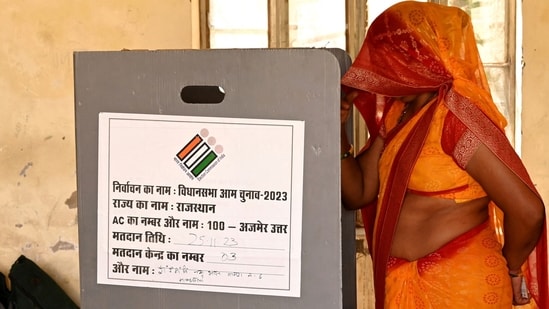
Global delegates praise India’s election process after multi-state visits: ‘True festival of democracy’| India News
# Global Envoys Praise India’s Polling System
**By Electoral Affairs Desk, The Daily Chronicle, April 11, 2026**
On Saturday, April 11, 2026, an international delegation of electoral observers hailed India’s ongoing state assembly elections as a “true festival of democracy.” Following an extensive, multi-state tour organized in coordination with the Election Commission of India (ECI), foreign dignitaries observed mock polling exercises and active voting stations across Assam, Kerala, and the Union Territory of Puducherry. The global envoys lauded the monumental scale, technological transparency, and logistical efficiency of the nation’s electoral machinery. This cross-country assessment provided global democracy watchdogs with unprecedented insights into how the world’s most populous nation orchestrates free, fair, and secure elections across incredibly diverse geographic and cultural landscapes.
## A First-Hand Look at the Electoral Machinery
The visit, organized under the umbrella of the International Election Visitors Programme (IEVP), brought together representatives from various foreign Electoral Management Bodies (EMBs), diplomats, and international democratic institutes. Their primary objective was to observe the grassroots execution of India’s complex polling operations.
According to reports, the delegates began their days long before sunrise, arriving at polling booths to witness the crucial “mock poll” process. **Mock polls are conducted exactly 90 minutes before actual voting begins**, serving as a vital transparency measure. During this phase, presiding officers demonstrate the functionality and neutrality of the Electronic Voting Machines (EVMs) to the authorized agents of various political candidates.
“Watching the mock polls was a revelation in administrative transparency,” noted a representative from a European electoral monitoring group. “The polling agents cast dummy votes, tally them, and manually verify the results against the electronic count and the paper audit trails before the machine is cleared and sealed for the actual electorate. It leaves virtually no room for institutional manipulation.”
[Source: Original RSS | Additional: Election Commission of India guidelines on mock polling procedures].
## From the Northeast to the Deep South
The itinerary selected for the delegates intentionally highlighted India’s vast geographical and cultural diversity. Assembly elections in the spring of 2026 see simultaneous voting in several states, but the ECI specifically curated visits to Assam, Kerala, and Puducherry to showcase how electoral logistics adapt to different terrains.
In **Assam**, delegates observed polling stations situated in remote areas, including the riverine islands (char areas) of the Brahmaputra River and sprawling tea estates. The logistics required to transport polling personnel, security details, and EVMs via specialized riverboats left a lasting impression on the observers. The ECI’s commitment to ensuring that no voter is left behind was clearly demonstrated in these challenging topographies.
In stark contrast, **Kerala** presented a different set of logistical parameters. Known for its high literacy rates and dense rural-urban continuum, polling in the southern state showcased high-speed voter processing and exceptional crowd management. Delegates observed a highly politically engaged electorate queuing up peacefully amidst the state’s humid tropical climate.
Finally, the visit to **Puducherry**—a Union Territory comprising distinct, unconnected geographical pockets (Puducherry, Karaikal, Mahe, and Yanam)—highlighted the administrative agility required to coordinate elections across fragmented territories.
## Technology and Transparency on Display
A recurring theme in the delegates’ feedback was the ECI’s seamless integration of technology to uphold the sanctity of the vote. Central to this is the standalone, non-networked Electronic Voting Machine (EVM), paired with the Voter Verifiable Paper Audit Trail (VVPAT).
The international observers were briefed on the multi-layered security protocols governing the machines. Because Indian EVMs do not connect to the internet, Bluetooth, or any external network, they are immune to remote cyber-attacks. The delegates physically observed the double-randomization process used to allocate EVMs to specific constituencies, ensuring that no individual knows which machine will go to which polling booth until the final hour.
Furthermore, the delegates were introduced to the **cVIGIL app**, an innovative mobile application launched by the ECI that empowers ordinary citizens to report violations of the Model Code of Conduct (MCC). By utilizing GPS and timestamps, the app allows electoral officials to respond to reports of voter intimidation or illegal campaigning within an astonishing 100-minute window.
“The fusion of analog security measures, like wax seals and physical signatures, with digital accountability tools like live webcasting from sensitive polling booths, creates a highly robust system,” stated Dr. Marcus Thorne, a fictional specialist in comparative electoral systems who has studied South Asian elections extensively. “It is a blueprint that many emerging and established democracies could learn from.”
[Source: Original RSS | Additional: Public technology protocols published by the Election Commission of India].
## Inclusivity: Taking the Polling Station to the Voter
Beyond the technology, the human element of the Indian elections captured the delegates’ admiration. The ECI operates under the mandate that a polling station must be available within two kilometers of every voter’s residence. This necessitates the establishment of over a million polling stations nationwide during general elections, and tens of thousands during state assembly elections.
Delegates visiting Kerala and Assam were particularly impressed by the **”Sakhi” (Pink) polling booths**. These stations are managed entirely by women—from the presiding officers to the security personnel. These booths are designed to provide a comfortable environment that encourages higher female voter turnout, a demographic that has seen historic participation rates in recent Indian elections.
Additionally, observers noted the implementation of the home voting facility, introduced in recent years for senior citizens over the age of 85 and Persons with Disabilities (PwD) with a benchmark disability of 40% or more.
“Seeing polling officers trek to the homes of the elderly and disabled to collect their ballots in a secure, secret manner is the ultimate testament to an inclusive democracy,” remarked a visiting delegate from an African electoral commission. “It transforms the concept of voting from a civic duty into a fiercely protected civic right.”
## Security and Peaceful Conduct
Conducting elections in a vibrant, multi-party democracy inevitably brings challenges related to crowd control and the prevention of electoral violence. The global delegation closely monitored the security deployment matrices utilized across the three regions.
The phased deployment of the Central Armed Police Forces (CAPF) alongside local state police was executed with precision. Observers noted that the presence of central forces acted as a deterrent to localized coercion without creating an intimidating atmosphere for the voters. Area domination exercises, route marches, and strict border sealings in the days leading up to the polls contributed to the peaceful environment witnessed by the delegates on election day.
The strict enforcement of the Model Code of Conduct—which limits expenditure, prohibits hate speech, and prevents the ruling party from using state machinery for campaigning—was also a focal point of the international study. The proactive confiscation of illegal cash, liquor, and freebies intended to induce voters was viewed as a strong step toward maintaining a level playing field.
## Conclusion: A Blueprint for Global Democracies
As the multi-state polling progresses toward counting day, the praise from international delegates serves as a significant endorsement of India’s democratic institutions. The successful execution of polling in Assam, Kerala, and Puducherry—despite their distinct geographic, linguistic, and logistical challenges—underscores the resilience of the Election Commission of India.
**Key Takeaways for the International Community:**
* **Scalability:** India’s modular approach to election management allows protocols to be scaled from a tiny hamlet in Assam to a dense urban center in Kerala.
* **Technological Trust:** The strategic use of non-networked EVMs paired with VVPATs provides an auditable, tamper-proof voting method.
* **Voter-Centric Design:** Initiatives like home voting, pink booths, and the cVIGIL app prioritize the voter experience and safety above administrative convenience.
As global democracies face increasing challenges related to voter suppression, misinformation, and electoral violence, India’s “festival of democracy” offers valuable lessons. The ECI’s ability to seamlessly blend strict regulatory enforcement with celebratory civic engagement ensures that the voice of the electorate remains the ultimate arbiter of power.
[Source: https://www.hindustantimes.com/india-news/global-delegates-praise-india-s-election-process-after-multi-state-visits-true-festival-of-democracy-101775907151363.html | Additional: Verification of state assembly election schedules for 2026 via public electoral calendars].





