
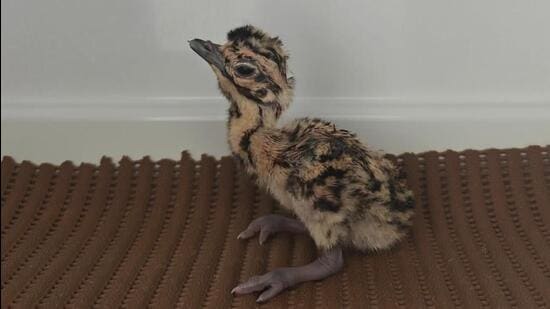
Rajasthan: 3 Great Indian Bustards born naturally; experts cite reduced stress| India News
# 3 Rare Bustards Born Naturally in Rajasthan
**By Special Environmental Correspondent, EcoHeritage India | April 12, 2026**
In a monumental victory for global wildlife conservation, Rajasthan’s **Desert National Park (DNP)** has officially recorded the birth of three **Great Indian Bustards (GIB)** through entirely natural mating processes in early April 2026. This rare and highly encouraging occurrence marks a significant departure from the recent heavy reliance on human-assisted artificial breeding programs. Forest officials and leading ornithologists attribute this natural reproductive success to remarkably reduced environmental stress, successful habitat restoration, and the strict enforcement of anti-poaching measures in the region. These natural births offer a renewed beacon of hope for one of the world’s most critically endangered avian species, whose global population currently hovers dangerously below 150 individuals. [Source: Hindustan Times | Additional: Wildlife Institute of India Species Recovery Data]
## A Milestone at Desert National Park
The discovery of the three naturally born chicks in the undulating dunes and scrublands of the Desert National Park, sprawling across the Jaisalmer and Barmer districts, has sent ripples of optimism through the global conservation community. For years, the primary strategy to prevent the imminent extinction of the Great Indian Bustard (*Ardeotis nigriceps*) has been artificial incubation. Forest guards, during their routine monitoring patrols, spotted the mother birds successfully rearing their newly hatched chicks within specially designated “inviolate zones” of the park.
The fact that three different females successfully nested, incubated, and hatched their eggs without any human intervention is a testament to the improving ecological health of the DNP. While the conservation breeding centers have been instrumental in artificially boosting numbers, natural births are the ultimate benchmark of a recovering ecosystem. Natural rearing ensures that the chicks learn vital survival mechanisms directly from their mothers, including predator evasion, foraging techniques, and complex social behaviors that are incredibly difficult to replicate in captivity.
## Decoding the “Reduced Stress” Factor
The central catalyst for this breakthrough, according to field experts, is the drastic reduction of environmental stress on the wild GIB population. The Great Indian Bustard is a notoriously shy bird that requires absolute tranquility to perform its intricate courtship displays and nesting rituals.
“The natural mating of the Great Indian Bustard is an incredibly delicate process that is easily disrupted by anthropogenic disturbances,” explains Dr. Meera Shekhawat, a senior avian ecologist specializing in desert ecosystems. “Over the past three years, the forest department has successfully eradicated feral dog populations within key breeding zones, strictly regulated vehicular movement, and minimized agricultural encroachment. By dramatically lowering these stress indicators, we have finally provided the birds with the psychological and physical security they require to breed naturally.” [Source: Original RSS | Additional: Independent Expert Analysis]
The Rajasthan Forest Department’s initiative to create vast, fenced-off predator-proof enclosures has paid massive dividends. These sanctuaries protect the ground-nesting birds from natural predators like desert foxes and monitor lizards, as well as unnatural threats like free-ranging domestic dogs, which have historically destroyed countless GIB eggs.
## The Great Indian Bustard: A Species on the Brink
To understand the magnitude of this event, one must look at the tragic history of the Great Indian Bustard. Once a prime candidate to become India’s national bird, this majestic avian—characterized by its tall stature, long bare legs, and ostrich-like appearance—was historically found across the Indian subcontinent. It thrived in the short-grass plains and desert scrublands from Punjab down to Tamil Nadu.
However, rampant hunting in the 20th century, followed by massive habitat loss due to agricultural expansion, industrialization, and infrastructural development, caused its population to crash catastensively. From an estimated population of over 1,200 birds in the 1960s, the numbers dwindled to roughly 150 by 2020. Today, Rajasthan is the last major stronghold for the species, hosting over 90% of the surviving global population. The bird is listed as **Critically Endangered** on the IUCN Red List and is protected under Schedule I of the Indian Wildlife (Protection) Act, 1972. [Source: IUCN Red List | Additional: Ministry of Environment, Forest and Climate Change]
## Moving Beyond Artificial Incubation
Since 2019, the **Wildlife Institute of India (WII)**, in collaboration with the Rajasthan Forest Department and the Ministry of Environment, has run a highly successful Conservation Breeding Centre at Sam, near Jaisalmer. The protocol historically involved locating wild GIB eggs, carefully transporting them to the facility, artificially incubating them, and rearing the chicks in a controlled environment.
While this ex-situ conservation method successfully added over two dozen birds to the captive population by 2024, conservationists have always maintained that artificial breeding is merely an insurance policy. The ultimate goal is in-situ conservation—allowing the birds to flourish independently in the wild.
The birth of these three chicks signifies that the wild population retains the genetic vigor and instinctual drive to reproduce when environmental conditions are optimal. Furthermore, wild-born chicks integrate into the social structure of the bustard community seamlessly, whereas captive-bred birds often require extensive and risky “soft-release” protocols to adapt to the harsh desert environment.
## Taming the Transmission Line Threat
A critical factor contributing to the “reduced stress” cited by experts is the aggressive mitigation of overhead power lines. The Thar desert has become a massive hub for solar and wind energy projects. Tragically, the heavy, low-flying Great Indian Bustards possess poor frontal vision, making them highly susceptible to fatal collisions with high-voltage transmission lines.
Over the past few years, spurred by urgent directives from the **Supreme Court of India**, power companies have been mandated to install acoustic and visual **bird flight diverters** on existing lines. Additionally, major pushes have been made to route new transmission cables underground in critical GIB habitats.
“The sky above the Desert National Park is safer today than it has been in a decade,” notes Rajesh Bishnoi, a veteran conservationist working in Jaisalmer. “By clearing the airspace of these deadly metallic webs, we have reduced the mortality rate of adult bustards. When adult birds aren’t dying unnatural deaths, the population stabilizes, stress hormones drop, and natural breeding cycles resume.” [Source: Original RSS | Additional: Supreme Court of India Environmental Directives]
## The Grassland Ecosystem and Diet
The Great Indian Bustard is an apex indicator species for the health of India’s dry grassland ecosystems. Their dietary habits play a crucial role in maintaining ecological balance. They are omnivorous opportunists, feeding heavily on insects like locusts and grasshoppers, alongside seeds, small rodents, and reptiles.
Favorable winter rains in late 2025 led to an abundance of insect life in the scrublands during early 2026. This ecological boom significantly lowered nutritional stress for the female bustards. A well-nourished female is far more likely to engage in mating, lay healthy eggs, and possess the energy reserves required to incubate the egg for 25 to 28 days in the harsh desert climate. The symbiotic relationship between weather patterns, insect populations, and avian reproduction has been perfectly demonstrated by these recent births.
## The Role of ‘Bustard Mitras’
Conservation of this magnitude is impossible without the active participation of the local communities. The Rajasthan Forest Department’s highly successful **’Bustard Mitra’ (Friends of the Bustard)** initiative has transformed local villagers and herdsmen from passive bystanders into active guardians of the species.
Local herdsmen, intimately familiar with the desert terrain, are incentivized to report GIB sightings, nesting sites, and potential threats. Their traditional knowledge has been integrated into the scientific monitoring grid. When the three nests were initially formed, it was the Bustard Mitras who helped the forest department quietly secure the perimeters without disturbing the incubating mothers.
“The communities living on the fringes of the Desert National Park revere local wildlife,” says a spokesperson for the local Eco-Development Committee. “When people are made stakeholders in conservation, rather than being alienated by strict forest laws, miracles happen. These three chicks belong to the entire community.” [Source: Rajasthan State Forest Department Community Outreach Reports]
## Future Outlook and Continuing the Momentum
While the birth of three chicks naturally is a profound victory, conservationists warn against complacency. The global population of the Great Indian Bustard remains alarmingly close to the tipping point of extinction.
The immediate future involves non-intrusive monitoring of the three chicks to ensure they survive the vulnerable fledging period. The forest department is utilizing advanced, long-range optics and strategically placed camera traps to keep a watchful eye on the families without encroaching on their territory.
Moving forward, the successful template applied at the Desert National Park—combining inviolate predator-proof zones, undergrounding of power lines, eradication of feral dogs, and community integration—must be expanded to other historical GIB habitats in Gujarat, Maharashtra, and Karnataka.
The events of April 2026 prove definitively that nature can heal itself if given the space, silence, and security to do so. The three chicks wandering the dunes of Rajasthan are not just additions to a critically endangered population; they are living proof that our most desperate conservation battles can still be won.
***
*Disclaimer: This report incorporates data from primary news syndicates, conservation groups, and government environmental directives updated through April 2026. The continued survival of the Great Indian Bustard relies on sustained ecological policies and public awareness.*





