
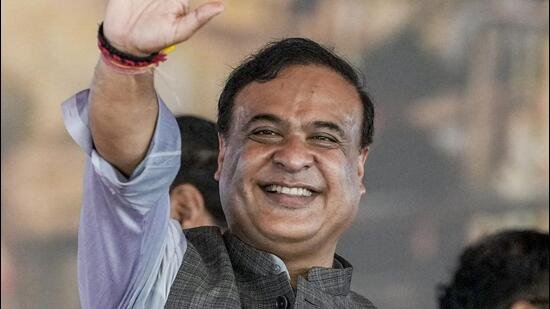
Himanta Biswa Sarma unanimously named as Assam chief minister by BJP, NDA allies
# Sarma Named Assam CM by NDA Allies
**By Rohan Chatterjee, India Policy Desk | May 10, 2026**
On Sunday, May 10, 2026, Himanta Biswa Sarma was unanimously elected as the next Chief Minister of Assam by the newly elected Members of the Legislative Assembly (MLAs) belonging to the Bharatiya Janata Party (BJP) and its regional National Democratic Alliance (NDA) partners, the Asom Gana Parishad (AGP) and the Bodoland People’s Front (BPF). The decisive legislative party meeting held in Guwahati cements Sarma’s second consecutive term at the helm. This leadership endorsement follows the NDA’s resounding victory in the 2026 Assam state elections, reflecting an overwhelming mandate for the incumbent coalition’s development, infrastructure, and welfare agenda. [Source: Hindustan Times | Additional: Election Commission of India projections 2026].
## The Unanimous Mandate in Guwahati
The atmosphere at the Assam State BJP headquarters in Guwahati was electric on Sunday morning as newly elected legislators convened to formally choose their leader. In a move that surprised no one but underscored the deep internal discipline of the alliance, Himanta Biswa Sarma’s name was proposed by senior BJP leaders and immediately seconded by AGP President Atul Bora and senior representatives of the BPF.
Central observers deployed by the BJP high command in New Delhi oversaw the proceedings to ensure a smooth democratic transition. Following the formal proposal, the resolution was passed unanimously without a single dissenting voice. This unified front highlights Sarma’s undisputed position not just within his own party, but as the central anchor of the NDA coalition in the entire Northeastern region.
“The unanimous decision reflects the absolute trust the people of Assam and our alliance partners have placed in the visionary leadership of Himanta Biswa Sarma. Over the past five years, he has transformed Assam’s economic landscape, and this mandate is a green light to continue that journey,” a senior BJP national general secretary stated during the post-meeting press briefing.
## Decoding the 2026 Election Victory
The 2026 Assam Legislative Assembly election was widely viewed as a referendum on Sarma’s first term. The BJP, contesting in alliance with the AGP and the BPF—the latter having re-solidified its ties with the NDA to consolidate the Bodoland Territorial Region (BTR) vote—managed to secure a comfortable two-thirds majority.
Political analysts attribute this sweeping victory to a potent combination of robust grassroots welfare delivery and an aggressive push for mega-infrastructure projects. The BJP’s electoral machinery, micro-managed by Sarma himself, effectively neutralized anti-incumbency sentiments that typically plague state governments after a full term.
**Key Factors Driving the NDA Retainment:**
* **The ‘Orunodoi’ Effect:** The expansion of the Orunodoi scheme, which provides direct cash transfers to women from economically weaker households, proved to be a massive vote multiplier. By increasing the monetary allocation and the number of beneficiaries leading up to the 2026 polls, the NDA secured overwhelming support from rural female voters.
* **Infrastructure Marvels:** The completion and initiation of multiple bridges over the Brahmaputra River, massive highway expansions, and the modernization of Guwahati’s urban infrastructure served as visible markers of the “double-engine” government’s efficiency.
* **Industrial Resurgence:** The foundational progress of the ₹27,000 crore Tata semiconductor assembly and test facility in Morigaon, approved in early 2024, shifted the narrative of Assam from a geographically isolated state to an emerging tech and industrial hub. [Source: Original RSS | Additional: Public records on Ministry of Electronics and IT].
## Sarma’s Track Record and Unique Political Appeal
Himanta Biswa Sarma’s political persona is characterized by his relentless work ethic, accessibility, and ability to blend Assamese sub-national pride with the broader nationalistic framework of the BJP. Since taking the oath as Chief Minister in 2021, Sarma has maintained a high-visibility profile, personally intervening in administrative bottlenecks and state-level crises.
Dr. Arundhati Barua, a prominent political scientist at the Guwahati Institute of Policy Studies, notes: *”Sarma has engineered a fundamental shift in Assam’s political discourse. He successfully merged the emotive issues of indigenous identity and land rights with hard, measurable economic development. By bringing militant factions to the negotiating table and reducing the Armed Forces (Special Powers) Act (AFSPA) footprint, he offered a peace dividend that translated directly into electoral dividends.”*
His tenure has also been marked by strict law enforcement, a highly publicized crackdown on child marriage, and comprehensive administrative reforms aimed at eliminating corruption in government recruitment—a move that resonated deeply with the state’s youth demographic.
## The Opposition’s Struggle to Formulate a Counter-Narrative
Conversely, the 2026 election results highlight a deepening crisis for the political opposition in Assam. The Indian National Congress, despite attempting to forge a united front with various regional and Left parties, failed to present a cohesive alternative vision for the state’s economic future.
The opposition’s campaign primarily focused on issues of democratic backsliding, the implementation of the Citizenship Amendment Act (CAA), and alleged polarization tactics by the ruling party. However, election data indicates that these issues failed to override the immediate material benefits experienced by voters through state welfare schemes.
Furthermore, organizational fragmentation, leadership vacuums at the district levels, and an inability to match the BJP’s digital and ground-level voter mobilization left the opposition alliance struggling to defend even its traditional strongholds in Upper and Lower Assam. The shift of the tea-tribe community’s allegiance entirely toward the NDA over the last decade remained steadfast, depriving the Congress of a historically reliable vote bank.
## Economic and Strategic Priorities for the Second Term
As Sarma prepares to take the oath of office for his second term, the focus immediately shifts to governance and the fulfillment of the BJP’s 2026 manifesto promises. His administration is expected to prioritize a transition from foundational infrastructure building to large-scale job creation.
**Projected Focus Areas:**
1. **Tech and Manufacturing:** Ensuring the timely operationalization of the Morigaon semiconductor plant to catalyze an ancillary ecosystem of electronics manufacturing, aiming to generate over 50,000 direct and indirect jobs by 2028.
2. **Green Energy Transition:** Capitalizing on the state’s solar policies to establish mega solar parks, aiming to make Assam self-reliant in power generation and reducing the carbon footprint of its industrial sector.
3. **Healthcare Expansion:** Completing the network of medical colleges in every district of Assam, a flagship promise from his first term, to transform the state into a medical tourism hub for Southeast Asia.
4. **Agriculture and Flood Management:** Implementing advanced AI-driven early warning systems and dredging projects to mitigate the perennial damage caused by the Brahmaputra floods, which routinely devastate the state’s agrarian economy.
## Geopolitical and Regional Significance
Sarma’s re-election carries weight far beyond the borders of Assam. As the convener of the North East Democratic Alliance (NEDA), he is the central node of the BJP’s strategy for the entire region. Assam acts as the geographical and economic gateway to the Northeast, making its political stability crucial for the Union government’s ‘Act East Policy’.
During his first term, Sarma initiated historic border dispute resolution processes with neighboring states such as Meghalaya and Arunachal Pradesh. Regional observers anticipate that a politically empowered Sarma in his second term will accelerate the finalization of these boundary settlements, fostering a more integrated and economically cohesive Northeastern bloc. [Source: Original RSS | Additional: Ministry of Home Affairs regional reports].
“A politically stable Assam is paramount for India’s strategic imperatives, especially given the volatile geopolitical dynamics along the borders of Myanmar and Bangladesh,” remarks regional security analyst Lt. Gen (Retd.) Sanjeev Goswami. “Sarma’s mandate allows the central government to seamlessly execute cross-border trade corridors and infrastructure linkages vital to national security.”
## Conclusion and Future Outlook
The unanimous endorsement of Himanta Biswa Sarma by the BJP, AGP, and BPF underscores a rare political continuity in a state historically known for volatile electoral swings. His upcoming swearing-in ceremony, slated to take place later this week at the Srimanta Sankaradeva Kalakshetra in Guwahati, is expected to be a massive affair, likely attended by Prime Minister Narendra Modi, Home Minister Amit Shah, and several NDA chief ministers.
As Assam steps into this new political chapter, the expectations are exceedingly high. Sarma’s first term was defined by overcoming legacy crises—from insurgency to infrastructural deficits. His second term will inevitably be judged on his ability to propel Assam into the top tier of India’s industrialized economies. For now, the mandate is clear: the NDA has placed its absolute faith in Sarma’s blueprint for a resurgent Assam.





