
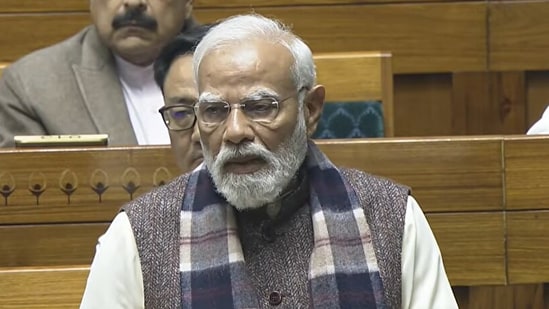
Important to implement women's quota in 2029: PM writes to LS, RS floor leaders| India News
# PM Urges 2029 Women’s Quota Rollout
**By Special Political Correspondent** | National Policy Desk | April 12, 2026
On April 12, 2026, Prime Minister Narendra Modi addressed a formal, high-priority letter to the floor leaders of both the Lok Sabha and Rajya Sabha, urging a unified, cross-party effort to implement the historic 33% women’s reservation quota ahead of the 2029 general elections. Emphasizing that increased female political participation is non-negotiable for India’s transformation into a developed nation, the Prime Minister has catalyzed a fresh wave of political momentum. This communication signals a proactive push by the ruling government to expedite the complex census and delimitation exercises required to make the Nari Shakti Vandan Adhiniyam a functional reality within the next three years. [Source: Hindustan Times].
## A Call for Consensus Ahead of 2029
The Prime Minister’s correspondence to the parliamentary floor leaders arrives at a crucial juncture in Indian politics. In his letter, PM Modi articulated that for India to realize its ambitious vision of becoming a developed nation (*Viksit Bharat*) by 2047, it is “essential that women play a greater, active role in this journey.” [Source: Hindustan Times].
This statement goes beyond mere political rhetoric; it firmly aligns the government’s macroeconomic goals with gender parity in governance. The letter appeals to the leaders of all political factions to rise above partisan divides and assist in smoothing the procedural, legislative, and administrative pathways required to operationalize the quota by the next Lok Sabha elections in 2029.
**”The empowerment of women in our legislative temples is not merely a matter of representation, but a fundamental prerequisite for inclusive policy-making,”** the letter reportedly stated, highlighting the necessity of diverse voices in the highest echelons of legislative decision-making. By setting a definitive target of 2029, the Prime Minister has effectively started the countdown clock for one of the most significant electoral overhauls in independent India’s history.
## Unpacking the Nari Shakti Vandan Adhiniyam
To understand the magnitude of this 2029 target, one must look back at the legislative milestone achieved in late 2023. The Nari Shakti Vandan Adhiniyam, officially known as the **Constitution (106th Amendment) Act**, was passed with near-unanimous support in a special session of Parliament.
The Act mandates the reservation of one-third (33%) of all seats for women in the Lok Sabha, state legislative assemblies, and the Legislative Assembly of the National Capital Territory of Delhi. This quota also encompasses seats already reserved for Scheduled Castes (SCs) and Scheduled Tribes (STs), ensuring intersectional representation.
However, the legislation included a critical caveat: the reservation would only take effect after an exercise of delimitation is undertaken based on the relevant figures of the first census published after the Act’s commencement. Furthermore, the Act stipulates that these reserved seats will be rotated after each subsequent delimitation exercise, and the reservation itself will carry a sunset clause of 15 years, subject to parliamentary extension. [Source: Public Legislative Records].
## The Twin Hurdles: Census and Delimitation
The PM’s explicit mention of 2029 brings the long-delayed census and the subsequent delimitation exercise sharply into focus. Under **Article 82 of the Indian Constitution**, the reallocation of seats in the Lok Sabha to the states and the division of each state into territorial constituencies must be readjusted by an authority determined by Parliament. Following a constitutional amendment in 2001, this process was frozen until the publication of the first census taken after the year 2026.
With 2026 now underway, the constitutional freeze on delimitation is poised to be lifted. The decadal census, originally scheduled for 2021 but indefinitely delayed due to the COVID-19 pandemic and subsequent administrative hurdles, is the absolute prerequisite for this process.
**Dr. Rajan Mahapatra**, a senior constitutional law expert in New Delhi, notes the operational urgency of the Prime Minister’s letter. “For the women’s quota to be active in 2029, the census data must be collected, compiled, and published at an unprecedented speed. Following that, a Delimitation Commission must be constituted. This Commission’s mandate to redraw the boundaries of hundreds of constituencies—while simultaneously earmarking 33% of them for women—will be the most mathematically and politically complex exercise the Election Commission of India has ever supported,” Dr. Mahapatra explains. [Source: Independent Policy Analysis].
By actively reaching out to floor leaders, PM Modi is preemptively attempting to neutralize potential political friction that historically accompanies constituency delimitation, particularly regarding the altering of political strongholds and demographic shifts between Northern and Southern states.
## Political Reactions and Floor Dynamics
The response from the opposition to the Prime Minister’s letter has been a mix of cautious optimism and strategic posturing. While virtually no political party fundamentally opposes the concept of women’s reservation—evidenced by the near-unanimous passage of the Bill in 2023—the mechanics of its implementation remain a highly contested battleground.
Key opposition figures have historically demanded a “quota within a quota,” advocating for specific sub-reservations for women belonging to Other Backward Classes (OBCs) and minority communities, arguing that a blanket reservation might disproportionately benefit women from elite and upper-caste backgrounds.
**Sunita Narayan**, a political sociologist, points out the impending floor dynamics: “The Prime Minister’s letter is a strategic masterstroke. It puts the onus on the opposition to cooperate. If floor leaders resist the delimitation parameters or stall the procedural bills, they risk being branded as anti-women ahead of the critical 2029 elections. However, we can expect robust debates in the upcoming monsoon session regarding *how* these constituencies will be identified and rotated.” [Source: Independent Expert Commentary].
Regional parties, particularly those from states that have achieved lower population growth rates, will also be seeking reassurances that the delimitation process—necessary for the women’s quota—will not result in a loss of their overall representation and political weight in the Lok Sabha.
## The Global Context: Women in Parliaments
India’s aggressive push for 2029 must be contextualized within the broader global landscape of female political representation. Historically, India has lagged behind global benchmarks despite being the world’s most populous democracy and having a rich history of powerful female leaders at the highest levels of government.
As of early 2024, women constituted roughly **15% of the Lok Sabha** and approximately **14% of the Rajya Sabha**. While this was a historic high for India, it remained noticeably below the global average. According to data from the Inter-Parliamentary Union (IPU), the global average for women in national parliaments hovers around 26%. Countries like Rwanda, Cuba, and several Nordic nations boast female representation exceeding 40% to 50%. [Source: Inter-Parliamentary Union Data].
Implementing the 33% quota will catapult India into the upper echelons of global democratic representation. A sudden influx of over 180 female Members of Parliament in the Lok Sabha will not only alter the visual demographic of the legislature but is expected to fundamentally shift legislative priorities.
## Socio-Economic Impact of Female Leadership
The Prime Minister’s assertion that female participation is linked to the “developed nation” vision is strongly supported by decades of socio-economic research. Evidence drawn from India’s own history with localized quotas provides a compelling preview of what a national quota might achieve.
In 1993, the **73rd and 74th Constitutional Amendments** mandated a 33% reservation for women in Panchayati Raj Institutions (local village councils) and urban local bodies. Over the last three decades, this policy has drawn over a million women into grassroots political leadership.
Studies conducted by institutions like the World Bank and the Abdul Latif Jameel Poverty Action Lab (J-PAL) have consistently demonstrated that female-led local councils invest significantly more in public goods closely linked to women’s and children’s welfare—such as drinking water infrastructure, sanitation, health facilities, and primary education. [Source: J-PAL / World Bank Public Data].
“When women sit at the policy table, the definition of what constitutes a ‘hard’ political issue changes,” says **Dr. Ananya Desai**, a gender economics researcher. “Issues of maternal health, early childhood education, and female workforce participation move from the margins of electoral manifestos to the very center of national budgetary allocations. PM Modi’s letter acknowledges that achieving a high GDP is impossible if half the population is structurally excluded from deciding how resources are distributed.” [Source: Independent Expert Commentary].
## Preparing the Ground for 2029
While the administrative burden lies with the government, the Election Commission, and the Delimitation Commission, the Prime Minister’s call to action also serves as a stark warning to political parties across the spectrum: **they must begin actively grooming female leadership now.**
Currently, the pipeline of female political candidates in many mainstream and regional political parties is worryingly thin. Ticket distribution has traditionally been dominated by deeply entrenched patriarchal networks, reliance on dynastic politics, and a preference for candidates with high independent financial “winnability.”
Implementing a 33% reservation means that out of 543 Lok Sabha constituencies, **at least 181 will be reserved exclusively for women in 2029.** Political parties can no longer treat female candidacy as an afterthought or a token gesture. Over the next three years, parties will need to invest heavily in identifying grassroots women leaders, providing them with political training, campaign resources, and platform visibility.
Furthermore, civil society organizations are advocating for strict intra-party democracy to ensure that the women nominated are independent leaders, rather than proxies for male relatives—a phenomenon colloquially known as “Sarpanch Pati” (husband of the female village head) that initially plagued the Panchayat reservations before waning as women gained experience and confidence.
## Conclusion: A Defining Milestone for the Republic
Prime Minister Narendra Modi’s formal communication to Lok Sabha and Rajya Sabha floor leaders on April 12, 2026, is far more than a procedural update. It is a definitive political stake in the ground, affirming the government’s commitment to ensuring that the 2029 general elections will be the first in India’s history to guarantee proportional legislative power to women.
As India marches toward its centenary of independence in 2047 with the vision of becoming a *Viksit Bharat*, the integration of women into the highest law-making bodies is an indispensable step. The road to 2029 will be fraught with logistical complexities regarding the census and fierce political negotiations over delimitation.
However, the consensus forged by this initiative has the potential to fundamentally rewrite the narrative of Indian democracy. If the political establishment heeds the Prime Minister’s call for unity and procedural expediency, 2029 will not merely be an election year; it will be the year India bridges its most significant democratic deficit, proving that true national development is inextricably linked to the empowerment of its women.





