
Important to implement women's quota in 2029: PM writes to LS, RS floor leaders| India News
# PM Pushes 2029 Women’s Quota in Letter to Leaders
**By Political Correspondent, National Policy Desk, April 12, 2026**
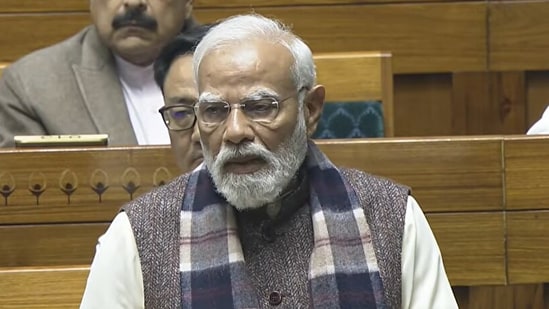
**NEW DELHI** — Prime Minister Narendra Modi on Sunday issued a clarion call for cross-party consensus to ensure the sweeping 33% women’s reservation quota is fully implemented ahead of the 2029 General Elections. In a formal letter addressed to floor leaders of both the Lok Sabha and Rajya Sabha on April 12, 2026, the Prime Minister emphasized that realizing India’s ambitious vision of becoming a developed nation by 2047 requires substantially enhanced female representation in the country’s highest legislative bodies. This outreach sets the stage for critical administrative groundwork and political cooperation as the government navigates the complex census and delimitation exercises required to roll out the historic mandate. [Source: Hindustan Times]
## The Push for ‘Viksit Bharat’ Through Gender Parity
In his communication to parliamentary leaders, Prime Minister Modi explicitly linked the political empowerment of women to the broader macroeconomic and social goals of the nation. The overarching theme of the letter underscores the administration’s focus on *Viksit Bharat* (Developed India) by the centenary of its independence in 2047.
“For India to realise its vision of becoming a developed nation, it is essential that women play a greater, active role in this journey,” the Prime Minister articulated in the missive. The letter noted that while Indian women have made remarkable strides in sectors ranging from space exploration to grassroots entrepreneurship, their representation in federal and state legislatures has not maintained a commensurate pace. By urging floor leaders to unite in operationalizing the quota by 2029, the Prime Minister is seeking to transform a long-standing legislative promise into a tangible democratic reality. [Source: Hindustan Times | Additional: Prime Minister’s Office Public Communications]
The economic argument underpinning this political move is robust. Development economists have long asserted that bringing women into the highest echelons of policy-making shifts governmental priorities toward human capital development, public health, and education. By cementing the 2029 timeline, the government aims to unleash a demographic dividend that cannot be fully realized if half the population remains underrepresented in the legislative arena.
## The Legislative Journey of the Nari Shakti Vandan Adhiniyam
To understand the weight of Sunday’s development, it is necessary to examine the complex historical trajectory of the women’s reservation initiative. The *Nari Shakti Vandan Adhiniyam* (Women’s Reservation Bill) was historically passed in September 2023 during a special session of Parliament, successfully becoming the 106th Constitutional Amendment Act.
The legislation mandates a 33% reservation for women in the Lok Sabha, state legislative assemblies, and the National Capital Territory of Delhi. However, its passage came with a significant caveat: the implementation of the quota was intrinsically tied to the completion of the next decadal Census and the subsequent delimitation exercise—the process of redrawing parliamentary and assembly constituency boundaries.
When the bill was passed in 2023, the timeline for its actual execution remained ambiguous, leading to widespread speculation and debate regarding whether the quota would be ready by 2029 or delayed into the 2030s. The Prime Minister’s letter to the Lok Sabha and Rajya Sabha floor leaders decisively signals the government’s intent to expedite the preparatory mechanisms, effectively drawing a line in the sand for the 2029 electoral cycle.
## Delimitation and Census: Navigating the Administrative Bottlenecks
The primary obstacles to implementing the women’s quota are deeply logistical and constitutional. Article 82 of the Indian Constitution froze the reallocation of Lok Sabha seats based on population until the publication of the first census figures after the year 2026. Therefore, to enact the 33% reservation, a fresh census must be completed, followed by the constitution of a Delimitation Commission.
The Delimitation Commission’s task will be monumental. It will not only entail reserving one-third of the existing seats for women but also potentially increasing the overall strength of the Lok Sabha and State Assemblies to reflect population changes over the last several decades.
“The Prime Minister’s outreach is a strategic necessity,” explains Dr. Meena Chaturvedi, a Senior Fellow at the Institute of Democratic Studies in New Delhi. “You cannot simply draw lots to reserve one-third of constituencies without a massive, politically sensitive delimitation process. By writing to the floor leaders now, in April 2026, the government is essentially sounding the bugle for the delimitation committee’s work, demanding cross-party cooperation to prevent administrative delays from derailing the 2029 implementation.” [Source: Independent Policy Analysis]
## Political Consensus and Opposition Dynamics
Building consensus around the delimitation and reservation mechanics is arguably the most sensitive aspect of this endeavor. While the 2023 passage of the bill saw near-unanimous support across the political spectrum—with only two dissenting votes in the Lok Sabha—the opposition parties, spearheaded by the INDIA bloc, have consistently criticized the government for delaying the implementation.
Many regional parties have also raised demands for sub-quotas within the 33% reservation to specifically accommodate women from Other Backward Classes (OBC) and marginalized communities. Furthermore, southern states have expressed apprehension regarding the broader delimitation process, fearing a loss of relative political representation due to their successful population control measures compared to northern states.
By directly engaging with the floor leaders of all major political parties, Prime Minister Modi is attempting to preemptively address these fractures. The letter urges leaders to look beyond partisan politics and regional disputes, positioning the women’s quota as an inviolable national commitment. This consultative approach is designed to ensure that the winter and budget sessions over the next two years are not paralyzed by procedural gridlock over constituency boundaries.
## Changing the Global Narrative on Female Representation
Should the 33% quota be successfully implemented by 2029, it will fundamentally alter India’s standing on the global stage regarding gender equity in governance. Currently, women make up roughly 15% of the Lok Sabha—a figure that, while marking an all-time high for the country, still lags significantly behind global averages.
According to data tracked by the Inter-Parliamentary Union (IPU), several nations in the Global South, including Rwanda, Cuba, and Mexico, maintain parliaments with over 50% female representation. Similarly, Nordic nations consistently hover around the 40-45% mark. India’s current metrics place it in the middle tier globally.
The implementation of the *Nari Shakti Vandan Adhiniyam* will instantly catapult the world’s largest democracy into the upper echelons of legislative gender parity. This is not merely a statistical victory; it aligns perfectly with New Delhi’s broader diplomatic efforts to project itself as a progressive, modernizing powerhouse and a leader of the Global South.
“When a nation of 1.4 billion people mandates that a third of its national and state legislators must be women, the ripple effects are felt globally,” notes international relations expert Dr. Ananya Sharma. “It sends a powerful message to foreign investors, international rights organizations, and global governance bodies about India’s commitment to inclusive growth.” [Source: Independent Global Governance Data]
## Socio-Economic Ripple Effects of Female Leadership
Beyond political representation, the push for the 2029 quota is deeply rooted in the proven socio-economic benefits of female leadership. India already possesses a vast reservoir of data on this topic, largely derived from the 1993 constitutional amendment that mandated a 33% reservation for women in local self-government institutions (Panchayati Raj).
Decades of research by prominent economists, including Nobel laureates, have demonstrated that village councils led by women systematically invest more heavily in public goods that directly benefit their communities, such as clean drinking water, sanitation facilities, local health centers, and primary education. Women leaders at the grassroots level have also been shown to be more accessible to vulnerable constituents and more likely to challenge deeply entrenched patriarchal norms.
Elevating this dynamic to the state assemblies and the national parliament promises to profoundly reshape legislative priorities. Advocates for the quota argue that complex, systemic issues—such as maternal mortality, the gender wage gap, female workforce participation, and crimes against women—will receive far more rigorous legislative scrutiny and funding when women constitute a critical mass of the voting bloc within Parliament.
## Future Outlook: The Countdown to 2029
The Prime Minister’s letter serves as the unofficial starting gun for a frantic three-year period of administrative and political restructuring. The road to 2029 will require a delicate balancing act. The Union Government must expedite the decadal census operations, seamlessly transition into the delimitation phase, and maintain a fragile political consensus across diverse and often fiercely competitive regional party lines.
**Key Milestones to Watch:**
* **Census Notification:** The rapid deployment of resources to conclude the delayed demographic data collection.
* **Constitution of the Delimitation Commission:** The appointment of the panel tasked with redrawing the national electoral map.
* **State-Level Consultations:** Overcoming friction between states regarding proportionate representation and seat allocations.
As the clock ticks toward the 2029 General Elections, the pressure is now on all political factions to demonstrate their commitment to gender parity. Prime Minister Modi’s proactive communication ensures that the *Nari Shakti Vandan Adhiniyam* remains at the forefront of the national agenda, transforming the rhetoric of women’s empowerment into the defining political project of the coming decade.
The successful execution of this quota will not only redefine the architecture of Indian democracy but will also be instrumental in writing the final, crucial chapters of India’s journey toward becoming a fully developed nation by 2047.





