
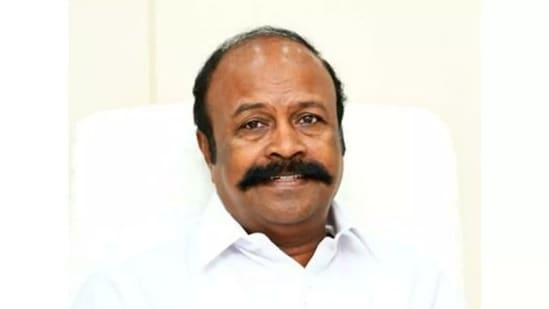
In special Sunday sitting, Madras HC to hear plea of DMK leader who lost to TVK by 1 vote in Tirupattur
# Madras HC Hears DMK 1-Vote Defeat
By Senior Political Correspondent, National Election Desk, May 10, 2026
In an extraordinary turn of events following the fiercely contested Tamil Nadu state assembly elections, the Madras High Court convened a rare special Sunday sitting on May 10, 2026. The urgent hearing centers on a plea filed by senior Dravida Munnetra Kazhagam (DMK) leader K.R. Periyakaruppan, who suffered a devastating defeat by exactly one vote in the Tirupattur constituency. According to the official Election Commission of India (ECI) data, Tamilaga Vettri Kazhagam (TVK) candidate Seenivasa Sethupathy secured 83,375 votes, while Periyakaruppan managed 83,374 [Source: Hindustan Times]. This unprecedented legal intervention underscores the high-stakes political environment in Tamil Nadu and tests the procedural limits of India’s electoral recount protocols.
## The Anatomy of a Razor-Thin Margin
The drama in the Tirupattur counting center began late Saturday evening as the final rounds of Electronic Voting Machine (EVM) tabulations drew to a close. Throughout the day, the lead oscillated between the DMK veteran and the TVK challenger, reflecting the intense ground-level battle between the ruling establishment and the newly formed political outfit.
As the final EVM was tabulated, the candidates were deadlocked. The deciding factor ultimately rested on the postal ballots—votes cast by election duty personnel, senior citizens, and persons with disabilities. When the final tally was announced by the Returning Officer (RO), Sethupathy edged past Periyakaruppan by a solitary vote.
**Key Voting Statistics for Tirupattur Constituency (2026):**
* **Total Votes Polled for TVK:** 83,375
* **Total Votes Polled for DMK:** 83,374
* **Margin of Victory:** 1 Vote
* **Rejected Postal Ballots:** 47 (approximate, contested)
Immediately following the declaration, DMK polling agents submitted a written memorandum to the RO under Rule 63 of the Conduct of Elections Rules, 1961, demanding a complete recount of both EVM votes and the rejected postal ballots. The RO, citing ECI guidelines that allow discretion in ordering recounts, reportedly declined the comprehensive recount, permitting only a re-verification of the postal ballots, which did not alter the final outcome. This administrative refusal triggered the DMK’s midnight knock on the doors of the Madras High Court.
## The Rare Sunday Court Sitting
The decision by the Madras High Court to hold a special Sunday sitting highlights the constitutional urgency of electoral disputes, particularly when the certification of a newly elected legislative assembly is imminent. The DMK’s legal team approached the Chief Justice’s bench late Saturday night, arguing that the RO’s refusal to conduct a full recount of the Voter Verifiable Paper Audit Trail (VVPAT) slips in a race decided by one vote was “arbitrary, unlawful, and an assault on democratic fairness.”
During the Sunday hearing, the petitioner’s counsel contended that at least five postal ballots favoring Periyakaruppan were wrongfully invalidated due to minor technicalities, such as smudged signatures or improperly sealed internal envelopes.
“When a constituency of hundreds of thousands of voters is decided by a single ballot, the margin of error permitted in the counting process effectively drops to zero,” notes Dr. K.V. Rajagopalan, a Chennai-based constitutional lawyer and former ECI consultant. “The High Court is not just deciding on a recount; it is evaluating the procedural rigidity of the Returning Officer under the Representation of the People Act, 1951. If the court finds prima facie evidence that valid votes were discarded, it has the authority to order VVPAT verification before the election results are formally gazetted.” [Additional Source: Public Legal Precedents up to 2026].
The Election Commission’s counsel maintained that the RO acted strictly within the statutory framework, noting that recounting requests must be supported by specific, actionable evidence of discrepancy, not merely the closeness of the margin.
## The TVK Factor: Disrupting Tamil Nadu’s Duopoly
The fact that the beneficiary of this one-vote victory is a candidate from the Tamilaga Vettri Kazhagam (TVK) adds immense political weight to the legal battle. Founded by actor-turned-politician Vijay, the TVK entered the 2026 Tamil Nadu assembly elections with the explicit goal of dismantling the decades-old DMK-AIADMK political duopoly.
Seenivasa Sethupathy’s performance in Tirupattur is emblematic of TVK’s broader electoral strategy: mobilizing youth voters, capitalizing on anti-incumbency sentiments against the DMK, and aggressively campaigning in rural and semi-urban pockets. Defeating an established incumbent like K.R. Periyakaruppan, even by a single vote, provides TVK with an enormous psychological and public relations victory.
“For TVK, retaining this seat is crucial for their narrative of being the giant-slayers of Tamil Nadu politics,” explains political analyst Dr. S. Venkatraman. “For the DMK, losing a traditional stronghold to a newly minted party by one vote is a bitter pill to swallow. It questions their micro-level booth management. Both parties will fight this to the highest court if necessary, because the optics of Tirupattur represent the shifting tectonic plates of Dravidian politics.”
## Election Commission Guidelines and Recount Protocols
The legal scaffolding surrounding recounts in India is notoriously stringent. Under Section 80 of the Representation of the People Act, 1951, an election can generally only be called into question by an Election Petition presented after the results are declared. However, Rule 63 of the Conduct of Elections Rules allows a candidate to demand a recount before the final result form (Form 21E) is signed.
The RO is bound to consider the application and may accept it in whole or in part, or reject it entirely if it appears “frivolous or unreasonable.” In the Tirupattur case, the DMK alleges that a margin of one vote inherently validates the reasonableness of a recount demand.
Furthermore, recent Supreme Court guidelines regarding EVM and VVPAT verification add a layer of complexity. While the ECI mandates the counting of VVPAT slips in five randomly selected polling stations per assembly constituency, a candidate can request a broader VVPAT recount if there are substantial grounds. The Madras High Court will have to determine whether a one-vote margin automatically qualifies as a “substantial ground” for a 100% VVPAT tally.
## Historical Precedents: When One Vote Changed Destiny
While incredibly rare, a one-vote victory is not entirely unprecedented in Indian democratic history. The Tirupattur episode joins a very exclusive list of razor-thin electoral mandates that underscore the age-old adage: every single vote matters.
| Year | State/Constituency | Winning Candidate | Losing Candidate | Margin | Note |
| :— | :— | :— | :— | :— | :— |
| **2004** | Karnataka (Santhemarahalli) | R. Dhruvanarayan (INC) | A.R. Krishnamurthy (JD-S) | 1 Vote | Krishnamurthy famously lost because his own driver failed to reach the polling booth in time. |
| **2008** | Rajasthan (Nathdwara) | Kalyan Singh Chouhan (BJP) | Dr. C.P. Joshi (INC) | 1 Vote | Joshi, the state Congress Chief, lost by one vote. His wife and daughter reportedly could not vote on election day. |
| **2026** | Tamil Nadu (Tirupattur) | S. Sethupathy (TVK) | K.R. Periyakaruppan (DMK) | 1 Vote | Currently under dispute in the Madras High Court. |
These historical instances show that once the Election Commission certifies the result, overturning it via an Election Petition is a long, arduous process that can take years. This explains the DMK’s desperate rush to secure a judicial intervention *before* the electoral process is irrevocably concluded.
## Implications for Democracy and Voter Engagement
Beyond the immediate partisan battle, the Tirupattur scenario serves as a powerful civic lesson. Voter apathy, particularly in urban and semi-urban constituencies, often stems from the belief that a single individual’s ballot is statistically insignificant. The reality of a 83,375 to 83,374 result effectively shatters that myth.
Election watchdogs and civil society organizations in Tamil Nadu are already utilizing the Tirupattur outcome to advocate for mandatory VVPAT recounting in constituencies where the margin of victory is less than 0.1% of the total votes polled. Advocates argue that implementing such a statutory safety net would reduce the burden on courts, eliminate allegations of administrative bias by Returning Officers, and bolster public faith in the electoral machinery.
If the Madras High Court rules in favor of the DMK and orders a recount that subsequently changes the victor, it will set off a political firestorm. The TVK would inevitably allege establishment interference, potentially organizing state-wide protests. Conversely, if the court upholds the ECI’s declaration, the DMK will have to accept an embarrassing defeat and pivot to filing a long-term Election Petition.
## Conclusion and Future Outlook
The Madras High Court’s special Sunday hearing on the Tirupattur election dispute represents a crucial juncture in the 2026 Tamil Nadu state elections. As K.R. Periyakaruppan and Seenivasa Sethupathy await the judiciary’s directive, the entire state watches closely. The ruling will not only decide the immediate fate of the Tirupattur seat but also establish a critical modern legal precedent regarding recounts, postal ballot validity, and EVM integrity in the era of highly contested multi-party elections.
Whether the one-vote margin holds or is overturned through judicial scrutiny, the Tirupattur election will be immortalized in Indian political history as the ultimate testament to the power of a single citizen’s democratic franchise. All eyes now remain on the bench as it deliberates the complex intersection of administrative discretion and democratic fairness.





