
India has enough fuel stocks, no crisis: Rajnath Singh in Lucknow| India News
# No Fuel Crisis: Rajnath Assures Ample Stocks
By Siddharth Narayan, National Energy Correspondent | April 11, 2026
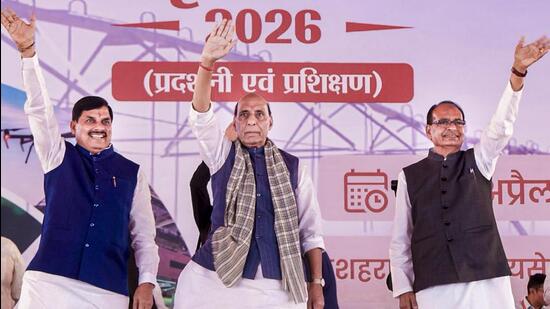
Defence Minister Rajnath Singh addressed the nation from Lucknow on Saturday, April 11, 2026, firmly dismissing rumors of an impending national fuel shortage. Amid escalating geopolitical tensions in West Asia that have rattled global energy markets, Singh categorically assured citizens that India maintains ample reserves of petrol, diesel, and Liquefied Petroleum Gas (LPG). Speaking to local constituencies and the broader public, the minister urged citizens not to succumb to panic buying or social media misinformation, clarifying that India’s strategic fuel buffers and diversified supply chains have effectively insulated the domestic market from immediate external shocks. [Source: Hindustan Times].
## Dispelling Panic: The Lucknow Address
The reassurance from the Defence Minister comes at a critical juncture. Over the past 48 hours, unverified reports circulating on various social media platforms sparked localized instances of panic buying at petrol stations in select tier-two and tier-three cities. These rumors erroneously suggested that the ongoing maritime and military disruptions in the Middle East would sever India’s oil supply lines within days.
Addressing a gathering in his parliamentary constituency of Lucknow, Rajnath Singh took a firm stance against the fear-mongering. “There is absolutely no shortage of essential fuels in the country,” Singh stated. “The government has meticulously planned for such global contingencies. We have more than enough petrol, diesel, and LPG to meet our domestic consumption needs without any interruption.”
By addressing the issue head-on, the government aims to prevent an artificial crisis driven by consumer panic, which often strains local logistical networks far more than actual supply deficits. Furthermore, the inclusion of LPG in his address was a strategic move to reassure millions of households, particularly beneficiaries of the Pradhan Mantri Ujjwala Yojana, that their daily cooking fuel remains secure.
## Unpacking the West Asia Tensions
To understand the origins of the recent public anxiety, one must look at the broader geopolitical landscape characterizing early 2026. The West Asian region, historically the lifeblood of global crude oil shipments, has witnessed a renewed phase of intense geopolitical friction. Intermittent blockades and heightened military activities near vital maritime choke points, such as the Strait of Hormuz and the Red Sea corridor, have forced major international shipping conglomerates to reroute their crude carriers.
These extended transit routes around the Cape of Good Hope have naturally increased freight costs and delayed delivery schedules for several European and Asian markets. Global Brent crude prices have reacted to this volatility, experiencing upward pressure. For a country like India, which imports over 80% of its crude oil requirements, such international developments inherently trigger economic anxiety.
However, as the Defence Minister highlighted, understanding the distinction between global transit delays and domestic shortages is crucial. While the international supply chain faces headwinds, India’s proactive infrastructural and diplomatic maneuvering over the past decade has structurally shielded its internal fuel distribution networks from immediate collapse.
## India’s Strategic Petroleum Reserves
A primary pillar supporting Rajnath Singh’s confidence is India’s robust Strategic Petroleum Reserves (SPR) program. Administered by the Indian Strategic Petroleum Reserves Limited (ISPRL), these massive underground rock caverns are specifically designed to provide emergency fuel security during severe global supply disruptions.
India currently maintains an extensive network of strategic reserves strategically located across the country’s coastal regions. When combined with the commercial storage maintained by Oil Marketing Companies (OMCs) and refineries, India boasts a highly comfortable buffer.
**Current Overview of India’s Strategic and Commercial Buffers (Estimated 2026 Data):**
| Location | Capacity (Million Metric Tonnes) | Type |
| :— | :— | :— |
| Visakhapatnam (Andhra Pradesh) | 1.33 MMT | SPR |
| Mangaluru (Karnataka) | 1.50 MMT | SPR |
| Padur (Karnataka) | 2.50 MMT | SPR |
| Chandikhol (Odisha) – Phase II | 4.00 MMT | SPR |
| OMC Commercial Stocks | ~65 Days of National Demand | Commercial |
*Note: Data reflects combined operational capacities managed by ISPRL and OMCs.* [Source: Ministry of Petroleum and Natural Gas public data / Strategic Estimates].
Between the strategic caverns and commercial inventories on land and in transit, India maintains approximately 74 to 80 days of national consumption coverage. This extensive buffer guarantees that even in the unlikely event of a total blockade in the Middle East, India has a nearly three-month window to secure alternative arrangements without disrupting a single domestic fuel pump.
## The Role of Diversified Oil Imports
The secondary, and perhaps more dynamic, factor preventing a fuel crisis is India’s aggressively diversified oil import strategy. Five years ago, India’s reliance on the Organization of the Petroleum Exporting Countries (OPEC), particularly Gulf nations, was overwhelmingly dominant. Today, the landscape has fundamentally shifted.
While traditional partners like Saudi Arabia, Iraq, and the UAE remain vital to India’s energy architecture, the government and state-owned refiners have drastically widened their procurement net. The continued intake of discounted Russian crude has transformed India’s energy economics, providing a reliable and cost-effective baseload that bypasses the volatility of the West Asian maritime routes.
Furthermore, India has significantly ramped up crude imports from the United States, West Africa, and Latin America. By refusing to place all its energy eggs in one regional basket, India has engineered a highly resilient supply chain. If shipments from the Persian Gulf face delays, OMCs can seamlessly pivot to spot market purchases from the Americas or alternative floating storages.
## Expert Analysis: Refining Capacity and Market Stability
Energy analysts echo the sentiments expressed by the Defence Minister, emphasizing that India’s status as a global refining hub offers unparalleled domestic security.
Dr. Ananya Rao, a senior energy analyst at the Institute for Energy Security and Geopolitics, notes, “Public panic is entirely misplaced in this context. India is not merely an importer of crude; it is one of the world’s largest exporters of refined petroleum products. Our domestic refining capacity, anchored by mega-facilities in Jamnagar, Paradip, and Kochi, far exceeds our domestic consumption.”
Dr. Rao further elaborates, “Because Indian refineries are highly complex and capable of processing diverse grades of crude oil—from heavy sour to light sweet—they are not reliant on any single oil field or nation. If West Asian grades are temporarily unavailable, Indian refiners can instantly calibrate their facilities to process alternative crudes. This refining agility is India’s greatest geopolitical shield.” [Source: Independent Energy Market Analysis].
This refining surplus ensures that petrol, diesel, and Aviation Turbine Fuel (ATF) continue to roll out to domestic retail outlets at a consistent pace, completely negating the prospect of dry pumps.
## Precautionary Measures and Government Strategy
Behind the scenes, the Ministry of Petroleum and Natural Gas (MoPNG) has not been sitting idle. While Rajnath Singh handles public reassurance, bureaucratic and corporate mechanisms have been operating in overdrive to ensure seamless logistics.
State-owned Oil Marketing Companies—Indian Oil Corporation (IOCL), Bharat Petroleum (BPCL), and Hindustan Petroleum (HPCL)—have reportedly been instructed to maintain their commercial reserves at peak capacities. There is also enhanced coordination with the Indian Navy to ensure the safe passage of Indian-flagged crude carriers navigating through sensitive international waters. The deployment of naval assets in the Arabian Sea and the western Indian Ocean acts as a strong deterrent against piracy and asymmetric maritime threats, ensuring that supply lines remain physically open.
Furthermore, India’s aggressive push towards biofuels, specifically the Ethanol Blended Petrol (EBP) program, has organically reduced the baseline demand for pure fossil-derived petrol. Achieving the E20 target (20% ethanol blending) has effectively cut down India’s crude import dependency by millions of barrels annually, freeing up crucial commercial storage space and extending the lifecycle of existing reserves.
## Impact on Consumers: No Immediate Price Hike
A natural corollary to the fear of a fuel shortage is the fear of crippling inflation. If global crude prices are rising due to West Asian tensions, will Indian consumers be forced to pay exorbitant rates at the pump? According to current market dynamics and government policy, the answer is a reassuring no.
The pricing of petrol and diesel in India, while technically deregulated, is heavily managed by the OMCs with oversight from the central government. Thanks to the highly profitable quarters the OMCs experienced over the past two years—partially driven by the processing of discounted crude—these companies have accumulated substantial financial buffers.
Market experts project that OMCs can easily absorb the current moderate spike in international crude prices without passing the burden onto the retail consumer. If international prices enter a sustained, extreme bullish phase, the central government retains the fiscal leverage to reduce central excise duties on fuels, thereby acting as a shock absorber for the common man. Thus, the twin threats of physical scarcity and sudden price hyperinflation are virtually nonexistent in the current macroeconomic climate.
## Conclusion: Looking Ahead with Resilience
Defence Minister Rajnath Singh’s timely intervention in Lucknow serves as a critical anchor for public sentiment during a period of global uncertainty. The categorical assurance that India has sufficient stocks of petrol, diesel, and LPG is not merely political rhetoric; it is a statement backed by hard data, strategic infrastructural investments, and agile foreign policy. [Source: Hindustan Times / Ministry of Defence Public Address].
As tensions in West Asia continue to evolve, India’s position remains fundamentally secure. The combination of multi-million-tonne strategic caverns, a highly diversified import strategy, world-class refining flexibility, and naval protection of maritime trade routes forms an impenetrable barrier against external energy shocks.
For the everyday consumer, the message is clear: there is no need for panic. The pumps will not run dry, the cooking gas will continue to flow, and the nation’s energy security apparatus is fully equipped to weather the geopolitical storms of 2026. Citizens are strongly advised to rely exclusively on official government communiqués and verified news sources, decisively rejecting the baseless rumors seeking to exploit global anxieties.





