
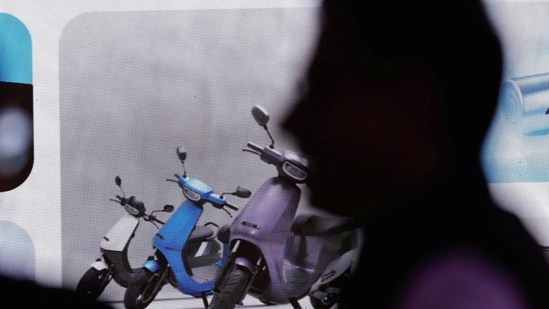
'Only electric two-wheelers from April 2028': Delhi's draft EV policy is in, suggestions sought| India News
# Delhi Mandates EV-Only 2-Wheelers by 2028
The Government of the National Capital Territory (NCT) of Delhi released its highly anticipated draft Electric Vehicle Policy 2026-2030 on Saturday, establishing a strict April 2028 deadline to end the registration of new petrol and diesel two-wheelers. Aimed at drastically reducing vehicular emissions in the capital, the policy mandates a complete transition to zero-emission technology for the two-wheeler segment. Authorities have officially opened the draft for a 30-day public consultation window, actively seeking feedback from citizens, manufacturers, and urban planners before finalizing this historic regulatory shift. [Source: Hindustan Times].
## The New Blueprint for a Greener Capital
Following the relative success of its inaugural EV framework launched in 2020, Delhi is now moving from an incentive-based model to a mandate-driven approach. The **Draft Electric Vehicle Policy 2026-2030** outlines the definitive phasing out of Internal Combustion Engine (ICE) vehicles across multiple transport categories. However, the most striking element of the new policy is the firm cutoff for two-wheelers.
By targeting April 2028, the Delhi government is giving the automotive industry and consumers exactly 24 months from the policy’s expected enactment date to adapt to a reality where traditional petrol-powered scooters and motorcycles will no longer receive regional transport office (RTO) registration.
This policy pivot reflects a growing urgency among policymakers to tackle the city’s chronic air quality crises. Delhi routinely battles severe smog, particularly during the winter months, and vehicular exhaust remains one of the primary local contributors to Particulate Matter (PM2.5) pollution. [Additional Source: Public health data and historical Delhi pollution reports].
## Why Target Two-Wheelers First?
To understand the government’s aggressive stance on two-wheelers, one must look at the demographics of Delhi’s roads. Two-wheelers form the backbone of urban mobility in the capital, accounting for **over 60% of all registered vehicles** and conducting millions of daily commutes.
“Petrol two-wheelers are disproportionately responsible for toxic emissions compared to their size,” explains Dr. Rajiv Mathur, Director of the Urban Emissions Consortium. “Because of their sheer volume and the less stringent emission control technologies historically used in cheaper models, transitioning this specific segment to battery power is the fastest way to achieve a measurable drop in urban air pollution.”
Furthermore, the technology for electric two-wheelers is highly mature. Unlike heavy-duty commercial trucks where battery weight and range remain significant hurdles, electric scooters are perfectly suited for the short, predictable daily distances characteristic of urban commuting.
## Phasing Out ICE Vehicles: Proposed Timelines
While the two-wheeler mandate is grabbing headlines, the draft policy is comprehensive, outlining transition timelines across the board.
**Draft Policy Phase-Out Schedule:**
* **Two-Wheelers (Private & Commercial):** 100% EV registration by April 2028.
* **Three-Wheelers (Auto-rickshaws):** 100% EV registration by March 2027 (building on existing high penetration).
* **Ride-Hailing Cabs/Aggregators:** 100% EV fleet additions by December 2029.
* **Light Commercial Goods Vehicles:** 100% EV registration by 2030.
The staggered approach is designed to give heavier, more complex vehicle segments extra time to develop supply chains, while pushing the already-thriving electric scooter market over the finish line.
## Industry Reactions and Manufacturing Readiness
The automotive sector’s response to the draft policy has been a mixture of cautious optimism and logistical concern. India’s EV manufacturing ecosystem has scaled rapidly over the last five years, but an outright ban on ICE two-wheelers in a major market like Delhi presents unprecedented supply chain pressures.
Vikram Sharma, a representative for the Delhi Automotive Dealers Association, highlighted the economic anxieties of the transition. “The 2028 deadline is highly ambitious. While major EV players are scaling up capacity, we must ensure that the supply of affordable electric two-wheelers can meet the demand of the working class. If the market isn’t ready, we risk outpricing lower-income commuters from personal mobility.”
Conversely, EV manufacturers have welcomed the draft. The guaranteed phase-out of petrol competitors provides a stable, predictable market that justifies massive capital investments in local battery manufacturing and assembly lines.
## The Gig Economy and Economic Impact
A crucial aspect of the draft policy focuses on the commercial use of two-wheelers. Delhi is home to hundreds of thousands of gig workers operating for food delivery, courier, and e-commerce platforms. For these individuals, a two-wheeler is a livelihood, not just a commuting tool.
To protect this vulnerable demographic, the Draft EV Policy 2026-2030 proposes **targeted financial interventions**. While broad-based consumer subsidies are being gradually tapered off, the government plans to introduce ring-fenced subsidies specifically for registered gig workers purchasing their first electric vehicle.
“Achieving total cost of ownership (TCO) parity was the goal of the 2020 policy, and we have largely achieved that,” notes Meera Desai, lead policy analyst at the Clean Mobility Initiative. “An EV scooter is cheaper to run per kilometer than a petrol scooter. The barrier is the upfront cost. The new policy’s focus on micro-financing and low-interest loans for commercial riders is a step in the right direction.”
## Charging Infrastructure and Battery Swapping
Mandating a 100% electric two-wheeler market requires a parallel explosion in charging infrastructure. Range anxiety remains a psychological barrier for many potential buyers, even in dense urban environments.
The draft policy aims to address this by mandating the installation of EV charging points in all new residential and commercial buildings. Furthermore, it places a massive emphasis on **battery swapping networks**.
For two-wheelers, battery swapping—where a depleted battery is exchanged for a fully charged one in under two minutes—eliminates charging downtime entirely. The Delhi government proposes offering subsidized public land to swapping operators to densify the network, aiming for a swapping station within a 2-kilometer radius of any point in the city by 2027.
## Environmental Implications and Public Health
The core driver behind this sweeping legislation is public health. Delhi’s Air Quality Index (AQI) frequently enters the “Severe” and “Hazardous” categories, leading to a surge in respiratory illnesses, cardiovascular complications, and reduced life expectancy for its residents.
Replacing millions of petrol-burning engines with zero-tailpipe-emission vehicles will have a profound localized impact. Health economists estimate that achieving the 2028 EV mandate could save the state exchequer billions of rupees annually in reduced healthcare costs and lost productivity due to pollution-related illnesses.
While critics often point out that EVs are only as clean as the grid that charges them, the transition is still a net positive. Power plants are generally located outside city centers and are subject to strict point-source emission controls, effectively removing the pollution from the immediate breathing zones of millions of pedestrians and commuters.
## The Path Forward: Public Consultation
The release of the Draft EV Policy 2026-2030 is just the first step. The Delhi Government has explicitly sought suggestions, objections, and improvements from the public. Transport unions, automotive manufacturers, environmental NGOs, and everyday commuters have a 30-day window to submit their feedback via the state transport department’s digital portal.
This democratic approach to policymaking is essential for a transition of this magnitude. Issues such as second-hand market regulations for existing petrol vehicles, the recycling framework for degraded lithium-ion batteries, and the stability of the local power grid to handle the sudden surge in electrical load will need to be refined based on expert feedback.
## Conclusion and Future Outlook
Delhi’s Draft Electric Vehicle Policy 2026-2030 represents one of the most aggressive urban decarbonization strategies attempted in the developing world. By drawing a hard line in the sand for April 2028, the government is forcing a paradigm shift away from fossil fuels in the city’s most ubiquitous transport segment.
If successfully implemented, the policy will not only transform the auditory and atmospheric landscape of India’s capital but will also serve as a blueprint for other megacities grappling with vehicular pollution. The success of this mandate will ultimately hinge on the seamless execution of public charging infrastructure, the continued affordability of EVs, and the collective willingness of the populace to embrace a quieter, cleaner commute.
By Senior Correspondent, India Mobility News, April 11, 2026.





