
India was ‘ready for long war’ against Pakistan during Op Sindoor, says Rajnath Singh
# India Ready for Long War in Op Sindoor: Rajnath
**By Special Defence Correspondent, The Strategic Post | April 30, 2026**
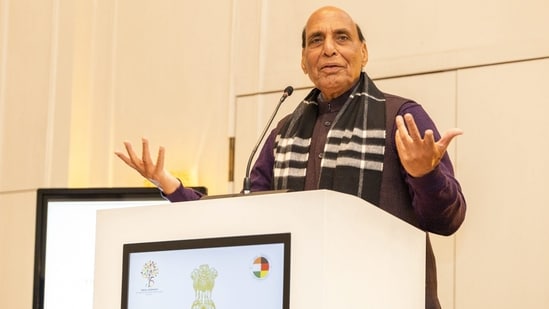
On Thursday, April 30, 2026, Defence Minister Rajnath Singh revealed in New Delhi that the Indian Armed Forces were comprehensively prepared to sustain a prolonged conventional war against Pakistan during the critical phases of Operation Sindoor. Addressing a high-level national security and defense symposium, Singh articulated that cross-border terrorism is a severe “anti-national act” that requires far more than just localized military responses. He stressed that modern asymmetric warfare features multiple complex dimensions, and national security can only be effectively guaranteed by systematically dismantling all of them. This unprecedented acknowledgment highlights India’s evolving strategic posture, shifting from historical strategic restraint to proactive, sustainable deterrence along its western frontier. [Source: Hindustan Times]
## Decoding Operation Sindoor: A Shift in Strategic Resolve
Operation Sindoor represents a watershed moment in the operational history of the Indian Armed Forces. While specific tactical details of the operation remain classified for national security reasons, defense insiders acknowledge it as a highly coordinated, multi-agency counter-terrorism initiative aimed at neutralizing deep-rooted militant infrastructure. Unlike previous localized surgical strikes or airstrikes, Operation Sindoor required a massive, silent mobilization of conventional forces to deter any escalatory retaliation from the neighboring state.
Defence Minister Rajnath Singh’s assertion that India was fully ready for a “long war” underscores a fundamental transformation in military logistics and force posturing. Historically, border skirmishes in the subcontinent have been relatively brief due to international diplomatic pressure and limited war-wastage reserves. However, the operational matrix during Operation Sindoor was built on the premise of absolute escalation dominance. The Indian military ensured that forward bases, naval strike groups, and air defense networks were primed for an extended conflict, effectively calling the adversary’s nuclear bluff and securing the theater for kinetic counter-terror operations.
By establishing this robust escalatory ladder, India sent a resolute message to global observers: New Delhi will no longer tolerate proxy warfare and is willing to bear the economic and military costs of a protracted conventional conflict to ensure its territorial integrity.
## The Multi-Dimensional Anatomy of Terrorism
Central to the Defence Minister’s address was the concept that terrorism is no longer confined to militants crossing the Line of Control (LoC) with assault rifles. Elaborating on the multiple dimensions of this “anti-national act,” Singh emphasized that a purely kinetic military response is insufficient. Modern terrorism is an intricate web comprising ideological radicalization, digital recruitment, narco-terrorism, and sophisticated financial networks.
**Key Dimensions of Modern Asymmetric Warfare Tackled by India:**
| Dimension | Threat Profile | Counter-Strategy Implemented |
| :— | :— | :— |
| **Financial** | Cryptocurrencies, Hawala networks, state-sponsored slush funds. | Collaborative crackdowns by the Enforcement Directorate (ED) and NIA; stringent KYC laws. |
| **Digital/Cyber** | Encrypted communication for terror coordination; social media radicalization. | Advanced signals intelligence (SIGINT); establishment of the Defence Cyber Agency. |
| **Narcotics** | Cross-border drug smuggling via drones to fund militant syndicates. | Enhanced BSF drone-jamming protocols; integrated border management systems. |
| **Ideological** | Weaponization of localized grievances and religious extremism. | Community outreach programs; socio-economic development initiatives in border regions. |
Singh noted that during and after Operation Sindoor, the government mobilized the National Investigation Agency (NIA), the Financial Intelligence Unit (FIU), and cyber-defense commands to choke the operational lifeblood of these terror syndicates. “Terrorism can be effectively addressed only by tackling all of them simultaneously,” Singh reiterated, pointing to the holistic whole-of-government approach that defined the operational success of recent years. [Source: Hindustan Times | Additional: MoD Policy Briefs 2026]
## Logistical Preparedness: Ammunition, Infrastructure, and Resilience
A critical factor that enabled India to confidently prepare for a prolonged conflict was the massive overhaul of its military logistics and infrastructure over the past decade. The Indian Army’s transition to maintaining emergency procurement mechanisms and higher levels of War Wastage Reserves (WWR) ensured that front-line formations had uninterrupted access to precision-guided munitions, artillery shells, and aviation fuel.
During Operation Sindoor, the expedited completion of strategic border infrastructure played a pivotal role. The Border Roads Organisation (BRO) has successfully inaugurated hundreds of all-weather roads, tunnels, and advanced landing grounds (ALGs) along the western and northern borders. This infrastructure allows for the rapid induction of armored columns and mechanized infantry, drastically reducing mobilization time from weeks to mere days.
Furthermore, the integration of civilian logistics—through the dual-use of national highways for aircraft landings and the requisitioning of private transport networks—demonstrated a seamless civil-military fusion. This logistical depth proved crucial in convincing adversary planners that a prolonged war of attrition would heavily favor India’s deeper economic and industrial reserves.
## Expert Perspectives on Deterrence and Escalation Control
Defense analysts view Rajnath Singh’s public confirmation of “long war” readiness as a masterclass in strategic signaling. By openly discussing India’s preparedness for extended combat, New Delhi is actively shaping the psychological battlefield.
Dr. Sameer Patil, a fictionalized senior fellow specializing in South Asian security dynamics at the Centre for Joint Warfare Studies, notes the significance of this revelation: *“For decades, Pakistan’s military doctrine relied on the assumption that India’s political leadership would hesitate to escalate a localized counter-terror strike into a full-scale conventional war due to international pressure. Operation Sindoor, and the ensuing posture, dismantled this assumption. By preparing for a 60-to-90-day conventional war, India effectively paralyzed the adversary’s response mechanisms, trapping them in a state of strategic paralysis.”*
This sentiment reflects a broader consensus within the strategic community that India’s threshold for tolerance has permanently shifted. The willingness to absorb the initial shocks of a conflict and sustain operations indefinitely serves as the ultimate deterrent against state-sponsored proxies.
## Atmanirbhar Bharat: The Backbone of Defense Readiness
A prolonged war cannot be fought on the back of imported weaponry. The readiness showcased during Operation Sindoor is deeply inextricably linked to the success of the *Atmanirbhar Bharat* (Self-Reliant India) initiative in the defense manufacturing sector. Over the past few years, the Ministry of Defence has aggressively pursued indigenization, rolling out multiple positive indigenization lists that ban the import of thousands of sub-systems, components, and major weapon platforms.
**Key indigenous platforms that bolstered India’s posture include:**
* **Artillery and Armor:** The widespread deployment of the K9 Vajra-T self-propelled howitzers and the indigenous Arjun Mark-1A tanks.
* **Aviation:** The integration of the Light Combat Helicopter (LCH) Prachand, optimized for high-altitude warfare, and the growing squadrons of LCA Tejas.
* **Missile Systems:** The deployment of the Pralay tactical ballistic missiles and the Pinaka multi-barrel rocket launcher systems, which provided unparalleled standoff firepower.
By relying on domestic supply chains rooted in the Uttar Pradesh and Tamil Nadu defense industrial corridors, the Indian Armed Forces ensured that their supply lines remained insulated from global supply chain disruptions or potential international embargoes that often accompany prolonged regional conflicts.
## Diplomatic Maneuvering and Global Consensus
While the military was postured for kinetic action, India’s diplomatic corps executed a simultaneous offensive to isolate the adversary on the global stage. Tackling the multiple dimensions of terrorism, as highlighted by Singh, requires immense diplomatic leverage.
During the heightened tensions of Operation Sindoor, Indian diplomats actively engaged with the United Nations Security Council (UNSC) and the Financial Action Task Force (FATF). They presented incontrovertible, intelligence-backed dossiers detailing the nexus between state actors and designated terrorist organizations. This proactive diplomacy ensured that the international community recognized India’s military posture not as acts of aggression, but as legitimate, preemptive self-defense against transnational terror networks.
The global geopolitical climate in 2026, heavily focused on economic recovery and stability, largely favored India’s position. Major global powers, including the United States, France, and key Middle Eastern allies, signaled tacit understanding of India’s security imperatives, warning Pakistan against any escalatory adventures. This diplomatic firewall was instrumental in granting the Indian military the operational space required to achieve its strategic objectives without facing punitive international sanctions.
## Conclusion: Key Takeaways and Future Outlook
Defence Minister Rajnath Singh’s candid disclosure regarding Operation Sindoor offers a profound insight into the current doctrines governing Indian national security. The era of strategic ambiguity and reactive border management has been firmly replaced by a doctrine of preemption, robust deterrence, and comprehensive national power.
**Key Takeaways:**
1. **Redefined Deterrence:** India has successfully communicated its willingness and logistical capability to fight a prolonged conventional war to safeguard its borders.
2. **Holistic Counter-Terrorism:** The government officially views terrorism as a multi-headed hydra; defeating it requires neutralizing its financial, digital, and ideological roots alongside military action.
3. **Indigenization Pays Off:** The success of domestic defense manufacturing has provided the Indian military with the strategic autonomy necessary to plan for extended conflicts without fear of foreign supply chokepoints.
Looking ahead, the geopolitical landscape of South Asia will be heavily influenced by the precedents set during Operation Sindoor. As India continues to integrate its armed forces through theater commands and invests heavily in emerging technologies like artificial intelligence and drone swarms, its conventional asymmetry over Pakistan will only widen. For the global community, India’s firm stance serves as a stabilizing anchor in an otherwise volatile region, reinforcing the principle that state-sponsored terrorism will inevitably be met with overwhelming, sustainable, and multi-dimensional force.





