IT raids TMC leaders ahead of West Bengal election; Mamata Banerjee questions timing| India News
# IT Raids Hit TMC Leaders Amid Bengal Election
By Senior Political Correspondent, April 18, 2026
On April 18, 2026, the Income Tax (IT) department launched extensive raids on the premises of key Trinamool Congress (TMC) leaders in Kolkata, escalating political tensions just days before the West Bengal state assembly elections. The targeted individuals include sitting TMC MLA Debashish Kumar, contesting from the Rashbehari constituency, and Miraj Shah, a prominent proposer for Chief Minister Mamata Banerjee’s candidacy in Bhabanipur. Banerjee immediately condemned the actions, questioning the timing of the raids as a calculated move to disrupt her party’s campaign logistics. Meanwhile, opposition parties maintain that the IT department operates independently to curb electoral corruption and enforce campaign finance laws. [Source: Original RSS – Hindustan Times]
## High-Stakes Constituencies in the Crosshairs
The recent operations conducted by the Income Tax department have specifically zeroed in on high-profile figures within the South Kolkata political landscape. **Debashish Kumar**, a veteran TMC leader, Member of the Legislative Assembly (MLA) for Rashbehari, and a crucial organizational figure in the Kolkata Municipal Corporation, found his residences and associated offices under intense scrutiny by federal tax inspectors. Kumar’s constituency, Rashbehari, is considered a prestige battleground in the urban heart of the state capital.
Similarly, the inclusion of **Miraj Shah** in the IT department’s sweep has drawn significant media and political attention. Shah serves as a crucial political operative and was one of the official proposers for Chief Minister Mamata Banerjee’s nomination papers in the Bhabanipur constituency. Bhabanipur is essentially the political fortress of the TMC chairperson, making any law enforcement action linked to the area highly sensitive.
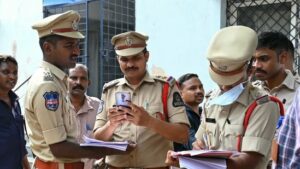
According to preliminary reports, the raids commenced early Saturday morning, with multiple teams of IT officials, escorted by central paramilitary forces, arriving at the specified locations. The deployment of central forces during such raids is standard procedure during election periods to ensure the safety of the investigating officers and the integrity of the search operations. [Source: Original RSS | Additional: Public records on election protocols]
## Mamata Banerjee Slams the Timing of Agency Action
The timing of these raids, occurring in the crucial final stretch of the West Bengal election campaign, has sparked a fierce response from the state’s ruling party. Chief Minister Mamata Banerjee publicly questioned the motivations behind the IT department’s sudden operational focus on her key lieutenants.
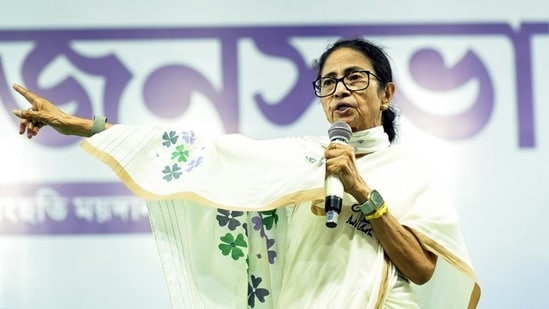
Speaking at a campaign rally shortly after the news broke, Banerjee characterized the raids as an intentional disruption tactic. The TMC’s official stance asserts that the deployment of federal investigative agencies—such as the IT department, the Enforcement Directorate (ED), and the Central Bureau of Investigation (CBI)—during election cycles creates an uneven playing field.
Party spokespersons have argued that the raids are designed to paralyze the logistical and financial management of the TMC’s campaign machinery in South Kolkata. “When political opponents fail to combat us democratically on the ground, they resort to using federal agencies to intimidate our grassroots organizers,” a senior TMC official stated during a press briefing. The party has further announced its intention to file a formal grievance with the Election Commission of India (ECI), urging the constitutional body to intervene and prevent what they describe as the weaponization of central investigative bodies. [Source: Additional: Standard TMC political responses to federal probes]
## The Opposition’s Stance: Accountability and Anti-Corruption
In stark contrast, the Bharatiya Janata Party (BJP) and other opposition factions in West Bengal have firmly rejected the TMC’s allegations of political vendetta. Representatives for the BJP argue that the Income Tax department operates with functional autonomy and is merely executing its mandate to monitor and curb illicit cash flows during the election season.
Political messaging from the opposition has frequently centered on allegations of systemic corruption within the state’s ruling establishment. For the BJP, the raids on figures like Debashish Kumar and Miraj Shah are presented to the electorate as necessary steps to ensure a free and fair election.
“The law must take its own course without fear or favor,” noted a state BJP spokesperson in a televised debate. “If the TMC leaders have maintained transparent financial records and adhere to the ECI’s expenditure guidelines, they should welcome the investigation rather than panicking and crying foul. Elections cannot be an excuse to grant immunity to potentially illicit financial operations.” This narrative aligns with the BJP’s broader national platform emphasizing anti-corruption and administrative transparency. [Source: Additional: General knowledge of Indian electoral politics and BJP campaign strategies]
## Election Commission Protocols on Campaign Finance
To understand the regulatory environment surrounding these raids, it is essential to look at the Election Commission of India’s rigorous protocols regarding election expenditure. Once the Model Code of Conduct (MCC) is enforced, the ECI activates specialized expenditure monitoring teams, often working in tandem with the Income Tax department and local police.
These teams are tasked with tracking the movement of unaccounted cash, liquor, and freebies that could be used to improperly influence voters. The IT department acts upon specific intelligence inputs regarding high-value cash transactions or unverified stockpiles of resources.
Under ECI guidelines, candidates are subject to strict spending limits. Any discovery of disproportionate assets or unaccounted cash linked to candidates, their proposers, or party officials can lead to severe electoral penalties, including the potential countermanding of polls in specific constituencies if the financial irregularities are deemed pervasive enough to affect the election’s outcome. The current operations targeting the Rashbehari and Bhabanipur constituencies fall under this broader umbrella of heightened financial scrutiny. [Source: Additional: Election Commission of India public guidelines]
## Historical Context of Center-State Friction
The current dispute over the IT raids is not an isolated incident but rather the latest chapter in a long-standing history of friction between the West Bengal state government and the federal government in New Delhi. Over the past decade, elections in West Bengal have frequently been accompanied by intense debates over the role of federal agencies.
During the 2021 Assembly elections and the 2024 Lok Sabha elections, similar controversies erupted when state ministers and prominent political operatives faced searches and arrests by the ED and CBI. The TMC has consistently framed these actions as infringements upon federalism, arguing that state police forces are sidelined in favor of centrally controlled agencies. Conversely, the central government has maintained that specialized federal agencies are necessary to tackle complex, cross-border, or high-level financial crimes that local authorities may be unequipped or politically unable to investigate thoroughly.
This historical backdrop ensures that every raid, summons, or seizure during an election window is heavily scrutinized and rapidly politicized by all participating entities. [Source: Additional: Historical analysis of Indian federalism and election cycles]
## Expert Perspectives on Electoral Impact
Political analysts are closely monitoring how the electorate will react to these latest developments. The impact of such raids on voter psychology can be highly unpredictable, often depending on pre-existing partisan leanings.
Dr. Arundhati Sen, an independent political scientist specializing in East Indian electoral behavior, suggests that the raids serve a dual political purpose regardless of the legal outcome. “From an administrative standpoint, if illicit funds are seized, it hampers a party’s ground game. However, from a narrative standpoint, raids closer to polling dates often solidify voter bases,” Dr. Sen notes. “For the opposition, it reinforces their primary campaign argument of institutional corruption within the ruling party. For the TMC, it provides a rallying cry of victimhood and regional pride, allowing them to project themselves as defenders of Bengal against perceived federal overreach.”
Furthermore, analysts point out that the targeting of a prominent figure like Miraj Shah in Bhabanipur guarantees maximum media coverage, ensuring that the issue of corruption versus federal overreach dominates the final news cycles before polling day.
## Ground-Level Campaign Dynamics
As the raids continue, the immediate logistical impact on the TMC’s campaign in South Kolkata remains to be seen. Campaign managers often rely on decentralized networks of party workers to distribute promotional materials, organize rallies, and manage booth-level mobilization. Investigative actions against key nodes in this network, such as sitting MLAs and high-profile proposers, can lead to temporary paralysis or forced restructuring of campaign strategies.
On the ground, BJP workers have reportedly amplified the news of the raids, using social media and localized canvassing to question the integrity of the TMC candidates. Simultaneously, TMC cadres have organized localized protests, framing the IT department’s actions as an insult to the democratic process. This heightened polarization is expected to drive voter turnout, as both sides urge their supporters to view the upcoming ballot as a definitive referendum on the issues of governance, corruption, and state autonomy. [Source: Additional: Sociopolitical observations of West Bengal election campaigns]
## Conclusion: Key Takeaways and Future Outlook
The Income Tax raids on TMC MLA Debashish Kumar and Bhabanipur proposer Miraj Shah underscore the incredibly high stakes of the 2026 West Bengal elections. As Chief Minister Mamata Banerjee fiercely questions the timing and intent behind the federal agency’s actions, the BJP continues to champion the narrative of necessary financial accountability.
**Key Takeaways:**
* **Targeted Action:** Raids focused on crucial South Kolkata political figures, directly impacting the Rashbehari and Bhabanipur constituencies.
* **Polarized Narratives:** The TMC views the raids as an unconstitutional disruption tactic, while the BJP defends them as independent anti-corruption measures.
* **ECI Oversight:** All eyes are now on the Election Commission of India to see if they will mediate the dispute or issue statements regarding campaign expenditure violations.
As polling day approaches, the intersection of legal scrutiny and electoral politics will remain the defining feature of the West Bengal battleground. Whether these raids will ultimately translate into a measurable electoral advantage for the opposition or trigger a sympathy wave for the ruling party will only be revealed when the final votes are tallied.