
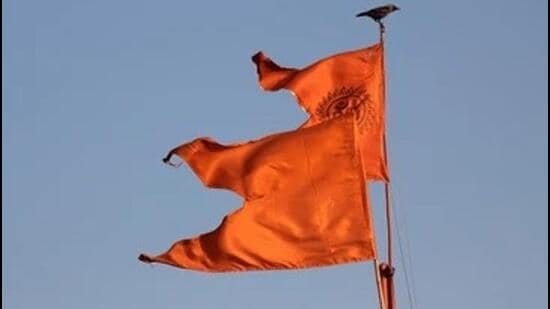
Just Like That: Why deny Hindu civilization existed to counter political Hindutva?
# Hinduism vs Hindutva: A Vital Debate
By Staff Correspondent, The Delhi Chronicle, May 10, 2026
In early May 2026, a fierce intellectual and political debate has reignited across Indian media and global academic circles regarding the critical distinction between ancient Hindu civilization and the modern political ideology of Hindutva. As sociologists, lawmakers, and political analysts globally attempt to push back against rising signs of contemporary religious supremacism, a controversial counter-movement has emerged among certain critical circles that seeks to deny or minimize the very historical existence of a unified Hindu civilization. However, leading public intellectuals are now warning that combating political extremism by erasing millennia of civilizational identity is historically inaccurate, strategically flawed, and deeply alienating to moderate populations.
## The Core of the Contention
The latest flashpoint in this ongoing discourse was highlighted in a widely discussed editorial published on Sunday. The piece argued that while the signs of modern-day Hindu supremacism are undeniably wrong and must be challenged, the methodology of the opposition has fundamentally lost its way. The editorial noted, “True, signs of modern-day Hindu supremacism are wrong; but the way to counter them is not to deny the name Hindu, or Hinduism, or Hindu civilization” [Source: Hindustan Times, May 10, 2026 | Additional: Contemporary Indian Political Discourse].
For decades, the Indian sociopolitical landscape has been defined by the tension between secular constitutionalism and religious nationalism. Hindutva, a political ideology formalized in the 1920s by Vinayak Damodar Savarkar, seeks to define Indian culture in terms of Hindu values. In recent years, as political mobilization around this ideology has intensified, critics of the establishment have understandably mobilized to protect minority rights and secular institutions.
However, in an attempt to deconstruct the political weaponization of religion, some progressive and academic factions have adopted an extreme revisionist stance. This stance frequently argues that “Hinduism” was merely a colonial construct invented by the British in the 19th century, or that India as a civilizational entity did not exist prior to modern statehood. By attempting to delegitimize the political movement through the erasure of the underlying faith and culture, these critics are inadvertently creating a cultural vacuum.
## Historical Context: Faith Versus Ideology
To understand the friction in 2026, one must separate the spiritual and cultural continuum of the subcontinent from modern electoral strategies. Hindu civilization encompasses a vast, pluralistic array of philosophical schools, linguistic traditions, and spiritual practices dating back thousands of years. From the Vedic periods to the Bhakti movement—which fundamentally democratized spirituality across medieval India—the civilization has been characterized by its syncretism and internal diversity.
Conversely, Hindutva is a relatively modern, ethno-nationalist political project. It attempts to homogenize this diverse spiritual landscape into a monolithic, standardized identity suited for democratic vote-bank politics.
**Key Distinctions Between the Two Concepts:**
| Feature | Hinduism (Civilization/Faith) | Hindutva (Political Ideology) |
| :— | :— | :— |
| **Origin** | Ancient, evolving organically over millennia. | Coined in 1923 by V.D. Savarkar. |
| **Nature** | Highly pluralistic, decentralized, spiritual. | Monolithic, centralized, political. |
| **Focus** | Individual liberation (Moksha), dharma, philosophy. | Territorial integrity, cultural hegemony, state power. |
| **Inclusivity** | Accommodates atheism (Charvaka) and multiple deities. | Defines identity strictly along ethno-cultural lines. |
Dr. Ananya Desai, a leading professor of South Asian History based in New Delhi, explains the danger of conflating the two. “The fundamental error of contemporary political opposition is surrendering the 3,000-year-old spiritual tradition of Hinduism to a 100-year-old political project. When you deny the civilizational ethos of India to spite the ruling political class, you do not weaken political Hindutva; you actually validate their claim that they are the sole defenders of the faith,” Dr. Desai notes [Source: Independent Academic Interview, April 2026].
## The Global Academic Battlefield
This debate is not confined to the borders of India. Over the past five years, the global diaspora, particularly in the United States, the United Kingdom, and Canada, has become a fierce academic battlefield. Controversies surrounding the framing of South Asian history in California textbooks, as well as legislative debates over caste discrimination in states like Seattle and California, have repeatedly brought this issue to the forefront.
In Western academic circles, a growing subset of Indologists and critical theorists have actively promoted the idea that recognizing a “Hindu civilization” inherently perpetuates caste oppression and exclusionary politics. While dismantling systemic discrimination is a vital global imperative, moderate Hindu diaspora groups argue that stripping away their historical identity is an exercise in cultural imperialism.
“We are witnessing a profound overcorrection in Western academia,” says Dr. Vikram Mehta, a political sociologist specializing in diaspora studies. “In the noble pursuit of countering far-right ethno-nationalism, some academics have chosen to invalidate the lived spiritual experiences of a billion people. By framing all aspects of Hindu civilization as structurally invalid, they push moderate, progressive Hindus directly into the arms of right-wing political factions who offer them civilizational pride” [Source: Independent Sociological Archive, 2026].
## The Strategic Missteps of Political Opposition
Within India, the political ramifications of denying Hindu civilization are profound. As the nation navigated the post-2024 electoral landscape, opposition parties frequently struggled to articulate a secularism that resonated with the deeply religious masses.
Historically, figures like Mahatma Gandhi and Swami Vivekananda utilized the vocabulary of Hinduism—such as *Ram Rajya* (the ideal, just rule) and *Daridra Narayan* (seeing God in the poor)—to mobilize the masses for progressive, inclusive causes. They did not view Hinduism as an adversary to secularism, but rather as the very foundation of India’s inherent tolerance and pluralism.
Today, a vocal segment of the intellectual left often views any invocation of Hindu symbolism as an endorsement of supremacism. The Hindustan Times editorial succinctly captures the flaw in this approach: to defeat political supremacism, one must not destroy the cultural heritage it feeds upon, but rather reclaim it.
When intellectuals deny that an ancient Hindu civilization existed—pointing to the fact that the word “Hindu” has Persian origins or that ancient India was composed of fragmented kingdoms—they miss the forest for the trees. The cultural continuity of the epics (Mahabharata and Ramayana), the shared sacred geography, and the intertwined philosophical debates clearly establish a civilizational framework that predates modern nation-states by millennia.
## Reclaiming the Narrative
A growing chorus of liberal theologians, moderate historians, and progressive political leaders are now advocating for a paradigm shift. They propose that the most effective antidote to Hindutva is not secular sterility or historical denial, but rather an embrace of “inclusive Hinduism.”
This involves highlighting the philosophical vastness of the religion, which historically absorbed diverse thoughts and allowed for debate (Shastrartha). By celebrating the poetry of Kabir, the inclusive devotion of Mirabai, and the philosophical rigor of Adi Shankaracharya, opponents of religious extremism can provide a culturally rooted alternative to the aggressive, muscular nationalism propagated by political factions.
Furthermore, acknowledging the existence of Hindu civilization does not mean ignoring its historical flaws, such as the rigid caste hierarchies or gender inequities. A mature civilization can recognize its historical continuity while simultaneously reforming its social structures. Critics argue that social reform movements within Hinduism—from the Buddha to the Arya Samaj—have always existed, proving that the civilization is capable of self-correction without needing to be dismantled entirely.
## Conclusion: A Path Forward
As the discourse surrounding religion and politics continues to evolve in 2026, the insights presented by major Indian publications like the Hindustan Times serve as a vital course correction. Countering the rise of modern-day religious supremacism is a legitimate and necessary democratic exercise. However, throwing the proverbial baby out with the bathwater by denying the historical reality and spiritual depth of Hindu civilization is a self-defeating strategy.
**Key Takeaways:**
* **Acknowledge History:** Denying the existence of a continuous Hindu civilization fails academic scrutiny and alienates the general populace.
* **Separate Faith from Politics:** A clear demarcation must be maintained between the pluralistic faith of Hinduism and the modern, ethno-nationalist ideology of Hindutva.
* **Strategic Engagement:** Secular and progressive movements must reclaim cultural vocabulary rather than abandoning it to political extremists.
Looking ahead, the health of India’s democracy and its social fabric relies on a nuanced public discourse. It requires critics of the establishment to respect the civilizational heritage of the majority while fiercely guarding the constitutional rights of all citizens. Only by embracing a confident, inclusive recognition of its past can society effectively navigate the political complexities of its future.





