
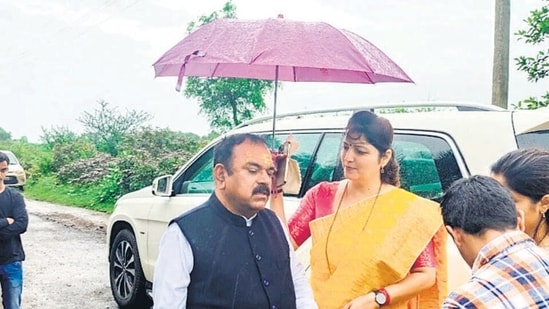
Maharashtra opposition demands probe into ministers linked to ‘godman’ Ashok Kharat held for rape| India News
Shiv Sena UBT Calls for NCP Leader Rupali Chakankar as Co-Accused in Trust Matter Key Takeaways Omni 360 News
A significant development in Maharashtra’s political landscape has seen the Shiv Sena (Uddhav Balasaheb Thackeray) faction publicly demand that Nationalist Congress Party (NCP) leader Rupali Chakankar be named a co-accused in a legal matter. This demand stems from her past association with a trust previously headed by Ashok Kharat. The call highlights the intricate connections between political figures and public trusts, drawing considerable attention across local political circles.
For those unfamiliar with the complexities, a ‘trust’ is essentially an organization that holds and manages assets, like money or property, for the benefit of specific individuals or for charitable purposes, often without aiming for profit. When someone is named a ‘co-accused’, it means they are being formally alleged to have been involved in the same wrongdoing as another person already facing charges in a particular case. In this instance, Shiv Sena (UBT) is asserting that Ms. Chakankar’s leadership role within a trust connected to Ashok Kharat warrants her inclusion in any ongoing investigation related to the trust’s activities or Mr. Kharat himself.
Rupali Chakankar, a prominent face in the NCP and the current head of the Maharashtra State Commission for Women, previously led the trust in question. The specific nature of the case involving Ashok Kharat and the trust has not been detailed extensively by Shiv Sena (UBT) in their public statements regarding this new demand, but the focus is clearly on the alleged links and Ms. Chakankar’s administrative responsibility during her tenure. The Shiv Sena (UBT) appears to be pushing for a thorough examination of these connections, suggesting that her leadership role makes her accountable for any irregularities or alleged misdeeds associated with the trust under Kharat’s prior management or during her own period.
This political move by Shiv Sena (UBT) signals an effort to link an opposition party leader to existing legal scrutiny. Such demands are not uncommon in the vibrant and often charged political environment of Maharashtra, where rival parties frequently seek to highlight alleged improprieties of their opponents. The NCP, for its part, has yet to issue a comprehensive official statement specifically addressing this particular demand from Shiv Sena (UBT). However, generally, political figures facing such allegations often assert their innocence and attribute these calls to political vendetta or attempts to tarnish their reputation.
The implications of this demand could be far-reaching. It could intensify political sparring between the two factions and potentially lead to deeper scrutiny of the trust’s operations and financial dealings. For Rupali Chakankar, it presents a significant challenge to her public image and could necessitate a strong defense of her actions and the trust’s management during her time at the helm. For local citizens, it underscores the importance of transparency in the functioning of trusts and the accountability of individuals, especially public figures, associated with them.
As this story unfolds, Omni 360 News will continue to monitor developments, bringing readers the most current and relevant updates from the ground.
Key Takeaways:
- Shiv Sena (UBT) has formally demanded that NCP leader Rupali Chakankar be made a co-accused in a case connected to a trust previously headed by Ashok Kharat.
- The demand hinges on Ms. Chakankar’s past leadership of the same trust, implying alleged accountability for its affairs.
- This move represents a significant political development, potentially escalating tensions between the Shiv Sena (UBT) and the NCP in Maharashtra.
- The situation highlights ongoing calls for transparency and accountability within public trusts and among political figures associated with them.





