Navy veteran sentenced by Qatar in second case; MEA cites legal process| India News
# Qatar Sentences Navy Vet; MEA Reacts
**By Rohan Sharma, Defense & Foreign Affairs Desk | April 17, 2026**
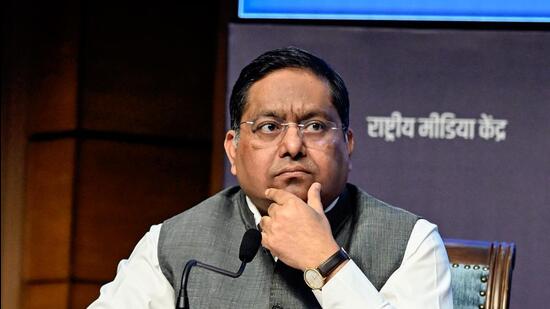
**New Delhi:** The Indian Ministry of External Affairs (MEA) confirmed on Friday that Commander (retired) Purnendu Tiwari, a decorated Indian Navy veteran, has been sentenced by a Qatari court in a second, separate legal case. Addressing the media, MEA spokesperson Randhir Jaiswal stated that the Indian government remains actively engaged with Qatari authorities, Tiwari’s family, and his legal counsel. The sentencing adds a new layer of complexity to the protracted legal saga that began in August 2022, when eight former Indian Navy personnel working for the defense services company Dahra Global were detained in Doha. While seven of his colleagues were released and repatriated to India in early 2024, Tiwari remained in Qatar under a travel ban to face these secondary proceedings.
[Source: Original RSS – Hindustan Times | Additional: MEA Press Briefing Transcripts]
## The MEA’s Stance and Ongoing Consular Support
The latest development in Commander Tiwari’s legal battles has prompted a swift but measured response from New Delhi. During the weekly press briefing, MEA spokesperson Randhir Jaiswal emphasized that the Indian government is closely monitoring the situation and respecting Qatar’s judicial process while ensuring the veteran’s fundamental rights are protected.
“The Indian side is in touch with Commander (retired) Purnendu Tiwari, his family, and his lawyers in connection with the case against him in Qatar,” Jaiswal stated. He reiterated that the Indian Embassy in Doha is providing continuous consular assistance and facilitating legal representation for the appeals process.
The MEA’s cautious tone reflects the delicate diplomatic tightrope India has walked since the Dahra Global controversy erupted. By focusing on the “legal process,” New Delhi is signaling its intent to resolve the matter through established judicial and diplomatic channels rather than public confrontation, a strategy that proved successful in commuting the death sentences of the eight veterans in late 2023.
## Background: The Dahra Global Saga
To understand the gravity of Commander Tiwari’s current predicament, it is essential to trace the origins of the Dahra Global case, which has been one of the most sensitive diplomatic challenges for India in the Middle East over the past four years.
In August 2022, Qatar’s State Security Bureau arrested eight former Indian Navy officers employed by Dahra Global Technologies and Consultancy Services, a private firm providing training and related services to the Qatari Emiri Naval Forces. The arrested individuals included highly decorated officers who had commanded frontline Indian warships.
**The Eight Veterans Initially Detained:**
* Captain Navtej Singh Gill
* Captain Birendra Kumar Verma
* Captain Saurabh Vasisht
* Commander Amit Nagpal
* Commander Purnendu Tiwari
* Commander Sugunakar Pakala
* Commander Sanjeev Gupta
* Sailor Ragesh Gopakumar
The charges, which were never officially made public by Doha or New Delhi, reportedly involved allegations of espionage related to Qatar’s advanced submarine program. In October 2023, a Qatari Court of First Instance sent shockwaves through India by sentencing all eight men to death.
Following intense diplomatic interventions at the highest levels of government—including a crucial meeting between Indian Prime Minister Narendra Modi and Qatar’s Emir Sheikh Tamim bin Hamad Al-Thani on the sidelines of the COP28 summit in Dubai—the sentences were commuted to varying prison terms in December 2023. By February 2024, seven of the eight veterans were released and allowed to return to India.
## Why Commander Tiwari Remained Behind
While his seven colleagues boarded flights back to New Delhi in early 2024, Commander Purnendu Tiwari was compelled to remain in Doha. As the Managing Director of Dahra Global, Tiwari occupied a senior executive role that placed him at the center of the company’s corporate and operational structure in Qatar.
According to legal experts tracking the case, while the severe state security charges were mitigated for all personnel, Tiwari faced secondary liabilities owing to his corporate position. These likely involve regulatory, financial, or administrative compliance charges under Qatari corporate law, leading to a travel ban and the initiation of this second case.
“When a foreign enterprise in the Middle East faces state-level scrutiny, the local managing director often absorbs the brunt of corporate liability,” explains Dr. Meenakshi Sanyal, a specialist in Gulf legal systems at the Center for West Asian Studies. “Commander Tiwari’s continued detention and this subsequent sentencing are likely tied to his signatory authority and managerial responsibilities at Dahra Global, distinct from the initial espionage allegations.”
[Source: Additional: Geopolitical and Legal Analysis based on Qatari Corporate Law]
## Timeline of the Qatar Navy Veterans Case
To provide context to this evolving story, here is a timeline of the key events:
| Date | Event |
| :— | :— |
| **Aug 2022** | Eight Indian Navy veterans working for Dahra Global arrested in Doha. |
| **Oct 2023** | Qatari Court of First Instance sentences all eight to death. |
| **Nov 2023** | India files an appeal; PM Modi meets Qatar’s Emir at COP28 in Dubai. |
| **Dec 2023** | Qatari appellate court drops the death penalty, commutes to prison terms. |
| **Feb 2024** | Seven veterans released and repatriated to India; Tiwari remains under travel ban. |
| **Apr 2026** | Commander Tiwari sentenced in a second, separate legal case. MEA issues statement. |
## Legal Complexities and Qatari Judicial Process
The Qatari legal system, deeply rooted in both civil law and Islamic jurisprudence, operates with stringent corporate liability frameworks. For Commander Tiwari, navigating this second conviction will require appealing through the multi-tiered judicial system.
If this recent sentence was handed down by the Court of First Instance or the Court of Appeal, his legal team, backed by the MEA, retains the right to escalate the matter to the Court of Cassation—Qatar’s highest appellate body. The Court of Cassation does not re-examine the facts of the case but exclusively reviews whether the lower courts applied the law correctly.
Additionally, the Emir of Qatar possesses the absolute authority to grant pardons, particularly during significant Islamic events such as Ramadan or Eid, a mechanism India has successfully leveraged for its citizens in the past. Given the precedent set by the earlier release of the seven veterans, diplomatic back-channels are likely focusing on securing an eventual Emiri pardon for Tiwari once the formal legal avenues are exhausted.
## Expert Perspectives on India-Qatar Relations
Despite the friction caused by the Dahra Global case, the broader geopolitical and economic relationship between New Delhi and Doha remains robust. Qatar is home to over 800,000 Indian expatriates, forming the largest expatriate community in the Gulf nation. Furthermore, Qatar is a vital pillar of India’s energy security.
In early 2024, parallel to the negotiations for the veterans’ release, India’s Petronet LNG signed a massive $78 billion deal with QatarEnergy to extend liquefied natural gas (LNG) imports through 2048. Analysts point out that this immense economic interdependence acts as a shock absorber against diplomatic ruptures.
“The Indian government has deliberately decoupled the legal plight of the Navy veterans from the broader strategic and energy partnership with Qatar,” notes Rajiv Bhatia, a former Indian ambassador and Distinguished Fellow at Gateway House. “By treating Commander Tiwari’s case strictly as a consular and legal matter, New Delhi ensures that the overall bilateral architecture remains undisturbed. The MEA’s statement today reinforces this pragmatic approach—trusting the legal process while quietly pushing for a humanitarian resolution behind closed doors.”
## Implications for Defense Contractors and Expatriates
The Dahra Global incident and Commander Tiwari’s ongoing legal struggles have cast a long shadow over Indian defense professionals working in the Gulf. The Middle East has long been a lucrative destination for highly skilled retired Indian military personnel, who offer expertise in training, logistics, and consulting to rapidly modernizing Gulf militaries.
However, this case has served as a stark cautionary tale. It underscores the vulnerabilities of working within jurisdictions where state security laws are opaque and corporate accountability can quickly transition into severe criminal liability.
Security consultancies in India report that since 2024, there has been a significant uptick in legal briefings and risk assessments for former military personnel taking up private sector roles in the Gulf. “There is now a much sharper focus on the exact legal structure of the employing entities, indemnification clauses, and the geopolitical alignment of the host nation,” says a senior executive at a New Delhi-based defense consultancy firm.
## Conclusion: The Road Ahead for Commander Tiwari
The sentencing of Commander Purnendu Tiwari in a second legal case marks a sobering chapter in a saga that many in India had hoped was fully resolved. As the MEA continues its consular efforts, the immediate focus will be on the appeals process within the Qatari judicial system.
Key takeaways from this development include:
1. **Continued Diplomatic Engagement:** India remains committed to resolving the issue through quiet diplomacy rather than aggressive posturing.
2. **Corporate Liability Risks:** The case highlights the unique legal risks faced by executives (like Tiwari in his role as MD) in foreign jurisdictions.
3. **Bilateral Stability:** The strong economic and energy ties between India and Qatar are expected to remain insulated from this specific consular issue.
The upcoming months will be critical for Commander Tiwari’s legal defense team as they formulate their appellate strategy. While the legal hurdles in Doha are formidable, the precedent of his seven colleagues returning home provides a lingering hope for a diplomatic or humanitarian breakthrough. Until then, New Delhi maintains its vigilant, process-oriented watch.