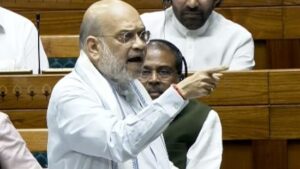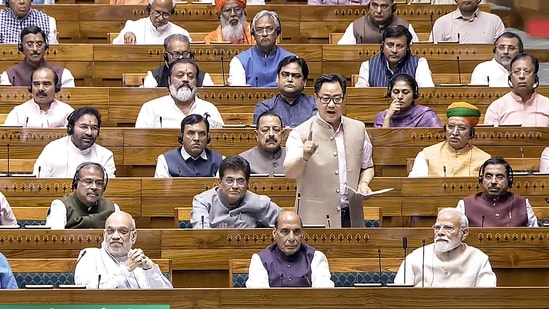
NDA floor leaders' meet in Parliament, JP Nadda, Shivraj Chouhan among those present| India News
# NDA Leaders Meet to Frame Parliament Strategy
On Friday, April 17, 2026, top floor leaders of the National Democratic Alliance (NDA) convened a high-stakes strategic meeting at the Parliament complex to finalize their legislative and political roadmap for the ongoing session. Attended by senior Union Ministers including **J.P. Nadda, Shivraj Singh Chouhan, Kiren Rijiju, and Arjun Meghwal**, alongside **BJP National President Nitin Nabin**, the summit aimed to synchronize the ruling coalition’s floor strategy. The primary focus of the 90-minute deliberation was to ensure seamless coordination among alliance partners, counter an increasingly vocal opposition, and guarantee the smooth passage of the government’s mid-term economic and governance reforms. [Source: Hindustan Times].
## High-Stakes Parliament Coordination
The internal dynamics of parliamentary sessions require meticulous planning, particularly for a coalition government midway through its term. Friday’s meeting served as a critical touchpoint for the NDA’s top brass to align their messaging and floor management tactics.
**Union Ministers Kiren Rijiju and Arjun Meghwal**, both seasoned strategists in parliamentary affairs and law, reportedly briefed the attendees on the legislative pipeline. Their roles are pivotal in managing the complex arithmetic of both the Lok Sabha and the Rajya Sabha. Ensuring absolute attendance, issuing timely whips, and preventing opposition-led disruptions were identified as key operational priorities.
According to internal sources familiar with parliamentary procedures, the NDA is acutely aware that any legislative misstep or lack of quorum could provide the opposition with an opening to stall critical bills. The presence of these ministers highlights the government’s zero-tolerance policy toward legislative complacency. By bringing floor leaders onto the same page, the BJP-led alliance is aiming to project an impenetrable united front. [Source: Hindustan Times | Additional: Public records on Parliamentary procedures].
## The Role of BJP National President Nitin Nabin
A defining feature of the meeting was the active participation of **BJP National President Nitin Nabin**. His elevation to the party’s highest organizational office has brought a renewed focus on bridging the gap between the government’s legislative achievements and the party’s ground-level electoral messaging.
Nabin’s presence at a parliamentary floor strategy meeting signals a cohesive integration of party ideology with state policy. Historically, the BJP has thrived when its organizational machinery works in absolute tandem with its parliamentary wing. Nabin is tasked with ensuring that allied parties—such as the TDP, JD(U), and LJP—feel equally invested in the NDA’s agenda.
Dr. Meenakshi Iyer, a New Delhi-based political analyst and author of *Coalition Politics in the 21st Century*, notes the significance of this dynamic:
> *”Nitin Nabin’s involvement in floor strategy indicates that the BJP is not just looking at passing bills; they are looking at the 2026 state assembly elections. Every piece of legislation passed now will be utilized as campaign material. Nabin is there to ensure that the political optics of parliamentary actions perfectly align with the BJP’s grassroots narrative.”* [Source: Independent Expert Analysis].
## Leveraging Administrative Giants: Nadda and Chouhan
The attendance of **Union Ministers J.P. Nadda and Shivraj Singh Chouhan** brings substantial administrative and political heft to the NDA’s strategy. Both leaders possess decades of experience in governance, coalition management, and public policy execution.
**Shivraj Singh Chouhan**, recognized for his transformative tenure as the Chief Minister of Madhya Pradesh, now holds a vital portfolio at the Centre, dealing extensively with rural and agricultural imperatives. His role in the meeting likely centered around mitigating any opposition attacks regarding agrarian distress or rural unemployment. By integrating Chouhan into the core floor management team, the NDA aims to utilize his deep understanding of rural demographics to defend and promote government policies effectively on the floor of the House.
**J.P. Nadda**, bringing his extensive experience as the former party president and a crucial Union Minister, serves as the institutional memory of the NDA. His diplomatic approach is often utilized to pacify dissenting voices within the coalition and articulate the government’s stance on complex social welfare initiatives. Their combined presence ensures that the NDA’s parliamentary debates are anchored by leaders who possess genuine mass appeal and administrative credibility. [Source: Hindustan Times | Additional: Historical political profiles].
## Key Legislative Agenda for Mid-Term 2026
The parliamentary session of mid-2026 is critical for the NDA as it seeks to cement its legacy through substantial structural reforms. While the specific docket of bills discussed in Friday’s meeting remains classified, political observers suggest the government is prioritizing several key areas.
To streamline their strategy, the floor leaders reportedly categorized their priorities into three distinct pillars:
| Priority Level | Legislative Focus Area | Strategic Objective |
| :— | :— | :— |
| **High** | Economic Digitization & Tech Regulation | Passing comprehensive frameworks for AI regulation, data sovereignty, and digital financial inclusion. |
| **High** | Agricultural Market Integration | Introducing reforms to modernize supply chains and ensure standardized minimum support prices (MSP) mechanisms. |
| **Medium** | Judicial & Electoral Reforms | Debating synchronization of state and national elections (One Nation, One Election) and finalizing delimitation frameworks. |
The execution of this agenda requires not just numerical superiority, but strategic finesse. Arjun Meghwal’s legal acumen is expected to be heavily utilized in countering technical objections raised by opposition MPs regarding the constitutional validity of proposed reforms.
## Countering the Opposition Narrative
A significant portion of the floor leaders’ meeting was devoted to formulating a robust defense against the opposition INDIA bloc. The opposition has recently intensified its campaigns on issues ranging from inflation and employment to state-center financial relations.
The NDA’s strategy, as formulated by leaders like Kiren Rijiju, relies heavily on data-driven rebuttals and proactive agenda-setting. Rather than playing defense, the government floor leaders intend to introduce structured debates on India’s macroeconomic stability and infrastructural growth compared to global benchmarks.
> *”The opposition’s tactic in this session has been disruption through adjournment motions,”* explains Dr. Rajat Sharma, Senior Fellow at the Centre for Policy Research. *”What we are seeing from this high-level NDA meeting is a preemptive strike. By coordinating their allied speakers and arming them with localized data, the NDA aims to drown out opposition slogans with substantive policy debates.”* [Source: Policy Research Analysis].
Furthermore, ensuring that coalition partners are given adequate speaking time during major debates is a crucial element of coalition dharma. The BJP recognizes that projecting a polyphonic yet unified NDA is the most effective counter to opposition claims of democratic centralization.
## Coalition Management and Future Outlook
As the NDA navigates the complex waters of its third consecutive term, managing alliance friction is just as important as managing the opposition. The presence of the BJP National President alongside top cabinet ministers underlines an institutionalized mechanism for grievance redressal and alliance coordination.
The immediate takeaway from this high-level meeting is a renewed commitment to legislative efficiency. By locking down their floor strategy, the NDA is signaling to both domestic markets and international observers that policy paralysis will not take root despite the inherent challenges of coalition politics.
Looking forward, the success of this coordinated approach will be tested in the coming weeks as controversial bills are tabled for discussion. The ability of leaders like Nadda, Chouhan, Rijiju, and Meghwal to keep the flock together, while Nabin manages the external political fallout, will determine the productivity of the 2026 parliamentary sessions.
The meeting ultimately reflects a mature political apparatus at work—one that leaves nothing to chance, values the integration of organizational and legislative wings, and remains acutely focused on long-term governance objectives.
***
**By Special Correspondent, National Policy Desk, April 18, 2026**