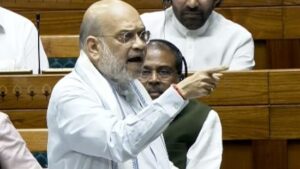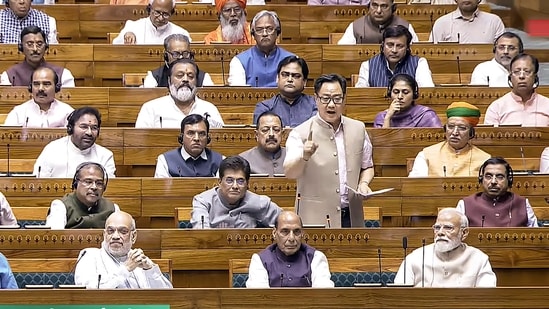
NDA floor leaders' meet in Parliament, JP Nadda, Shivraj Chouhan among those present| India News
# NDA Leaders Meet to Shape Parliament Strategy
**By Special Correspondent, National Affairs Desk** | **April 18, 2026**
On Friday evening, top floor leaders of the National Democratic Alliance (NDA) convened a high-level strategic meeting at the Parliament complex in New Delhi to finalize their legislative roadmap. Prominent attendees included Union Ministers J.P. Nadda, Kiren Rijiju, Arjun Ram Meghwal, and Shivraj Singh Chouhan, alongside BJP National President Nitin Nabin. Held against the backdrop of a highly charged parliamentary session, the April 17 gathering aimed to streamline floor coordination, ensure the seamless passage of critical pending bills, and construct a unified, impenetrable defense against an increasingly aggressive opposition front. [Source: Hindustan Times | Additional: Public Parliamentary Records].
## The Critical Timing of the Parliamentary Session
The mid-April parliamentary session of 2026 represents a crucial juncture for the ruling coalition. With several ambitious policy reforms waiting in the wings, the government is under pressure to maximize the productivity of both the Lok Sabha and the Rajya Sabha. Historically, the latter half of the Budget Session, or adjacent special sessions, witness intense legislative friction as the government attempts to push through financial bills and overarching policy changes while the opposition attempts to corner the executive on matters of national importance.
The meeting of the NDA floor leaders was specifically orchestrated to preempt any legislative paralysis. Floor coordination is an intricate political dance; it involves managing the speaking time of alliance members, ensuring quorum during the introduction of controversial bills, and anticipating the opposition’s procedural maneuvers. By bringing the most seasoned parliamentarians into one room, the NDA leadership sought to iron out internal policy differences and present a cohesive front. The presence of veteran leaders underscored the urgency and the high stakes associated with the current parliamentary docket.
## Heavyweights at the Strategic Table
The composition of the meeting revealed a carefully curated brain trust of the ruling party. Each leader brought a specific set of administrative and political competencies to the table, highlighting the multidimensional approach the government is taking toward parliamentary management.
**Key Attendees and Their Strategic Roles:**
* **J.P. Nadda:** Having transitioned from his pivotal role as the party chief in previous years to a crucial Union Minister, Nadda brings unparalleled experience in consensus-building. His deep understanding of alliance dynamics makes him indispensable in keeping NDA partners aligned on contentious bills.
* **Shivraj Singh Chouhan:** The former Chief Minister of Madhya Pradesh and current Union Minister commands immense grassroots respect, particularly regarding rural and agricultural matters. His role in the meeting likely centered on managing optics and framing legislative narratives that appeal to India’s vast agrarian voter base.
* **Kiren Rijiju:** Known for his assertive parliamentary interventions, Rijiju plays a central role in articulating the government’s stance, countering opposition narratives, and ensuring that parliamentary procedures are rigorously followed.
* **Arjun Ram Meghwal:** As a veteran leader with profound knowledge of law and parliamentary affairs, Meghwal is tasked with navigating the complex constitutional and legal intricacies of newly proposed bills, ensuring they stand up to both parliamentary scrutiny and subsequent judicial review.
## Bridging Government and Party: The Role of Nitin Nabin
One of the most significant aspects of the Friday meeting was the prominent presence of BJP National President Nitin Nabin. [Source: Hindustan Times]. The elevation of Nabin to the helm of the party apparatus marks a generational and regional shift within the organization, bringing a strong focus to Eastern India.
His participation in a parliamentary floor leaders’ meeting illustrates the seamless synergy the BJP aims to maintain between the executive branch and the organizational cadre. While ministers handle the legislative mechanics, the party president ensures that the political messaging derived from parliamentary victories is effectively communicated to the grassroots level. Nabin’s presence guarantees that every bill debated and passed in Parliament aligns perfectly with the party’s broader ideological commitments and electoral promises for the 2026 calendar year.
## Legislative Agenda on the Table
While the exact minutes of the closed-door meeting remain confidential, parliamentary sources indicate that the NDA leaders discussed a multi-pronged legislative strategy. The government is currently focused on a suite of reforms that target economic modernization, agricultural welfare, and systemic administrative overhauls.
| Priority Area | Legislative Focus | Strategic Importance |
| :— | :— | :— |
| **Economic Welfare** | Streamlining resource allocation and targeted subsidy distribution to lower-income demographics. | Essential for reinforcing the government’s pro-poor image ahead of impending state elections. |
| **Agricultural Reform** | Strengthening crop insurance frameworks and improving rural infrastructure funding mechanisms. | Managed heavily by Shivraj Singh Chouhan to consolidate rural voter bases. |
| **Judicial & Legal Frameworks** | Introducing amendments to expedite civil litigations and modernize colonial-era statutes. | Spearheaded by legal experts like Arjun Ram Meghwal to fulfill promises of systemic reform. |
The leaders reportedly deliberated on the sequencing of these bills. Deciding which bill to introduce on which day is a strategic calculation, heavily influenced by the opposition’s mood, the availability of allied MPs, and the daily media narrative.
## Countering the Opposition Narrative
A primary catalyst for the NDA leaders’ gathering is the highly organized pushback from the opposition benches. Over the past few sessions, the opposition coalition has utilized sophisticated floor management tactics—ranging from coordinated walkouts to strategic adjournment motions—to disrupt the government’s agenda.
During Friday’s meeting, Rijiju and Nadda reportedly led the discussion on how to counter these disruptions effectively. The strategy involves a two-tiered approach: first, maintaining an ironclad attendance record for all NDA Members of Parliament by issuing strict whips during critical voting periods; and second, deploying articulate ministers to dominate parliamentary debates, thereby preventing the opposition from monopolizing television broadcasts and digital media snippets.
By anticipating the opposition’s demands for debates on sensitive socio-economic issues, the NDA leadership is preparing comprehensive, data-backed rebuttals. This proactive defense ensures that the government is not caught off-guard and can seamlessly pivot the narrative back to its developmental achievements.
## Expert Analysis on the 2026 Political Landscape
Political commentators view the convergence of these specific leaders as a masterclass in coalition and cadre management. The integration of regional stalwarts with national strategists provides the NDA with a robust mechanism to handle the pressures of the 2026 legislative year.
“The presence of both top-tier union ministers and the BJP National President in a floor management meeting is highly indicative of the government’s current mindset,” notes Dr. Rajendra Panigrahi, a senior political analyst at the Centre for Legislative Studies in New Delhi. “It demonstrates that the NDA views parliamentary proceedings not just as a constitutional duty, but as the primary theater for political communication. Leaders like Shivraj Singh Chouhan and J.P. Nadda do not just bring administrative weight; they bring raw political capital that commands obedience from the backbenches.”
Furthermore, constitutional expert Meenakshi Sen points out the importance of legal acumen in these meetings. “With Arjun Ram Meghwal in the mix, the government is ensuring that its legislative drafts are legally watertight. The opposition has increasingly turned to the judiciary to challenge parliamentary bills. Having an impregnable legal strategy before a bill is even tabled is now a fundamental requirement for the ruling coalition,” Sen explained. [Source: Independent Expert Analysis].
## Implications for Upcoming State Elections
It is impossible to view the April 2026 parliamentary strategies in isolation from the broader electoral map. The year 2026 is heavily loaded with high-stakes state assembly elections, including crucial battlegrounds in West Bengal, Assam, Tamil Nadu, and Kerala. The policies debated and passed in the current parliamentary session will serve as the bedrock of the NDA’s campaign manifestos in these regions.
For instance, any legislation championed by Shivraj Singh Chouhan regarding rural development will be directly marketed to the agrarian populations of poll-bound states. Similarly, Nitin Nabin’s organizational strategies rely heavily on the success of these parliamentary sessions. If the government can showcase a highly productive session with landmark bills passed, the party cadre receives a massive morale boost, making grassroots mobilization significantly easier.
The floor leaders’ meeting, therefore, transcends mere parliamentary procedure. It is fundamentally an election war-room discussion dressed in parliamentary formality. The coordination between alliance partners is also being fine-tuned here, ensuring that regional allies who hold sway in upcoming state elections feel valued and their local interests are reflected in national policies.
## Looking Ahead: A Test of Synergy and Strategy
As the Parliament session progresses, the decisions made during the Friday evening meeting will be put to the ultimate test on the floors of the Lok Sabha and Rajya Sabha. The success of the NDA’s legislative agenda now rests on the execution of the strategies formulated by Nadda, Chouhan, Rijiju, Meghwal, and Nabin.
Key takeaways from this high-level assembly include the undeniable centralization of strategic planning, the elevation of legal and procedural readiness, and the seamless integration of party organization with executive governance. If the NDA successfully navigates the turbulent waters of the current session without conceding ground to the opposition, it will largely be credited to the meticulous groundwork laid down in strategic summits such as this one.
Moving forward, the nation can expect a highly disciplined ruling coalition in Parliament, characterized by aggressive debate participation, flawless attendance during critical votes, and a relentless focus on translating legislative victories into electoral momentum for the latter half of 2026. The meeting at the Parliament complex was not just about managing the present session; it was about setting the political rhythm for the entire year.