NDA floor leaders' meet in Parliament, JP Nadda, Shivraj Chouhan among those present| India News
# NDA Floor Leaders Convene Over House Strategy
**By Special Parliamentary Correspondent, The New Delhi Inquirer | April 17, 2026**
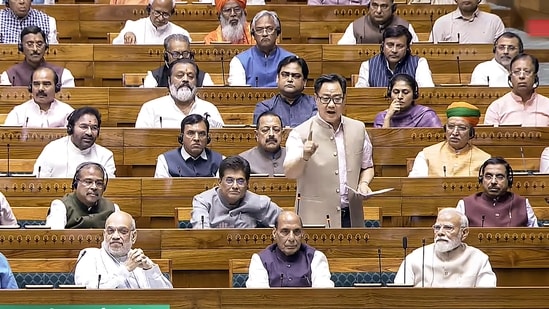
On Friday evening, top leaders of the National Democratic Alliance (NDA) convened a crucial floor management meeting at the Parliament complex to blueprint their legislative strategy for the ongoing parliamentary session. Attended by prominent Union Ministers including J.P. Nadda, Shivraj Singh Chouhan, Kiren Rijiju, and Arjun Meghwal, alongside BJP National President Nitin Nabin, the high-level gathering focused on streamlining coalition coordination. The meeting aimed to fortify the ruling alliance’s stance against an increasingly vocal opposition, prioritize the passage of pending reform bills, and ensure seamless communication among alliance partners during crucial debates [Source: Hindustan Times].
With the second half of the crucial Budget Session underway, the NDA’s leadership is leaving no stone unturned to guarantee smooth parliamentary proceedings. The presence of both veteran government ministers and top party brass signifies a synchronized effort to bridge governmental policy with organizational strategy.
## The Imperative of Floor Coordination
Floor management is the invisible engine that drives parliamentary democracy. For a ruling coalition, ensuring that Members of Parliament (MPs) are present, briefed, and unified on key bills is essential to project strength and pass legislation efficiently. Friday’s meeting of the NDA floor leaders was a proactive measure designed to iron out any potential legislative roadblocks before they materialize on the floor of the Lok Sabha and Rajya Sabha.
The ongoing session of Parliament has been marked by intense debates, with the opposition demanding comprehensive discussions on federal structures, agricultural policies, and economic indicators. To navigate this complex environment, the NDA requires airtight coordination. The floor leaders are tasked with issuing whips, managing debate rosters, and countering opposition narratives with data-driven arguments.
During the meeting, the leaders reportedly discussed a detailed timeline for introducing new legislative drafts and passing the financial appropriations required for the 2026-2027 fiscal year. By preemptively aligning the voices of various NDA constituent parties, the alliance aims to mitigate the risk of parliamentary stalemates that have occasionally characterized recent sessions.
## A Roster of Heavyweights at the Helm
The composition of the attendees highlights the strategic importance of the meeting. Each leader brings a unique set of skills and political capital to the table, ensuring that the NDA’s strategy is both comprehensive and resilient [Source: Original RSS Snippet].
* **J.P. Nadda:** As a senior Union Minister and former party chief, Nadda brings unparalleled institutional memory. His ability to navigate complex interpersonal dynamics within the coalition makes him a critical asset in consensus-building.
* **Shivraj Singh Chouhan:** The former long-time Chief Minister of Madhya Pradesh and current Union Minister commands massive respect across the Hindi heartland. His focus on grassroots issues, agriculture, and rural development ensures that the NDA’s legislative agenda remains tethered to the needs of the common citizen.
* **Kiren Rijiju:** Known for his sharp parliamentary acumen, Rijiju plays a pivotal role in liaising with the opposition, managing the daily legislative business, and defending the government’s legal and procedural decisions on the floor of the House.
* **Arjun Meghwal:** As a veteran parliamentarian with a deep understanding of constitutional law and parliamentary procedure, Meghwal is instrumental in drafting and defending complex bills, ensuring they stand up to rigorous parliamentary scrutiny.
* **Nitin Nabin:** The presence of BJP National President Nitin Nabin underscores the vital link between the government and the party organization. Nabin’s leadership is crucial in ensuring that the party cadre is mobilized to support the government’s legislative achievements on the ground.
## Navigating the Opposition’s Offensive
The INDIA bloc has been actively trying to corner the government on multiple fronts. From raising points of order to staging strategic walkouts, the opposition has utilized every parliamentary tool available to disrupt the NDA’s legislative momentum. Friday’s meeting was, in large part, a tactical war room aimed at countering these maneuvers.
The NDA floor leaders discussed mechanisms to ensure that ruling party MPs are adequately prepared to aggressively defend the government’s track record. This involves providing MPs with comprehensive briefing dockets, real-time data, and talking points that directly address the opposition’s allegations.
Furthermore, the leaders emphasized the importance of maintaining parliamentary decorum while firmly pushing back against what they perceive as manufactured disruptions. By presenting a united and disciplined front, the NDA intends to highlight the contrast between its governance-focused approach and the opposition’s protest-centric tactics.
## The Critical Role of Regional Allies
While the BJP remains the dominant force within the NDA, the coalition relies heavily on the support of its regional partners, including the Telugu Desam Party (TDP), the Janata Dal (United) [JD(U)], and the Lok Janshakti Party (LJP). Floor coordination is not just about managing BJP MPs; it is about honoring the fundamental tenets of “coalition dharma.”
During the strategy session, ensuring that allied parties are consulted and comfortable with upcoming bills was a top priority. Regional parties often have state-specific sensitivities regarding subjects like center-state financial relations, resource allocation, and concurrent list legislation.
By engaging floor leaders from these allied parties in the broader parliamentary strategy, the BJP aims to prevent any internal dissonance from spilling out onto the floor of the House. This collaborative approach ensures that when a vote is called, the NDA block remains undivided, effectively neutralizing the opposition’s hopes of exploiting internal coalition fractures.
## Electoral Shadows: The 2026 State Assembly Elections
It is impossible to view parliamentary strategy in isolation from the broader electoral landscape. The year 2026 is a politically charged one, with several crucial state assembly elections on the horizon, including West Bengal, Assam, Tamil Nadu, and Kerala [Source: General Political Knowledge]. The legislative business conducted in Parliament serves as a primary narrative-builder for these state campaigns.
Union Minister Shivraj Singh Chouhan’s focus on rural development and agriculture bills is directly tied to securing the rural vote bank. Similarly, the presence of BJP National President Nitin Nabin highlights the party’s intent to package parliamentary victories into campaign slogans. The NDA wants to pass bills that resonate with welfare distribution, infrastructure development, and economic growth—key pillars of their state election manifestos.
The opposition, fully aware of this dynamic, uses Parliament to stall these narrative victories. Therefore, the floor management strategy discussed on Friday is not just about passing laws; it is about winning the perception battle in the run-up to the state elections.
## Expert Analysis: A Shift Towards Micro-Management
Political analysts view the high-profile nature of this floor leaders’ meeting as a sign of the NDA’s evolving approach to parliamentary management.
“The convergence of organizational heads like BJP President Nitin Nabin and seasoned parliamentarians like Kiren Rijiju and J.P. Nadda indicates a zero-tolerance policy for legislative missteps,” notes Dr. Rajeev Sharma, a New Delhi-based political scientist. “In previous years, floor management was often left strictly to the Parliamentary Affairs Ministry. Today, we are seeing a holistic approach where the party organization and the cabinet work in absolute tandem to micromanage the parliamentary narrative.”
Dr. Sharma further adds, “The inclusion of mass leaders like Shivraj Singh Chouhan in these granular strategic meetings shows that the NDA is actively linking its macroeconomic legislative agenda with ground-level socio-political realities. They are preparing for debates not just legally, but politically.”
## Policy Implications on the Anvil
As a direct result of this meeting, political observers expect a more aggressive legislative push in the coming weeks. Several key bills related to digital data frameworks, judicial reforms, and agricultural logistics are pending.
The NDA’s strategy will likely involve pushing these bills through comprehensive committee reviews where necessary, but relying on their strong floor numbers to limit prolonged and disruptive debates. The coordination team led by Rijiju and Meghwal will be tasked with ensuring that all procedural requirements are flawlessly executed, preventing the opposition from challenging the bills on technical grounds.
Furthermore, the alignment with BJP National President Nitin Nabin ensures that once a bill is passed, the party machinery across the country is immediately activated to disseminate the benefits of the legislation to the grassroots level.
## Conclusion and Future Outlook
The Friday evening meeting of the NDA floor leaders in Parliament, attended by J.P. Nadda, Shivraj Singh Chouhan, Kiren Rijiju, Arjun Meghwal, and Nitin Nabin, marks a definitive step towards consolidating the ruling alliance’s parliamentary dominance. By focusing on meticulous floor coordination, strategic defense against opposition tactics, and seamless alignment between the government and the party organization, the NDA is securing its legislative agenda for the remainder of the session.
**Key Takeaways:**
* **Unified Command:** The integration of party leadership (Nitin Nabin) with cabinet veterans (Nadda, Chouhan) ensures a unified approach to parliamentary challenges.
* **Proactive Defense:** The NDA is preempting opposition disruptions by preparing comprehensive rebuttals and enforcing strict party discipline.
* **Electoral Alignment:** Legislative priorities are being carefully synchronized with the political narratives required for the upcoming 2026 state assembly elections.
* **Coalition Cohesion:** A strong emphasis is being placed on keeping regional allies informed and aligned, safeguarding the numerical strength of the alliance on the floor.
As the parliamentary session progresses, the effectiveness of this strategic conclave will be tested. However, the comprehensive nature of the planning suggests that the NDA is well-prepared to navigate the turbulent waters of Indian parliamentary democracy, transforming legislative hurdles into political victories.