
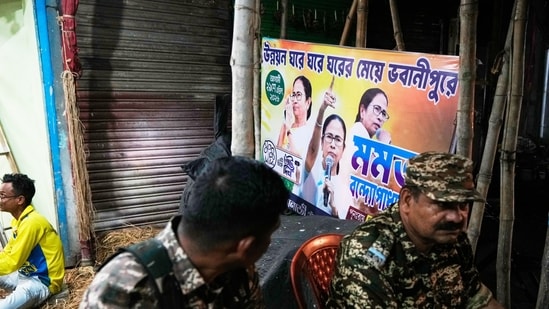
'No important files to be removed or damaged’: Top official as TMC loses Bengal
# Bengal Transition: Official Secures Govt Files
By Siddhartha Basu, The Subcontinent Post, May 5, 2026
Following a historic defeat for the **Trinamool Congress (TMC)** in the 2026 West Bengal Legislative Assembly elections, the state’s top administrative leadership has enacted strict measures to freeze the bureaucratic paper trail. On Monday evening, the West Bengal Chief Secretary issued an urgent directive mandating that “no important paper or any file is removed/damaged or otherwise taken out from the offices” across all state departments. This unprecedented late-night order, aimed at District Magistrates and departmental secretaries, seeks to ensure an uncompromised transition of power to the incoming administration. The immediate securing of the state secretariat, Nabanna, and all peripheral administrative complexes highlights the high-stakes nature of this political handover. [Source: Hindustan Times].
## A Strict Mandate for Bureaucratic Integrity
The internal memorandum, circulated shortly after the Election Commission of India (ECI) confirmed the electoral trends, serves as a preemptive strike against potential sabotage or the destruction of crucial evidence. The Chief Secretary’s office explicitly instructed all heads of departments, directorates, and regional offices to seal off records rooms and monitor the movement of physical and digital files.
According to sources within Nabanna, the state’s administrative headquarters, the directive includes the suspension of routine file disposal protocols. Typically, outdated or non-essential documents are periodically shredded or archived. However, this process has been entirely halted until the new Chief Minister takes the oath of office and reviews the administrative landscape. Security personnel at all government facilities have been ordered to inspect briefcases, bags, and unauthorized vehicles leaving the premises.
“This is a standard yet highly emphasized protocol during a regime change, especially one resulting from a fiercely contested election,” a senior Indian Administrative Service (IAS) officer stated on the condition of anonymity. “The bureaucracy must act as the custodian of the state’s machinery. Preserving every document ensures that the incoming government has total visibility into the outgoing administration’s decisions, financial commitments, and ongoing projects.” [Additional Source: Public Administration Protocols].
## Election 2026: The Fall of the TMC Fortress
The directive arrives in the wake of a seismic political shift in West Bengal. The 2026 assembly elections marked the end of Mamata Banerjee’s 15-year tenure as Chief Minister. After sweeping to power in 2011 on the slogan of “Ma, Mati, Manush” (Mother, Earth, People) and dismantling the 34-year rule of the Left Front, the TMC faced a mounting tide of anti-incumbency, economic challenges, and aggressive campaigning by a consolidated opposition.
Despite launching numerous welfare schemes, the TMC administration over the last five years was heavily burdened by allegations of systemic corruption, bureaucratic lethargy, and controversies surrounding law and order. The electorate, reflecting a desire for administrative overhaul, voted decisively for change.
With the TMC shifting to the opposition benches, the urgency to secure government files reflects the profound mistrust that characterized the election campaign. The incoming leadership had repeatedly promised comprehensive audits of state finances and vowed to investigate alleged irregularities in state-sponsored schemes, making the physical preservation of government documents a matter of paramount political and legal importance.
## Echoes of Past Probes and Transparency Concerns
To understand the gravity of the Chief Secretary’s order, one must look at the administrative controversies that plagued West Bengal in the years leading up to 2026. The state witnessed multiple high-profile investigations by central agencies, including the Central Bureau of Investigation (CBI) and the Enforcement Directorate (ED).
Cases such as the infamous school service commission (SSC) recruitment scam, the public distribution system (ration) irregularities, and various municipal recruitment controversies relied heavily on paper trails, digital signatures, and departmental memos. In several of these past investigations, central agencies had alleged that crucial files had gone “missing” from government offices, significantly hindering the judicial process.
By ordering that “no important paper or any file is removed/damaged,” the state administration is attempting to insulate the bureaucracy from accusations of a cover-up. [Source: Hindustan Times]. The new administration will inherit these ongoing probes, and the preservation of administrative archives will be critical to their stated goal of publishing ‘White Papers’ on the financial and administrative health of the state.
## Expert Perspectives on the Transition of Power
Legal scholars and political analysts view the Chief Secretary’s move as both legally necessary and politically astute. It acts as a shield for civil servants who might otherwise face pressure from outgoing political operatives.
**Dr. Meenakshi Sengupta**, a constitutional law expert and former advisor to the Election Commission, explains the legal dynamics: *“When a ruling party loses an election, the incumbent Chief Minister resigns and transitions into a caretaker role until the new government is sworn in. During this period, the caretaker government is stripped of its power to make major policy decisions. The Chief Secretary effectively becomes the operational head of the state, answering directly to the Governor. Securing the administrative apparatus is their first and most vital constitutional duty.”*
Political analyst **Rajat Chatterjee** notes the political optics: *“The opposition built its 2026 campaign on the promise of transparency and routing out corruption. If files were to go missing during the transition, it would trigger a massive political crisis before the new government even took office. The Chief Secretary’s proactive order defuses a potential ticking time bomb and reassures the public that the democratic mandate is being respected at an institutional level.”*
## Standard Operating Procedures vs. Emergency Measures
While securing files is a normal part of democratic transitions, the explicit and stringent nature of the West Bengal order highlights an atmosphere of heightened vigilance. To ensure continuity and prevent data loss, the state machinery has activated several protocols:
* **Suspension of Routine Archiving:** All shredding of old documents and clearing of office spaces are halted.
* **Digital Logs:** IT departments overseeing state portals (such as *E-Bhagat* and treasury portals) have been ordered to freeze access privileges for outgoing political appointees and log all download activities.
* **CCTV Monitoring:** Enhanced surveillance in government record rooms, particularly in the departments of Finance, Home Affairs, Urban Development, and Education.
* **Inventory Audits:** Departmental heads are required to submit an immediate inventory of all classified and active policy files to the Chief Secretary’s office.
These measures echo similar actions taken during highly polarized state transitions in India’s political history, such as the 2007 handover in Uttar Pradesh or the 2018 transition in Tripura, where bureaucratic records were heavily guarded following decades of single-party rule.
## Looking Ahead: The Incoming Administration’s Challenge
For the newly elected government, the secured files represent both an asset and an overwhelming challenge. The transition team will face the monumental task of auditing 15 years of administrative decisions, financial allocations, and departmental expenditures.
The immediate priorities for the incoming Chief Minister will likely involve setting up specialized bureaucratic task forces to comb through files from the most heavily scrutinized departments. Furthermore, protecting whistleblowers within the state administration who come forward with documents related to alleged past irregularities will be a crucial test of the new government’s commitment to its campaign promises.
The Chief Secretary’s decisive action ensures that, at the very least, the new government will begin its tenure with a comprehensive, unredacted view of the state’s affairs. The unhampered transfer of physical and digital data will dictate the pace at which the new administration can fulfill its electoral mandate and stabilize the state’s economy.
## Conclusion: A Victory for Institutional Integrity
The mandate to secure all government files in West Bengal following the TMC’s electoral defeat is a vital exercise in democratic accountability. By explicitly stating that “no important paper or any file is removed/damaged,” the highest levels of the state bureaucracy have demonstrated a commitment to institutional integrity over partisan allegiance. [Source: Hindustan Times].
As West Bengal prepares to swear in its first new government in a decade and a half, the safety of these documents guarantees that the history of the outgoing administration remains intact. It sets a robust precedent for civil servants across India, reminding them that their ultimate loyalty lies not with the politicians who transiently occupy the statehouses, but with the constitution, the law, and the public record. How the incoming administration utilizes this preserved bureaucratic archive will ultimately define the state’s political trajectory for the next five years.





