
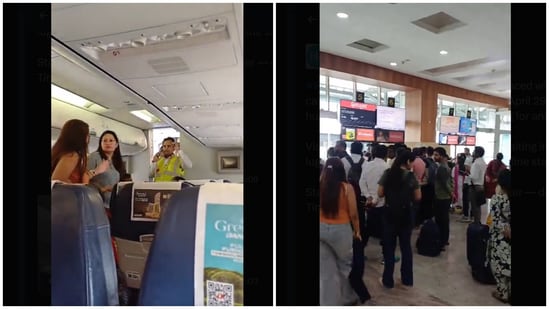
'No one is answering': SpiceJet cancellations at Mumbai airport leave passengers stranded for hours
# SpiceJet Chaos: Mumbai Flights Strand Hundreds
By Staff Reporter, Aviation Today, April 30, 2026
Hundreds of passengers were left severely stranded at Mumbai’s Chhatrapati Shivaji Maharaj International Airport (CSMIA) on Thursday after budget carrier SpiceJet abruptly canceled multiple domestic flights. Visuals emerging from the terminals on April 30, 2026, depicted chaotic scenes of massive queues, piled-up luggage, and deeply frustrated travelers demanding answers from absent airline staff. With the summer vacation travel season at its peak, the sudden operational collapse disrupted holiday plans and crucial business itineraries, spotlighting the airline’s deepening crisis and raising urgent questions about passenger welfare in India’s booming aviation sector. [Source: Hindustan Times | Additional: Industry Data].
## Panic and Confusion at Mumbai Airport
The disruption began early Thursday morning when travelers arriving for morning departures found their flight statuses silently updated to “Canceled” on the departure display boards. According to initial reports and viral visuals circulating on social media platforms, passengers were completely blindsided.
Footage from the spot prominently featured passengers sitting on their suitcases, forming winding, unmanaged queues, and attempting to corner the few visible ground handling staff. The primary complaint echoing through the terminal was the absolute lack of prior notification. [Source: Hindustan Times].
“We arrived at the airport at 4:00 AM for a 6:30 AM flight to Bengaluru, only to see a red ‘Canceled’ sign on the screen. No SMS, no email, and absolutely no staff at the check-in counters to guide us,” shared one frustrated passenger in a widely shared video clip.
The chaos was particularly distressful for families traveling with young children and elderly passengers. With seating areas quickly filling to capacity, many were forced to sit on the cold terminal floors. The sudden grounding of these flights created an immediate bottleneck at CSMIA, one of the busiest airports in South Asia, forcing airport security personnel to step in and manage the swelling crowds to prevent stampedes near the departure gates.
## The ‘Silent’ Airline: A Complete Communication Breakdown
The most glaring issue highlighted during Thursday’s fiasco was the complete communication blackout from the airline. As the Hindustan Times aptly summarized the situation: “No one is answering.”
In modern aviation, automated systems are designed to trigger SMS, WhatsApp, and email alerts the moment a flight is rescheduled or canceled. However, passengers reported that SpiceJet’s digital infrastructure seemingly failed them. Furthermore, customer care helplines were reportedly jammed, with travelers spending upward of an hour on hold only to be disconnected automatically.
At the physical counters in Mumbai, the situation was similarly dire. Ground staff, heavily outnumbered by irate passengers, appeared ill-equipped to offer solutions. Reports indicated that staff members were retreating to back offices to avoid the ire of the crowds, leaving travelers to fend for themselves. This lack of transparency not only violates basic customer service ethics but also contravenes standard operating procedures mandated by Indian aviation regulators. [Source: Original RSS | Additional: Aviation Regulatory Framework].
## The Ripple Effect: Route Disruptions and Surging Fares
Because aircraft operate on tightly scheduled loops—often flying from Mumbai to Delhi, then onward to Srinagar or Guwahati—a cancellation at a primary hub like Mumbai triggers a massive domino effect across the country. An aircraft grounded in Maharashtra means passengers waiting in New Delhi or Kolkata will inevitably face delays or subsequent cancellations later in the day.
This immediate reduction in seat capacity had an instant and brutal impact on spot airfares. Desperate travelers attempting to rebook themselves onto rival carriers such as IndiGo, Akasa Air, or Air India found that last-minute ticket prices had skyrocketed. Fares on the high-density Mumbai-Delhi sector reportedly surged by over 300% within hours of the SpiceJet cancellations, pricing out many budget-conscious travelers and families.
## SpiceJet’s Ongoing Operational Struggles
To understand the chaos in Mumbai, one must look at the broader, systemic issues plaguing SpiceJet over the past several years. As of early 2026, the once-dominant low-cost carrier has been fighting an uphill battle for survival, grappling with severe financial headwinds, legal battles with aircraft lessors, and a shrinking operational fleet.
**Key Factors Contributing to the Crisis:**
* **Lessor Disputes:** SpiceJet has faced continuous litigation in the National Company Law Tribunal (NCLT) and the Delhi High Court over unpaid dues to aircraft lessors and engine vendors. This has periodically resulted in aircraft being grounded or repossessed.
* **Supply Chain Bottlenecks:** Global shortages of spare parts and prolonged engine maintenance turnaround times have disproportionately affected airlines with strained cash flows, limiting their ability to lease replacement aircraft.
* **Capital Constraints:** Despite multiple rounds of fundraising and promoter capital infusions between 2023 and 2025, the airline has struggled to maintain a robust financial buffer, making it highly vulnerable to minor operational shocks.
* **Attrition:** The airline has faced challenges in retaining ground staff and pilots amid delayed salary disbursements, directly correlating with the lack of personnel seen at the Mumbai terminal. [Source: Additional Financial News & Industry Knowledge].
## Passenger Rights: What Does the DGCA Say?
In light of these mass cancellations, consumer rights are firmly in the spotlight. The Directorate General of Civil Aviation (DGCA) lays down strict Civil Aviation Requirements (CAR) to protect passengers in such scenarios.
According to current DGCA guidelines regarding flight cancellations:
1. **Advance Notice:** If an airline cancels a flight without giving passengers at least 24 hours of advance notice, the airline is liable to provide a full refund of the ticket price, or an alternate flight acceptable to the passenger.
2. **Financial Compensation:** In addition to refunds or rebooking, passengers may be entitled to financial compensation ranging from ₹5,000 to ₹10,000 depending on the block time of the flight, unless the cancellation was caused by “extraordinary circumstances” (force majeure) beyond the airline’s control.
3. **Facilities at the Airport:** If passengers are already at the airport and face delays extending beyond certain thresholds while awaiting an alternate flight, the airline is legally obligated to provide free meals, refreshments, and access to communication.
Given the videos from Mumbai showing passengers waiting without basic amenities or guidance, it is highly likely the DGCA will issue a show-cause notice to the airline regarding CAR violations.
## Industry Experts Weigh In on the Crisis
The unfolding situation in Mumbai has raised alarm bells among aviation analysts regarding the overall health of India’s aviation market. The market has rapidly consolidated into a duopoly controlled by the Tata Group (Air India, Vistara, Air India Express) and IndiGo, which together command the vast majority of domestic market share.
“When a peripheral player like SpiceJet drops capacity suddenly, the entire ecosystem feels the shockwave,” notes Dr. Rajesh Menon, an independent aviation consultant based in New Delhi. “The duopoly structure means that remaining carriers are already operating at high load factors. They simply do not have the spare seats to absorb hundreds of stranded passengers at the last minute. This leads to predatory pricing algorithms kicking in, heavily penalizing the consumer.”
Menon adds, “SpiceJet’s survival is theoretically good for competition, but chronic unreliability destroys consumer trust. If passengers cannot trust that their flight will depart, they will migrate to costlier, more reliable competitors, further draining the struggling airline’s cash flow.” [Source: Independent Expert Analysis].
## Actionable Steps for Affected Passengers
For those currently stranded or facing upcoming travel on the affected routes, experts advise immediate, documented action:
* **Do Not Leave the Terminal Empty-Handed:** Secure documented proof of cancellation (like a stamped boarding pass or official email) before exiting the airport, as this speeds up the refund process.
* **Utilize AirSewa:** The Ministry of Civil Aviation’s grievance redressal portal, AirSewa, is an effective tool. Passengers can lodge official complaints with PNR details, which forces the airline to respond within a stipulated timeframe.
* **Credit Card Chargebacks:** If the airline fails to initiate a refund within the mandated seven days, passengers who paid via credit card should contact their banks to initiate a chargeback for “services not rendered.”
* **Direct Rebooking:** Given the severe operational strain on SpiceJet, accepting a future “credit shell” is highly risky. Passengers are strongly advised to demand cash refunds to their original source of payment and book directly with a different carrier.
## Conclusion: A Bumpy Flight Ahead
The distressing scenes at Mumbai airport serve as a grim reminder of the fragility of aviation operations when financial distress meets peak travel demand. While the ground staff and terminal security eventually managed to disperse the crowds, the financial and emotional toll on the stranded passengers remains unaccounted for.
As of publication, SpiceJet has yet to issue a comprehensive official statement explaining the precise cause of Thursday’s mass cancellations. However, this incident is likely to invite intense scrutiny from the Ministry of Civil Aviation and the DGCA. For the Indian aviation consumer, the chaos at CSMIA underscores an uncomfortable reality: despite record growth in airport infrastructure and aircraft orders, fundamental reliability and customer service remain highly vulnerable to corporate instability. Until systemic financial issues within budget carriers are fully resolved, travelers must remain vigilant, aware of their rights, and prepared for turbulence before they even leave the ground.





