
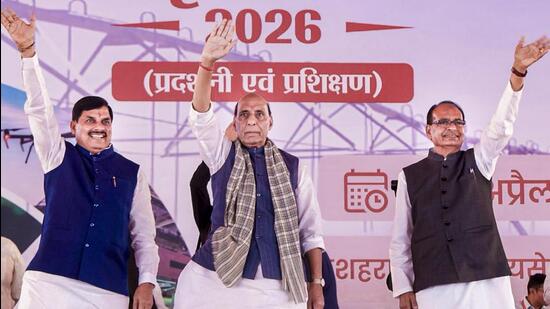
India has enough fuel stocks, no crisis: Rajnath Singh in Lucknow| India News
# No India Fuel Crisis Amid West Asia Tensions
**By Siddharth Verma, New Delhi Chronicle, April 12, 2026**
Defence Minister Rajnath Singh on Saturday (April 11, 2026) addressed the nation from Lucknow, reassuring citizens that India possesses ample reserves of petrol, diesel, and liquefied petroleum gas (LPG). Amid escalating geopolitical tensions in West Asia that have sparked global market anxieties and domestic supply rumours, Singh categorically denied any impending fuel crisis. Speaking to a massive gathering, he urged the public to dismiss panic-inducing misinformation, outlining the government’s proactive strategic petroleum reserves and diversified import strategies. This assurance comes at a critical time as crude oil prices experience significant volatility on the international stage. [Source: Hindustan Times].
## The Lucknow Address: Quelling Public Anxiety
During a high-profile public engagement in his parliamentary constituency of Lucknow, Defence Minister Rajnath Singh took a firm stance against the growing wave of misinformation regarding India’s energy security. In recent weeks, unverified social media forwards and speculative reports have suggested that the ongoing military and political friction in the Middle East could lead to severe fuel rationing or unprecedented price hikes across Indian metropolitan and rural sectors.
Singh’s address was strategically timed to prevent panic buying, a phenomenon that can artificially create the very shortages the public fears. “India is standing on a solid foundation of energy security. We have absolute sufficiency in our petrol, diesel, and LPG stocks. There is no need for citizens to hoard fuel or believe in baseless rumours circulating on digital platforms,” Singh stated emphatically.
He further elaborated that the Union Government, under the Ministry of Petroleum and Natural Gas, has been closely monitoring global supply chains and has established robust contingency plans to ensure uninterrupted supply to all retail outlets across the nation. [Source: Hindustan Times | Additional: Ministry of Petroleum Public Statements].
## Decoding the West Asia Tensions
The backdrop to these rumours is the complex and volatile situation in West Asia. As of April 2026, intensified regional conflicts have threatened critical maritime choke points, particularly the Strait of Hormuz and the Red Sea corridor. These waterways are the arteries of global energy trade, carrying millions of barrels of crude oil daily. Any disruption in these shipping lanes historically triggers an immediate spike in Brent crude prices and spikes global freight insurance premiums.
However, India’s diplomatic and strategic manoeuvring over the past few years has created a buffer against such regional shocks. While West Asia remains a vital partner for India’s energy requirements, the narrative of absolute dependency is outdated. The geopolitical risk premium currently factored into global oil prices has undoubtedly caused distress in energy-importing nations, but India’s systemic preparedness is currently acting as a massive shock absorber.
Dr. Meera Sanyal, Director at the Center for Global Energy Studies in New Delhi, explains the dynamics: “The panic we are seeing in the public discourse stems from an outdated understanding of India’s crude oil basket. While the tensions in West Asia are real and severely impact European and East Asian markets, India has spent the last four years aggressively insulating its domestic market from singular regional shocks.” [Source: Independent Energy Analysis].
## Strategic Petroleum Reserves: India’s Safety Net
A cornerstone of Rajnath Singh’s reassurance is India’s Strategic Petroleum Reserve (SPR) program. To mitigate the risks of supply disruptions, the Indian government, through the Indian Strategic Petroleum Reserves Limited (ISPRL), maintains massive underground rock caverns filled with crude oil.
Currently, India holds significant commercial reserves at petroleum refineries, alongside strategic reserves located at Mangaluru, Padur, and Visakhapatnam. These facilities hold approximately 5.33 million metric tonnes (MMT) of crude oil. Furthermore, Phase II of the SPR project, which includes commercial-cum-strategic facilities at Chandikhol and Padur, has significantly bolstered the country’s buffer capacity.
When combining the strategic reserves with the storage capacities of domestic Oil Marketing Companies (OMCs), India currently maintains an import cover of roughly 74 to 80 days. This means that even in the highly unlikely event of a total blockade of all crude oil imports, India could sustain its internal domestic and industrial operations for nearly three months without a drop of new oil entering the country. [Source: Ministry of Petroleum and Natural Gas Data].
## Diversification: Redefining the Crude Oil Basket
One of the most critical factors allowing the Defence Minister to confidently guarantee fuel security is the radical diversification of India’s crude oil import basket. Historically, India relied on Middle Eastern countries for over 60% of its oil. However, the geopolitical shifts triggered by the 2022 Russia-Ukraine conflict and subsequent global sanctions prompted a complete overhaul of India’s procurement strategy.
Today, India imports crude from a highly diversified portfolio of over 30 countries. Russia continues to be a major supplier, offering crude at discounted rates that benefit the Indian exchequer. Additionally, imports from the United States, Latin American nations like Brazil and Colombia, and West African producers have surged.
“The government’s pre-emptive steps in diversifying the crude basket have effectively neutralized the threat of a localized geopolitical crisis translating into a domestic fuel drought,” notes Rohan Kapur, Senior Analyst at the Asian Institute of Energy Economics. “By balancing term contracts with strategic spot market purchases, Indian refiners have secured a continuous and cost-effective flow of raw crude.” [Source: Industry Expert Analysis].
## Combating Misinformation and the Psychology of Panic
Rajnath Singh’s specific warning against rumours highlights a modern challenge in governance: digital misinformation. In the age of social media, viral messages claiming impending fuel shortages can trigger sudden surges in demand. If thousands of motorists simultaneously decide to top up their tanks and fill extra jerrycans out of fear, it can temporarily empty local petrol pumps, thereby creating a self-fulfilling prophecy of a “shortage.”
The government has directed local administrations and cyber-security cells to monitor and crack down on the deliberate spread of false information regarding fuel scarcity. State-run OMCs like Indian Oil Corporation (IOCL), Bharat Petroleum (BPCL), and Hindustan Petroleum (HPCL) have also launched localized awareness campaigns. Retail outlet managers have been instructed to prominently display fuel availability charts to reassure customers.
## Economic Implications: Protecting the Common Man
While physical supply is secure, the economic implications of rising global crude prices remain a concern. However, the government has mechanisms in place to shield retail consumers from extreme volatility.
Over the past few years, OMCs have occasionally absorbed price shocks, balancing their balance sheets over longer periods rather than passing daily international price spikes directly to the consumer. Furthermore, the central government has the fiscal room to adjust excise duties on petrol and diesel if international prices remain elevated for a prolonged duration.
For LPG—a crucial domestic cooking fuel—the government continues to operate targeted subsidy schemes, such as the PM Ujjwala Yojana, ensuring that economically vulnerable households are protected from international market fluctuations. The assurance from Lucknow indicates that the government is prepared to utilize these fiscal tools to maintain macroeconomic stability and curb fuel-driven inflation. [Source: Hindustan Times | Additional: Economic Policy Records].
## The Long-Term Transition: Biofuels and Renewable Energy
Beyond the immediate crisis management, Rajnath Singh’s statements underscore a broader national strategy to achieve energy independence. The best defence against global oil market volatility is reducing the reliance on imported fossil fuels altogether.
By 2026, India has made massive strides in its Ethanol Blended Petrol (EBP) program. The aggressive push to achieve E20 (20% ethanol blending in petrol) has significantly reduced the volume of crude oil required to meet domestic petrol demands. This not only saves billions in foreign exchange but also supports the domestic agricultural sector.
Simultaneously, the exponential adoption of Electric Vehicles (EVs) in both the two-wheeler and commercial transport segments is fundamentally altering India’s demand trajectory for liquid fuels. As the national grid becomes increasingly powered by solar and wind energy, the vulnerability of the Indian economy to West Asian instability diminishes every year.
## Conclusion and Future Outlook
Defence Minister Rajnath Singh’s address from Lucknow serves as a critical intervention to maintain public calm amidst global uncertainty. The key takeaways from the current situation are clear:
* **Supply is Secure:** India possesses more than adequate stocks of petrol, diesel, and LPG to meet regular national demand.
* **Buffer Systems Work:** The Strategic Petroleum Reserves provide a massive safety net of nearly 80 days of import cover.
* **Diplomatic Success:** The diversification of crude oil suppliers has minimized reliance on any single volatile region.
* **Beware of Rumours:** Panic buying driven by social media misinformation remains the only real threat to local pump availability.
Looking forward, while West Asia’s geopolitical landscape may remain fractured, India’s multi-layered approach to energy security—combining strategic reserves, diversified diplomacy, dynamic fiscal policies, and a rapid transition to biofuels and electricity—ensures that the nation’s economic engine will continue to run without interruption. Consumers can confidently continue their daily lives without the looming fear of dry fuel pumps.





