
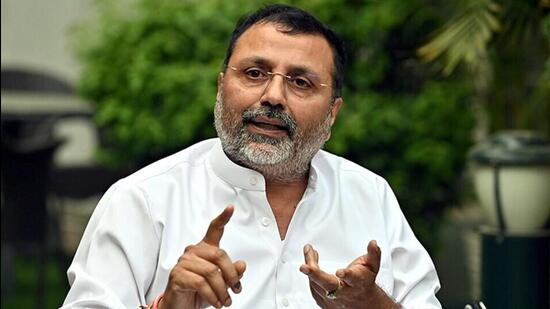
Parl panel suggests X ‘Community Notes’ may be treated as publishing activity: Chairperson| India News
# India Panel: Tax X Notes as News
By Editorial Desk, TechPolicyWire
April 11, 2026
On Saturday, an influential Parliamentary Standing Committee urged the Ministry of Electronics and Information Technology (MeitY) to formally classify X’s (formerly Twitter) ‘Community Notes’ feature as a direct publishing activity. The panel’s chairperson announced that the mechanism of crowdsourced fact-checking inherently strips the platform of its neutral intermediary status, recommending the implementation of a novel “publisher tax model” for the social media giant. This unprecedented legislative recommendation, issued on April 11, 2026, seeks to strictly regulate digital narrative control in India. However, legal experts immediately warned that treating user-driven context as editorial content could severely stifle free speech, dismantle decentralized fact-checking, and drastically alter the landscape of democratic discourse across the nation. [Source: Hindustan Times]
## The Shift from Platform to Publisher
For over two decades, the foundational bedrock of the modern internet has been the concept of “Safe Harbour.” In India, this is codified under **Section 79 of the Information Technology Act, 2000**, which shields intermediaries—like social media platforms—from legal liability regarding the content their users post. The core requirement for maintaining this immunity is that the platform must act as a mere conduit, without exercising editorial control over the transmission.
However, the parliamentary panel argues that X has crossed the Rubicon. By designing, promoting, and algorithmically prioritizing ‘Community Notes’—a feature that appends context, caveats, or outright corrections to users’ posts—X is no longer a passive host. The committee chairperson noted that while the notes are ostensibly written by a community of contributors, the platform’s proprietary algorithms ultimately decide which notes are published, displayed, and elevated to public visibility.
“The curation of truth, even if decentralized, is an editorial function,” the committee’s draft report reportedly states. By appending context that frames how a user’s post is consumed, the panel argues X is functionally acting as an editor and publisher. Therefore, the committee has strongly urged MeitY to amend the existing Information Technology (Intermediary Guidelines and Digital Media Ethics Code) Rules to reflect this reality, paving the way for platforms utilizing active narrative curation to be treated legally and fiscally as publishers. [Source: Hindustan Times | Additional: Indian IT Act, 2000]
## Exploring the Proposed ‘Publisher Tax Model’
Perhaps the most economically disruptive element of the panel’s recommendation is the introduction of a “publisher tax model.” If a platform like X is stripped of its pure intermediary status for specific posts or features, the panel suggests it should be subject to the same tax liabilities and regulatory levies as traditional digital news media organizations.
Traditional publishers invest heavily in editorial boards, legal reviews, and fact-checking teams. They also operate under specific corporate tax brackets and are subject to the purview of the Ministry of Information and Broadcasting (MIB). The panel asserts that platforms like X currently enjoy the financial benefits of high-engagement news curation without shouldering the associated fiscal or regulatory burdens.
The proposed model would likely involve:
* **Revenue Reclassification:** Taxing ad revenue generated adjacent to posts featuring Community Notes at a different rate, akin to digital news publishing.
* **Content Levies:** Establishing a fund where a percentage of revenue from “editorialized” content is diverted to support independent, verified domestic journalism.
* **Enhanced Compliance:** Requiring platforms to register under the Digital Media Ethics Code, opening them up to a higher tier of taxation and mandatory domestic grievance redressal frameworks.
**Comparing Intermediary vs. Publisher Status in India**
| Regulatory Feature | Intermediary (Current Safe Harbour) | Publisher (Proposed Reclassification) |
| :— | :— | :— |
| **Legal Liability** | Immune from user-generated content lawsuits | Directly liable for defamation or misinformation |
| **Editorial Control** | None (acts strictly as a neutral conduit) | Active curation, moderation, or contextualization |
| **Taxation Structure** | Standard corporate and digital services tax | Proposed ‘Publisher Tax’ and digital media levies |
| **Regulatory Oversight**| MeitY / Grievance Appellate Committees | Dual oversight by MeitY and I&B Ministry |
## The Mechanics and Dilemma of Community Notes
Introduced globally to combat rampant misinformation, Community Notes allows eligible users to add context to potentially misleading posts. The system relies on a bridging algorithm—a note is only shown publicly if it receives positive ratings from users who historically disagree on other issues. Elon Musk has frequently championed the feature as the ultimate, unbiased “truth engine” for the digital age.
However, in the highly polarized context of Indian politics, the feature has become a battleground. Political parties, public figures, and citizens frequently clash over the narrative context appended to viral posts. The parliamentary panel’s intervention highlights a deep governmental skepticism regarding who controls the algorithm determining this “truth.”
If X’s algorithm dictates that a crowdsourced note effectively debunks a post by an Indian citizen or a government official, the platform is arguably rendering a verdict. The panel’s chairperson stressed that outsourcing editorial decisions to an opaque algorithm and an anonymous crowd does not absolve the platform of publishing responsibilities; rather, it creates an unregulated publishing mechanism operating completely outside India’s domestic media laws. [Source: Hindustan Times | Additional: Technology Policy Research]
## Experts Warn of Severe Free Speech Impacts
The panel’s suggestions have sent shockwaves through India’s legal and digital rights communities. Experts warn that classifying Community Notes as a publishing activity could trigger a catastrophic chilling effect on free speech and the fight against fake news.
“If MeitY accepts these recommendations and implements a publisher tax or strips Safe Harbour protections based on Community Notes, the immediate result will be X disabling the feature entirely in India,” says Aarav Desai, a Supreme Court advocate specializing in technology policy and constitutional law. “No platform will risk being legally liable for crowdsourced text. By penalizing a platform for attempting to mitigate misinformation, the government is inadvertently incentivizing the unchecked spread of fake news.”
Digital rights activists echo this sentiment, pointing out that treating contextual notes as editorial publishing weaponizes regulatory frameworks against decentralized truth-seeking. Dr. Meera Sanyal, Director of the Digital Freedoms Institute, notes, “This is not about taxation; it is about narrative control. If X is treated as a publisher, it can be sued for defamation for a Community Note that accurately fact-checks a powerful politician. The platform will be forced into defensive self-censorship, eroding one of the few remaining democratic tools for pushing back against organized propaganda.” [Additional: Public Policy Discourse 2026]
Experts also point out the inherent contradiction in the proposal: the government expects platforms to strictly moderate harmful content and fake news, yet threatens to strip them of legal protections and tax them heavily if they deploy innovative mechanisms like Community Notes to achieve that very goal.
## MeitY’s Regulatory Tightrope
The ball is now in the court of the Ministry of Electronics and Information Technology. MeitY must weigh the parliamentary panel’s aggressive recommendations against the broader vision of the impending Digital India Act, which aims to modernize internet regulations without stifling innovation.
Currently, the IT Rules 2021 impose strict due diligence requirements on “Significant Social Media Intermediaries” (SSMIs) but do not address the gray area of algorithmic fact-checking. If MeitY acts on the panel’s urging, it would require drafting a completely new legal definition for “hybrid intermediaries”—platforms that both host user content and algorithmically elevate crowdsourced context.
Bureaucrats within MeitY are reportedly treading carefully. Redefining Safe Harbour solely based on the presence of a fact-checking tool could violate international norms and invite massive legal challenges from Big Tech companies operating in the country. Furthermore, implementing a ‘publisher tax’ specifically targeting features like Community Notes would require extensive coordination with the Finance Ministry and could deter foreign direct investment in India’s technology sector.
## Global Precedents and the Future of Big Tech
India is not operating in a vacuum. Governments globally are wrestling with the immense power held by Silicon Valley algorithms. In Australia, the News Media Bargaining Code forced platforms to pay publishers for hosting news content, though it did not classify the platforms themselves as publishers. Similarly, the European Union’s Digital Services Act (DSA) mandates extreme transparency regarding algorithmic moderation and content promotion, yet stops short of equating decentralized fact-checking with traditional editorializing.
If India proceeds with classifying X’s Community Notes as a publishing activity, it would be the first major democracy to legally erase the distinction between an algorithmic hosting platform and a traditional news publisher based on user-generated fact-checking. This move would likely prompt other nations to explore similar tax models, drastically shifting the global economics of social media.
## Conclusion and Future Outlook
The parliamentary panel’s recommendation to MeitY represents a critical inflection point in India’s digital governance. By suggesting that X’s ‘Community Notes’ functions as publishing activity worthy of a ‘publisher tax,’ lawmakers are signaling an end to the era of unchecked Safe Harbour protections.
However, the warnings from legal and tech experts cannot be ignored. The delicate balance between holding mega-platforms accountable and protecting the digital free speech of 1.4 billion citizens is at stake. If the cure for platform monopolization is a regulatory environment that kills decentralized fact-checking, the ultimate victim will be the Indian internet user, left exposed to unmitigated misinformation. All eyes are now on MeitY to see if they will formalize these recommendations into binding law, a decision that will undoubtedly reshape the future of digital expression in India.





