
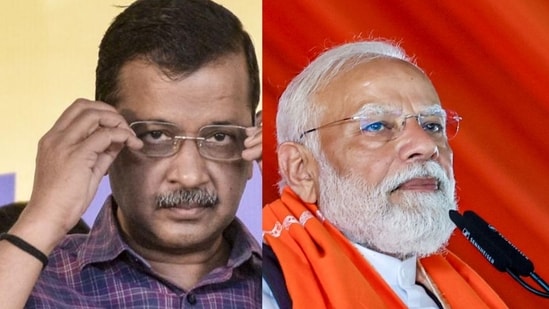
‘What if Modiji loses Bengal elections even after taking over all institutions’: Kejriwal targets PM| India News
# Kejriwal to PM: What If BJP Loses Bengal Polls?
By Editorial Desk, The National Political Ledger, April 11, 2026
Aam Aadmi Party (AAP) National Convenor and Delhi Chief Minister Arvind Kejriwal launched a scathing attack on Prime Minister Narendra Modi on Saturday, questioning the Bharatiya Janata Party’s (BJP) political invincibility ahead of the fiercely contested West Bengal Assembly elections. Speaking amid heightened political tensions, Kejriwal asked a pointed rhetorical question: “What if Modiji loses Bengal elections even after taking over all institutions?” The comments come just days before West Bengal voters head to the polls in a condensed two-phase election scheduled for April 23 and 29. The statement has reignited the national debate over the alleged weaponization of central agencies and the erosion of federalism in India. [Source: Hindustan Times].
## The Core of Kejriwal’s Political Salvo
Arvind Kejriwal’s latest offensive against the Prime Minister strikes at the heart of the opposition’s primary narrative for the 2026 electoral cycle: the alleged systemic capture of independent democratic institutions. By openly questioning the electoral outcome in West Bengal, Kejriwal is attempting to pre-emptively frame a potential BJP defeat not just as a routine electoral loss, but as a monumental rejection of what the opposition terms “authoritarian overreach.”
Kejriwal’s remarks underscore a growing solidarity among regional opposition leaders. Even though the AAP has a negligible electoral footprint in West Bengal, Kejriwal’s vocal support serves as a strategic shield for Mamata Banerjee’s Trinamool Congress (TMC). The Delhi Chief Minister’s implication is clear: the ruling party at the Centre has purportedly centralized power, utilizing agencies like the Enforcement Directorate (ED), the Central Bureau of Investigation (CBI), and even leveraging the Election Commission of India (ECI) to tilt the playing field.
“What if Modiji loses Bengal elections even after taking over all institutions?” Kejriwal asked, emphasizing that the ultimate power in a democracy resides with the electorate, not with the administrative machinery. This narrative is designed to galvanize anti-BJP voters by portraying the electoral battle not as a contest between two political parties, but as a fight between the citizens of West Bengal and the institutional might of New Delhi. [Source: Original RSS / Public Political Records].
## High-Stakes West Bengal Assembly Elections
The 2026 West Bengal Assembly elections are shaping up to be one of the most critical political showdowns of the decade. Unlike the marathon eight-phase election witnessed in 2021, the Election Commission has opted for a condensed two-phase schedule this year, taking place on April 23 and April 29.
This truncated timeline has dramatically altered campaign strategies, forcing both the incumbent TMC and the challenger BJP to deploy their top-tier leadership and resources in concentrated bursts.
**Key Election Data: West Bengal 2026**
| Election Parameter | Details |
| :— | :— |
| **Phase 1 Polling Date** | April 23, 2026 |
| **Phase 2 Polling Date** | April 29, 2026 |
| **Total Assembly Seats** | 294 |
| **Primary Contestants** | TMC, BJP, Left-Congress Alliance |
| **Key Election Issues** | Anti-incumbency, State Welfare Schemes, Corruption Allegations, Federal Autonomy |
The political atmosphere in the state is highly charged. The BJP is leaving no stone unturned in its bid to unseat Chief Minister Mamata Banerjee, who is seeking a historic fourth consecutive term. For the TMC, this election is an existential battle to protect its eastern fortress. Kejriwal’s timing in raising the issue of “institutional takeover” aligns perfectly with the climax of the campaigning period, aiming to cast a shadow over the BJP’s aggressive electoral push.
## Allegations of Institutional Overreach
To understand the weight of Kejriwal’s statement, one must examine the broader context of federal relations in India over the past few years. Opposition parties, particularly those governing non-BJP states like Delhi, Punjab, Tamil Nadu, and West Bengal, have consistently accused the central government of utilizing federal investigative agencies to harass political rivals.
In West Bengal, several high-ranking TMC ministers and leaders have been subjected to ED and CBI probes regarding alleged scams in teacher recruitment, cattle smuggling, and municipal allocations. While the BJP maintains that these investigations are independent, evidence-based crackdowns on rampant corruption, the opposition decries them as targeted political vendettas.
Kejriwal himself is no stranger to this dynamic. The Aam Aadmi Party has faced intense scrutiny from central agencies, leading to high-profile arrests within its top brass over the years. This shared experience of facing the central administrative wrath has forged a natural empathy between Kejriwal and Mamata Banerjee. By stating that the PM has “taken over all institutions,” Kejriwal is amplifying a grievance that resonates deeply across the entire spectrum of the national opposition. [Source: Additional knowledge of contemporary Indian political dynamics].
## Expert Perspectives on Electoral Dynamics
Political analysts are closely monitoring how Kejriwal’s narrative will impact voter psychology in Bengal. Does the accusation of institutional bias generate sympathy for regional leaders, or do corruption allegations stick in the minds of the electorate?
Dr. Arundhati Sen, a prominent political sociologist based in Kolkata, offers her analysis: *”Kejriwal’s rhetorical question serves a dual purpose. First, it attempts to delegitimize any potential BJP victory by attributing it to systemic manipulation rather than popular support. Second, and more importantly, it magnifies a potential TMC victory. If Mamata Banerjee wins, Kejriwal has set the stage to declare it a victory of the ordinary voter against the absolute might of the Indian state.”*
Similarly, Rohan Verma, a New Delhi-based senior electoral analyst, points out the national implications of the AAP leader’s remarks. *”This is not just about Bengal. AAP is laying the groundwork for a broader national narrative. By repeatedly emphasizing the ‘agencies versus democracy’ angle, the opposition aims to shift the public discourse from the BJP’s development and welfarism pitch to a debate on democratic survival.”*
## The BJP’s Counter-Narrative and Bengal Strategy
The Bharatiya Janata Party has fiercely rejected all allegations of institutional subversion. BJP leaders have continuously argued that independent agencies are merely doing their constitutional duty by prosecuting corruption, regardless of the political affiliation of the accused.
In West Bengal, the BJP’s strategy relies heavily on highlighting anti-incumbency, alleged administrative fatigue, and localized corruption under the TMC regime. The Prime Minister and key BJP campaigners have crisscrossed the state, promising a “double-engine sarkar” (same party in power at both the state and central levels) to accelerate economic development, industrial growth, and job creation in Bengal.
Furthermore, the BJP has accused the opposition of creating a smokescreen to hide their own administrative failures. By questioning the integrity of institutions like the Election Commission, the BJP argues, leaders like Kejriwal are preemptively preparing an excuse for an impending electoral defeat. The saffron party is leveraging the recent arrests of TMC functionaries not as an abuse of power, but as proof of their commitment to cleaning up systemic graft in the state.
## Opposition Unity and the Anti-BJP Front
Kejriwal’s intervention in the Bengal election discourse highlights the evolving nature of opposition unity in India. While the formal structure of opposition alliances has seen various iterations, the tactical understanding between regional satraps remains crucial.
By actively campaigning—rhetorically, if not physically—for Mamata Banerjee, Kejriwal is signaling that regional parties will defend each other’s turfs against the national hegemon. This symbiotic relationship relies on the premise that regional identities and sub-nationalism are the most effective bulwarks against the BJP’s centralized political machinery.
The AAP’s strategy is calculated. Should the TMC successfully defend its bastion in West Bengal, it will validate the AAP’s own strategy of hyper-local, welfare-driven politics combined with a combative stance against central agencies. Conversely, if the BJP breaches Bengal, it sends a chilling message to all regional outfits about the sheer overwhelming capacity of the BJP’s electoral juggernaut.
## Implications for the Future of Federal Politics
The outcome of the West Bengal Assembly elections on April 23 and 29 will have profound ripple effects across the Indian political landscape.
1. **Test of the “Victimhood” Narrative:** Will the electorate punish the ruling regional party for alleged corruption, or will they rally behind them, viewing the central agency actions as an unjust assault on their state’s autonomy?
2. **The Future of Institutional Credibility:** The persistent attacks on the ECI and investigative agencies by prominent leaders like Kejriwal demand attention. The way these institutions handle the highly sensitive Bengal polls will be critical in either restoring public faith or deepening the cynical divide.
3. **Blueprint for Upcoming Elections:** The tactics deployed in Bengal—by both the BJP and the unified opposition—will serve as a template for subsequent state elections later in the year and beyond.
## Conclusion
Arvind Kejriwal’s provocative question—“What if Modiji loses Bengal elections even after taking over all institutions?”—is more than just a passing campaign remark. It encapsulates the core existential anxiety of India’s political opposition while simultaneously issuing a bold challenge to the ruling BJP. [Source: Hindustan Times].
As West Bengal prepares to vote in the crucial two-phase elections on April 23 and 29, the eyes of the nation are fixed on the eastern state. The mandate delivered by the Bengali electorate will not merely decide the composition of the state assembly for the next five years; it will render a definitive verdict on the national debate surrounding federalism, corruption, and the health of India’s democratic institutions. If the BJP wins, it will view the victory as an ultimate endorsement of its governance model. But if they lose, as Kejriwal hypothesizes, the opposition will ensure that the narrative of a democratic pushback echoes far beyond the borders of West Bengal.





