
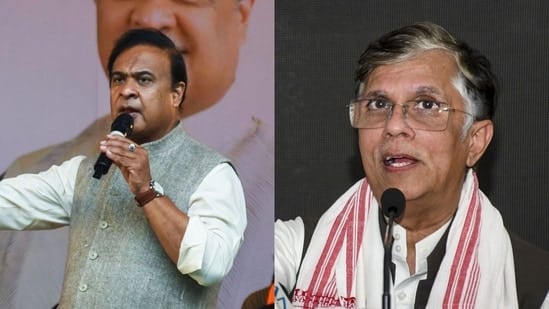
Pawan Khera's anticipatory bill rejected by Gauhati high court in Assam CM wife FIR| India News
# Pawan Khera Denied Bail in Assam Defamation Case
By Legal Correspondent, The National Desk
April 24, 2026
**GUWAHATI:** On Friday, April 24, 2026, the Gauhati High Court unequivocally rejected the anticipatory bail plea filed by senior Indian National Congress leader Pawan Khera. The legal maneuver was initiated in connection with a stringent First Information Report (FIR) lodged by Riniki Bhuyan Sharma, a prominent Assam-based entrepreneur and the wife of Assam Chief Minister Himanta Biswa Sarma. The court’s dismissal of the petition immediately exposes the Congress Media and Publicity Department Chairman to potential arrest by the Assam Police. This legal setback not only deepens Khera’s judicial woes but also intensifies the bitter political warfare between the opposition Congress party and the ruling Bharatiya Janata Party (BJP). [Source: Hindustan Times]
## The Gauhati High Court Ruling
The single-judge bench of the Gauhati High Court delivered its verdict after a series of intensive hearings that captured national attention. Khera’s legal team had approached the court seeking protection from arrest under Section 482 of the Bharatiya Nagarik Suraksha Sanhita (BNSS), the updated procedural code that replaced the CrPC. The defense argued that the FIR was a classic example of political vendetta, intended to stifle legitimate democratic opposition and muzzle political critique.
However, the prosecution, representing the state and the complainant, successfully argued that the allegations leveled in the FIR were grave and required custodial interrogation to uncover the full extent of the purported criminal conspiracy and defamation. The court noted that granting anticipatory bail in matters where prima facie evidence suggests a calculated attempt to malign an individual’s reputation could hamper the ongoing investigative process.
The presiding judge observed that the right to political critique does not provide blanket immunity against malicious defamation or the dissemination of unverified claims that cause quantifiable harm to private citizens—in this case, Riniki Bhuyan Sharma. Consequently, the court found no compelling legal merit to grant pre-arrest bail to the Congress leader. [Source: Hindustan Times | Additional: Standard Court Proceedings Analysis].
## Anatomy of the FIR and Allegations
The genesis of this high-stakes legal battle lies in the public statements and press conferences repeatedly held by Pawan Khera. Over the past few years, the Congress party has aggressively targeted the Assam Chief Minister’s family, particularly focusing on Riniki Bhuyan Sharma’s corporate ventures.
Riniki Bhuyan Sharma serves as the Chairman and Managing Director of Pride East Entertainments Pvt Ltd, a major media conglomerate in the Northeast. Previous controversies have involved allegations by the Congress regarding government subsidies and land acquisitions linked to her enterprises. Although the specific contours of the latest 2026 FIR remain closely guarded, legal sources indicate it involves fresh allegations of criminal defamation, public mischief, and intent to provoke a breach of the peace.
According to the complaint, Khera allegedly made defamatory, baseless, and highly derogatory remarks targeting the business integrity of Bhuyan Sharma during a nationally televised press briefing. The FIR contends that these statements were not merely political rhetoric but a deliberate, orchestrated attempt to destroy the financial reputation of a private corporate entity and its directors for cheap political mileage.
## Political Crossfire: Congress vs. BJP Dynamics
The rejection of Khera’s bail cannot be viewed in a vacuum. It represents the latest flashpoint in an enduring and acrimonious rivalry between the Congress and Himanta Biswa Sarma. Sarma, who was once the primary crisis manager for the Congress in the Northeast, defected to the BJP in 2015 and has since become one of the most formidable ideological and political adversaries of the Gandhi family and their loyalists.
For the Congress, Pawan Khera has been a crucial attack dog, consistently deployed to challenge the BJP’s narrative on national television. His uncompromising stance has frequently landed him in legal jeopardy. Political analysts suggest that the Assam government’s rapid mobilization of the state apparatus in response to defamation against the Chief Minister’s family is a strategic maneuver intended to force the opposition onto the defensive.
“The BJP is utilizing the judicial process as an instrument of political intimidation,” a Congress spokesperson stated shortly after the High Court’s ruling. “Our leaders will not be silenced by FIRs filed in BJP-ruled states. We will continue to demand accountability regarding crony capitalism.”
Conversely, the BJP leadership in Assam has maintained a starkly different narrative, insisting that the law is merely taking its natural course. State BJP officials argue that the Congress party routinely hides behind the shield of “freedom of speech” to peddle deliberate misinformation and character assassination.
## Expert Legal Perspectives
The intersection of criminal defamation and political speech remains a fiercely debated topic within Indian jurisprudence. Legal experts are closely analyzing the Gauhati High Court’s decision, noting its potential implications for the limits of political discourse.
“The rejection of anticipatory bail in a defamation-centric FIR indicates that the court views the alleged offense as more than a mere war of words,” explains Arindam Barua, a senior constitutional lawyer practicing in New Delhi and Guwahati. “Under the new provisions of the Bharatiya Nyaya Sanhita (BNS) and BNSS, courts are increasingly drawing a hard line between protected political critique and actionable reputational damage. If the prosecution can demonstrate that a politician knowingly disseminated false information to trigger public unrest or economic harm, the threshold for anticipatory bail becomes exceptionally high.”
Another legal scholar, Dr. Meenakshi Iyer, points out the logistical challenges for politicians facing inter-state FIRs. “We are witnessing a distinct pattern where politicians are booked in states governed by their rivals. The immediate denial of pre-arrest bail in the host state forces the accused to navigate an arduous legal labyrinth, often culminating in the Supreme Court. It is an effective deterrent against aggressive political commentary.” [Source: Independent Legal Analysis].
## Precedents in Political Defamation
Pawan Khera’s current predicament echoes a growing national trend where top-tier politicians face severe legal consequences for public statements. The most prominent historical parallel is the criminal defamation conviction of Congress leader Rahul Gandhi, which temporarily cost him his parliamentary membership before the Supreme Court intervened.
Furthermore, Khera himself is no stranger to dramatic legal interventions. In 2023, he was dramatically deplaned and arrested by the Assam Police at the New Delhi airport over remarks made about Prime Minister Narendra Modi. The Supreme Court had to urgently intervene to grant him interim bail. The current 2026 FIR filed by Riniki Bhuyan Sharma signals that the tactic of leveraging state police forces to address grievances related to political rhetoric remains a highly utilized strategy.
The fundamental tension lies in balancing **Article 19(1)(a)** of the Indian Constitution, which guarantees freedom of speech and expression, with the reasonable restrictions imposed under **Article 19(2)**, encompassing defamation and incitement to an offense.
## Next Steps for Khera and the Congress
With the Gauhati High Court ruling against him, Pawan Khera’s immediate legal options are restricted, yet clear. Legal experts anticipate that Khera’s legal counsel, heavily backed by the Congress party’s top legal minds, will immediately move the Supreme Court of India to challenge the High Court’s order.
The strategy will likely involve seeking an urgent listing to secure a stay on arrest, arguing that the Assam Police might use the High Court’s rejection to take Khera into immediate custody. The defense is expected to argue that the FIR is politically motivated and that Khera, as a public figure with established roots, is neither a flight risk nor in a position to tamper with documentary evidence.
Moreover, the Congress party is likely to elevate this issue on the national stage, framing it as an authoritarian crackdown on free speech. The ongoing narrative of “undeclared emergency” and the weaponization of investigative agencies will be heavily reiterated in the party’s upcoming election campaigns.
## Conclusion: A Shrinking Space for Rhetoric?
The Gauhati High Court’s rejection of Pawan Khera’s anticipatory bail plea in the FIR filed by Riniki Bhuyan Sharma is far more than a routine judicial order. It is a stark reflection of the volatile intersection where personal reputation, corporate interests, and high-stakes political rivalries collide.
**Key Takeaways:**
* **Immediate Legal Peril:** Pawan Khera faces imminent arrest unless the Supreme Court intervenes and overturns the Gauhati High Court’s decision.
* **Weaponization of Defamation:** The case highlights the increasing reliance on criminal defamation statutes to counter political allegations.
* **Heightened Political Tensions:** The ruling will undoubtedly escalate the hostility between the Congress high command and Assam Chief Minister Himanta Biswa Sarma.
* **Judicial Boundaries:** Courts are demonstrating a willingness to hold political figures accountable for statements that cross the line from public interest critique to targeted personal or corporate defamation.
As the legal proceedings transition from the High Court in Assam to the corridors of the Supreme Court in New Delhi, the entire political spectrum will be watching closely. The ultimate resolution of this case will not only determine Khera’s personal liberty but will also set a crucial precedent for the acceptable limits of political discourse in the world’s largest democracy.





