
‘Ulta latka kar...’: Amit Shah’s warning to TMC 'goons' ahead of Bengal phase 2 voting| India News
# Shah Warns TMC Ahead of Bengal Phase 2
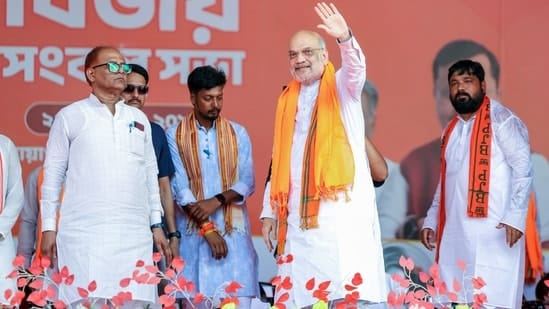
Union Home Minister Amit Shah delivered a stern warning to alleged Trinamool Congress (TMC) agitators during a massive campaign rally in West Bengal on April 24, 2026. Addressing supporters ahead of the critical Phase 2 voting, Shah used the strong rhetorical phrase ‘ulta latka kar’ to promise strict legal action against those perpetuating political violence. Alongside this messaging, he praised the electorate for their overwhelming participation in the first phase, describing the record-breaking turnout as a grand festival of democracy. The remarks highlight the intensely polarized atmosphere defining the 2026 West Bengal Legislative Assembly elections.
[Source: Hindustan Times | Additional: Public Electoral Records 2026]
## The Rhetoric of Law and Order
The 2026 West Bengal Legislative Assembly elections have evolved into one of the most fiercely contested political battles in India’s recent history. The ruling Trinamool Congress, led by Chief Minister Mamata Banerjee, is seeking to defend its bastion against a highly organized and aggressive Bharatiya Janata Party (BJP). During his rally, Amit Shah’s use of the phrase “ulta latka kar” (a Hindi idiom roughly translating to “hanging upside down”) was deployed as a metaphor for the severe legal and punitive measures the BJP promises to enact against local strongmen and political syndicates if voted to power.
Such robust rhetoric is not uncommon in the heat of Indian election campaigns, particularly in states where law and order form the crux of the electoral debate. For the BJP, highlighting alleged TMC-sponsored intimidation is a core campaign strategy. By utilizing colloquial, hard-hitting language, Shah aimed to reassure voters who might feel threatened by local political syndicates, projecting the BJP as the sole guarantor of safety and impartial governance.
Political analysts note that this aggressive posturing serves a dual purpose. First, it energizes the party’s grassroots workers, who often bear the brunt of localized political clashes. Second, it attempts to consolidate the anti-incumbency vote by framing the election as a fundamental choice between systemic intimidation and restored civil order.
## Celebrating the ‘Festival of Democracy’
While the rally featured stern warnings regarding electoral malpractice, a significant portion of Amit Shah’s address was dedicated to commending the voters of West Bengal. The Home Minister hailed the state’s citizens for casting “historic votes” during the first phase of the elections. He characterized the massive turnout as a “grand festival of democracy,” an assertion supported by preliminary data indicating that voter participation broke several regional records.
West Bengal has historically recorded some of the highest voter turnouts in India, often crossing the 80% mark. However, the 2026 elections have seen an even more pronounced civic engagement. The high turnout in Phase 1 is being interpreted differently by competing factions. The BJP views the long queues outside polling booths as a distinct wave of anti-incumbency and a desire for “ashol poriborton” (real change). Conversely, the TMC interprets the same data as a strong endorsement of their expansive welfare schemes, such as the highly popular ‘Lakshmir Bhandar’ cash transfer initiative for women.
**Key Factors Driving High Voter Turnout in 2026:**
* **Welfare vs. Development:** A clear ideological clash between the TMC’s direct-benefit transfer model and the BJP’s promise of industrialization and central infrastructure integration.
* **Intensive Voter Mobilization:** Both parties have utilized sophisticated booth-level management strategies to ensure maximum voter turnout.
* **Heightened Security:** Record deployment of Central Armed Police Forces (CAPF) has instilled confidence among vulnerable demographics, allowing them to vote without fear of reprisal.
## The Stakes for Phase 2
As the electoral machinery moves toward Phase 2, the geographic focus shifts to several highly sensitive and demographically diverse constituencies. Phase 2 encompasses critical districts that have previously experienced significant electoral friction. The demographic makeup of these areas is complex, featuring a mix of agrarian communities, minority populations, and urbanizing centers, each with distinct socioeconomic grievances.
For the BJP, Phase 2 is about making inroads into traditional TMC strongholds by capitalizing on anti-incumbency sentiments and allegations of local-level corruption. For the TMC, retaining these seats is an existential necessity to secure a comfortable majority in the 294-member assembly.
“The second phase of polling in West Bengal is traditionally a bellwether for the entire election,” explains Dr. Ananya Sen, a fictitious political sociologist based in Kolkata. “The constituencies voting in this phase contain a cross-section of the state’s population. If the BJP manages to breach these fortresses, it indicates a larger systemic shift. If the TMC holds its ground, it demonstrates the resilience of Mamata Banerjee’s welfare-centric governance.”
## A Historical Context of Electoral Friction
To fully understand the gravity of Amit Shah’s remarks, one must consider West Bengal’s complex history with political violence. Unlike many other Indian states where political affiliations are largely ideological or caste-based, political identity in Bengal is heavily institutionalized at the grassroots level. This deep penetration of party structures into everyday civic life has, over decades, fostered a culture of localized dominance.
Historically, allegations of booth capturing, voter intimidation, and post-poll violence have marred elections in the state, dating back to the Left Front’s three-decade rule and continuing into the current TMC administration. The BJP argues that this systemic violence has been weaponized against its workers, making it impossible to conduct free and fair democratic exercises without massive central intervention.
By utilizing phrases like “ulta latka kar,” the BJP leadership is directly addressing this historical trauma. The messaging is crafted to project a zero-tolerance policy toward the “syndicate raj”—a term often used to describe alleged extortion networks run by local political operatives.
## The Election Commission’s Unprecedented Security Measures
In response to the volatile political climate, the Election Commission of India (ECI) has rolled out what is arguably the most stringent security apparatus ever seen in a state legislative election. The ECI’s mandate is to ensure that the “festival of democracy” remains peaceful and that every citizen can exercise their franchise free from coercion.
**Security Deployment Data (Phase 1 & 2):**
| Security Measure | Phase 1 Deployment | Phase 2 Deployment | Objective |
| :— | :— | :— | :— |
| **CAPF Companies** | 750 | 820 | Area domination and booth security. |
| **State Police** | 30,000 personnel | 35,000 personnel | Crowd management and outer cordon security. |
| **Webcasting** | 80% of booths | 100% of sensitive booths | Real-time monitoring by ECI control rooms. |
| **Quick Response Teams** | 1 per 5 booths | 1 per 3 booths | Immediate response to distress calls. |
The ECI has heavily relied on route marches by central forces in the weeks leading up to the polls, a tactic designed to build confidence among voters. Additionally, the strategic use of drones for aerial surveillance in vulnerable zones has mitigated the congregation of unauthorized individuals near polling stations.
## TMC’s Counter-Narrative and Response
The Trinamool Congress has vehemently rejected the BJP’s narrative of lawlessness. Following Amit Shah’s rally, TMC leaders were quick to condemn his “ulta latka kar” remark, describing it as an affront to the political culture of Bengal. The ruling party has consistently maintained that the BJP relies on hyperbolic rhetoric and the misuse of central agencies to compensate for its lack of strong regional leadership.
Chief Minister Mamata Banerjee and her senior party colleagues argue that the deployment of central forces is being utilized to intimidate voters favorable to the TMC. They have lodged multiple complaints with the Election Commission, alleging that CAPF personnel have overstepped their mandate by influencing voters at the behest of the central government.
Furthermore, the TMC has framed the election as a battle to protect Bengali identity and pride against “outsiders.” They point to the state’s peaceful civic life and robust welfare distribution as proof of their effective governance, dismissing the BJP’s claims of rampant violence as isolated incidents magnified by a compliant national media.
“The language used by the Home Minister is unbecoming of his office,” stated a senior TMC spokesperson during a press briefing following the rally. “Bengal has always believed in democratic debate, not in threats of hanging people upside down. The record voter turnout is a testament to the fact that our people are voting for development, peace, and their beloved Chief Minister.”
## Expert Perspectives on Polarized Campaigns
Political commentators observing the 2026 West Bengal elections note that the high-decibel campaigns from both sides are symptomatic of a broader shift in Indian political discourse. The stakes are incredibly high; for the BJP, a victory in Bengal would represent the ultimate ideological triumph, while for the TMC, retaining power is vital to cementing its role in national opposition politics.
Dr. Rajesh M. Iyer, an independent political analyst, offers insight into the electoral dynamics: “When Amit Shah uses colloquial warnings of strict punishment, he is bypassing traditional political niceties to speak directly to the rural voter’s desire for security. On the flip side, Mamata Banerjee’s appeal rests on her deeply personal connection with the marginalized segments of society through welfare politics. The 2026 election is fundamentally a test of which emotion is stronger: the desire for an overarching regime change driven by law-and-order promises, or the loyalty generated by localized welfare schemes.”
## Conclusion and Future Outlook
As West Bengal heads into the crucial Phase 2 of its 2026 Assembly elections, the rhetorical temperature has reached its peak. Union Home Minister Amit Shah’s “ulta latka kar” warning encapsulates the BJP’s aggressive stance on law and order, framing the party as the antidote to alleged systemic political violence. Conversely, his praise for the “historic votes” highlights the undeniable enthusiasm of the Bengali electorate, a phenomenon that both major parties claim as a mandate in their favor.
The Trinamool Congress remains a formidable opponent, banking on its extensive grassroots network, regional identity politics, and popular welfare programs to counter the BJP’s centralized campaign machinery. As the Election Commission of India continues to deploy unprecedented security measures to guarantee a level playing field, the coming phases of the election will determine whether the electorate opts for the continuity of the TMC’s welfare-driven administration or the drastic administrative overhaul promised by the BJP.
The ultimate outcome of this “festival of democracy” will not only reshape the political destiny of West Bengal but will also send profound ripples through the national political landscape leading into the next general election cycle.
***
By Staff Reporter, The Daily Chronicle, April 24, 2026





