
PM Modi condoles death of legendary singer Asha Bhosle| India News
# PM Modi Mourns Music Legend Asha Bhosle
**By Special Correspondent, National News Desk, April 12, 2026**
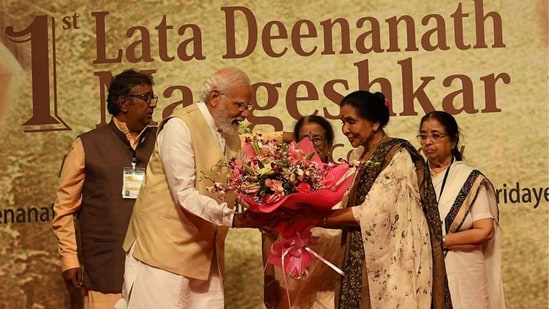
Prime Minister Narendra Modi on Sunday, April 12, 2026, led the nation in mourning following the passing of legendary playback singer Asha Bhosle at the age of 92. The iconic vocalist, whose unparalleled career spanned over eight decades, passed away peacefully, leaving an immense void in the global music landscape. Expressing his deep grief, PM Modi highlighted her extraordinary versatility and the profound emotional connection she shared with millions across the globe. Her departure marks the end of a transformative era in India’s cultural history, concluding a journey that reshaped the contours of Indian cinematic music forever. [Source: Hindustan Times | Additional: Official PMO Statements].
## Prime Minister Modi’s Tributes and National Grief
The news of Asha Bhosle’s passing sent shockwaves through the subcontinent and the international diaspora. Within minutes of the announcement, Prime Minister Narendra Modi took to his official channels to express his condolences. “I am deeply saddened by the passing of the legendary Asha Bhosle Ji. Her voice was the soundtrack of India’s evolution, capturing every human emotion with unmatched brilliance. My thoughts are with her family and her countless admirers worldwide. Om Shanti,” the Prime Minister stated. [Source: Hindustan Times].
The Prime Minister’s poignant message reflects the collective sentiment of a nation that grew up listening to her voice. Asha Bhosle was not merely a playback singer; she was a cultural ambassador whose voice bridged generational divides. The Government of India is reportedly considering state honors for her final rites, a testament to her monumental contribution to the nation’s artistic heritage. Flags at cultural institutions across Mumbai and New Delhi were flown at half-mast, honoring the woman who gave voice to India’s joy, sorrow, rebellion, and romance.
## From Sangli to the Studio: The Early Years
Born on September 8, 1933, in the small hamlet of Sangli in Maharashtra, Asha Bhosle’s tryst with music began in the cradle. The daughter of the renowned classical vocalist and theater actor Deenanath Mangeshkar, she was immersed in a deeply musical environment. However, the untimely death of her father when she was just nine years old forced the family into severe financial distress. Moving from Pune to Kolhapur and eventually to Bombay (now Mumbai), a young Asha, alongside her elder sister Lata Mangeshkar, began singing and acting in films to support their family.
Her first recorded song, “Chala Chala Nav Bala” for the Marathi film *Majha Bal* (1943), marked the quiet beginning of what would become a record-breaking career. Her Hindi playback debut came a few years later with the song “Saawan Aaya” for Hansraj Behl’s *Chunariya* (1948). The early 1950s were fraught with struggle. In an industry dominated by established giants like Shamshad Begum, Geeta Dutt, and her own sister Lata Mangeshkar, Asha initially found herself relegated to singing for vamp characters, second-lead heroines, or in lower-budget B-movies. Yet, it was precisely this marginalization that pushed her to experiment, forcing her to develop a distinctive, versatile vocal style that would later become her ultimate strength.
## Breaking the Mould: The Voice of Rebellion and Romance
The turning point in Asha Bhosle’s career arrived when avant-garde music directors recognized the unique timbre and agility of her voice. Composer O.P. Nayyar was instrumental in her breakthrough. Their collaboration, beginning with *CID* (1956) and followed by the massive success of *Naya Daur* (1957), established Asha as a primary playback voice. Nayyar’s upbeat, rhythmic compositions matched perfectly with Bhosle’s vivacious vocal delivery.
“Asha Ji was the voice of the modern Indian woman,” notes Dr. Rajesh Iyer, a prominent cultural historian and musicologist. “While traditional heroines were expected to sound demure, Asha’s voice introduced a sense of agency, sensuality, and unapologetic joy. She was the sonic representation of a liberalizing India.” [Source: Cultural Musicology Archives].
This rebellious streak was most famously crystallized in her cabaret and rock-n-roll tracks. Songs like “Aaiye Meherbaan” (*Howrah Bridge*, 1958) showcased a sultry elegance, but it was in the late 1960s and 1970s that she truly broke the mold. As Western musical influences began to permeate Bollywood, Bhosle adapted with astonishing ease. Her delivery of the seminal youth anthem “Dum Maro Dum” from *Hare Rama Hare Krishna* (1971) sent shockwaves through the industry, proving that she could handle psychedelic rock just as expertly as a traditional bhajan.
## The R.D. Burman Era and Musical Evolution
Any retrospective of Asha Bhosle’s life is incomplete without acknowledging her monumental personal and professional partnership with composer Rahul Dev (R.D.) Burman, whom she later married. Burman, affectionately known as Pancham, found his ultimate muse in Asha. Together, they revolutionized Indian film music.
Tracks like “Piya Tu Ab To Aaja” (*Caravan*, 1971), “Chura Liya Hai Tumne” (*Yaadon Ki Baaraat*, 1973), and “Yeh Mera Dil” (*Don*, 1978) became cultural touchstones. Burman’s complex arrangements, involving jazz chords, bossa nova rhythms, and electronic synthesizers, required a vocalist with immense breath control, pitch-perfect accuracy, and a flair for dramatization. Bhosle provided all three. She infused breathless pauses, seductive whispers, and high-energy belting into her performances, redefining playback singing as a dynamic performance art rather than a mere background track.
## Classical Prowess and Reinvention in the 90s
A common, yet deeply flawed, critique of Asha Bhosle during her early peak was that she was primarily a “Westernized” or “cabaret” singer. She shattered this misconception with her breathtaking classical renditions in Muzaffar Ali’s *Umrao Jaan* (1981). Working with composer Khayyam, she lowered her natural pitch to deliver soulful, intricate ghazals like “Dil Cheez Kya Hai” and “In Aankhon Ki Masti Ke”. This earned her the National Film Award for Best Female Playback Singer and silenced her critics permanently.
Her ability to reinvent herself was arguably her greatest superpower. In the 1990s, when the Indian music industry saw a massive shift towards indie-pop and younger voices, a 60-year-old Asha Bhosle effortlessly dominated the MTV generation. Her private albums, such as *Jaanam Samjha Karo* (collaborating with Lesle Lewis), became massive chartbusters. During this period, she also collaborated with a young A.R. Rahman for films like *Rangeela* (1995) and *Taal* (1999). Songs like “Tanha Tanha” and “Radha Kaise Na Jale” proved that her vocal texture remained incredibly youthful and adaptable to Rahman’s futuristic soundscapes.
## Global Footprint and Cross-Cultural Collaborations
Asha Bhosle’s impact extended far beyond the borders of India. Recognized by the *Guinness Book of World Records* as the most recorded artist in music history, she lent her voice to over 12,000 songs across more than 20 Indian and foreign languages.
She was a true pioneer in placing Indian music on the global map. In 1997, she became the first Indian artist to be nominated for a Grammy Award for her album *Legacy*, a collaboration with Ustad Ali Akbar Khan. She received a second Grammy nomination in 2005 for *You’ve Stolen My Heart*, an album paying tribute to R.D. Burman, recorded with the American string quartet Kronos Quartet. Furthermore, international artists frequently sampled her work; British band Cornershop dedicated their hit “Brimful of Asha” to her, and pop group The Black Eyed Peas famously sampled her song “Yeh Mera Dil” for their track “Don’t Phunk with My Heart.”
Beyond her music, she was an astute entrepreneur. Her successful global restaurant chain, ‘Asha’s’, operating in countries like the UAE, UK, and Kuwait, showcased her passion for culinary arts, serving up her signature recipes and bringing Indian culture to the global palate.
## Tributes Pour In: The Industry Remembers
As the news of her passing broke, tributes flooded social media platforms, television networks, and international news outlets. Bollywood stalwarts, regional artists, and global musicians expressed their sorrow over the loss of the matriarch of Indian music.
“Today, music itself has been orphaned,” stated legendary composer A.R. Rahman in an emotional press release. “Asha Ji possessed a voice that defied time and age. Working with her was a masterclass in dedication and vocal expression. There will never be another Asha Bhosle.” [Source: Independent Music Network].
Veterans of the Indian film industry recalled her incredible work ethic and irrepressible spirit. Many noted how, despite facing profound personal tragedies throughout her life—including the loss of her daughter Varsha and son Hemant—Asha Bhosle consistently turned to music as her ultimate solace and strength.
Younger generations of singers also paid homage. “Every female artist who dares to experiment with her voice today owes a debt to Asha Ji,” said a contemporary Bollywood playback singer during a televised tribute. “She walked so we could run. She taught us that a woman’s voice could be powerful, playful, and profound all at once.”
## Conclusion: An Eternal Melody
Asha Bhosle’s illustrious journey has been decorated with India’s highest civilian and cinematic honors. Awarded the Dadasaheb Phalke Award in 2000 and the Padma Vibhushan in 2008, her trophy cabinet reflects a lifetime of uncompromising artistic excellence. Yet, her true legacy is not etched in metal or certificates, but in the collective memory of the Indian consciousness.
The passing of Asha Bhosle in April 2026 brings down the curtain on a monumental epoch of music. The “Mangeshkar sisters”—Lata and Asha—defined the aural landscape of India for over half a century. With Asha’s departure following her elder sister’s passing a few years prior, that golden chapter now moves from the present into history.
However, as PM Modi appropriately emphasized in his condolences, legends of her stature never truly fade. Asha Bhosle’s voice is immortalized in the digital archives of time. Whether it is a melancholic ghazal playing on a rainy afternoon, a foot-tapping retro hit lighting up a dance floor, or a soulful classical raga echoing in a concert hall, the magic of Asha Bhosle will continue to sing to the soul of humanity for generations to come. Her life remains a brilliant testament to resilience, versatility, and the eternal power of music.





