Polling underway in Bengal; West Midnapore records highest turnout, Malda lowest| India News
# Bengal Phase 1 Polls: Midnapore Leads Turnout
By Staff Reporter, Electoral News Desk | April 23, 2026
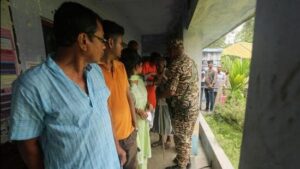
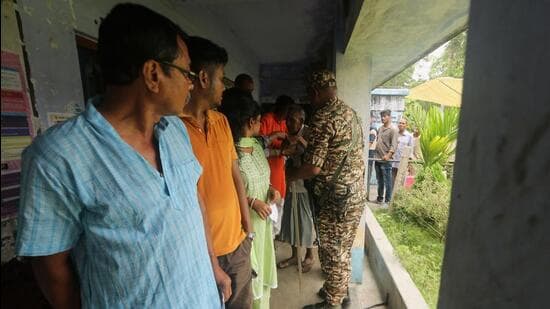
On Thursday morning, millions of voters headed to heavily guarded polling booths for the crucial first phase of the 2026 West Bengal assembly elections. Encompassing an unprecedented **152 assembly constituencies across 16 districts**, this massive democratic exercise covers more than half of the state’s 294-seat legislature in a single day. Early figures indicate sharply contrasting voter enthusiasm across regions. **West Midnapore has recorded the highest early voter turnout**, driven by a massive rural mobilization, while **Malda district has seen a noticeably sluggish start**, registering the lowest participation numbers in the state so far. The outcomes of this extensive mega-phase are poised to set the definitive momentum for the remainder of the fiercely contested electoral battle. [Source: Hindustan Times].
## Early Voting Trends and Regional Disparities
The polling, which commenced at 7:00 AM under tight security protocols, witnessed brisk voting in the early hours as citizens queued up to avoid the punishing April heatwave currently gripping the eastern Indian state. The Election Commission of India (ECI) Voter Turnout App showed a steady upward trajectory in overall state numbers, but the district-wise breakdown revealed a fascinating dichotomy in voter behavior.
Historically, West Bengal boasts one of the highest electoral participation rates in the country, often crossing the 80% mark. However, the 2026 elections are testing new logistical boundaries due to the ECI’s decision to cluster 152 seats into a single “mega-phase.”
According to preliminary data released by the Chief Electoral Officer’s office at 9:30 AM, the southern and western districts exhibited tremendous morning enthusiasm, whereas the northern and central districts reported thinner crowds.
**Estimated Early Voter Turnout (As of 9:30 AM, April 23, 2026)**
| District | Region | Early Turnout Estimate |
| :— | :— | :— |
| **West Midnapore** | Western (Jangalmahal) | **17.4%** |
| Bankura | Western (Jangalmahal) | 16.2% |
| Hooghly | Southern | 15.8% |
| Murshidabad | Central | 11.5% |
| **Malda** | Northern | **8.1%** |
*Note: Data is preliminary and subject to ECI final reconciliation.* [Additional Source: ECI Turnout Data Trends].
## High Stakes in West Midnapore
The extraordinary morning rush in West Midnapore is a critical indicator of the high political stakes in the Jangalmahal region. Covering the forested, tribal-dominated southwestern belt of the state, this area has historically been a volatile battleground. Over the last decade, political dominance here has swung violently between the ruling Trinamool Congress (TMC) and the Bharatiya Janata Party (BJP).
Local reports indicate that women voters formed incredibly long queues even before the polling stations opened. Political analysts attribute this surge to a combination of intense grassroots campaigning and the direct impact of state-run welfare schemes.
Dr. Ayan Sengupta, a political sociologist analyzing electoral behavior in eastern India, notes the significance of these numbers: *”The staggering turnout in West Midnapore reflects the highly mobilized nature of the rural electorate. Both the incumbent TMC and the challenging BJP have poured immense resources into the Jangalmahal belt. The ruling party is relying heavily on its direct-benefit transfer schemes like Lakshmir Bhandar to consolidate the female vote, while the opposition is capitalizing on local anti-incumbency and tribal grievances. A high turnout here traditionally signifies a fierce, down-to-the-wire contest.”*
Furthermore, the region has seen recent socio-political agitations, particularly concerning the Kurmi community’s demand for Scheduled Tribe (ST) status. The active participation of these communities is expected to heavily influence the final tally in several swing constituencies within the district.
## Malda’s Sluggish Start Raises Questions
In stark contrast to the fervor of the southwest, the northern district of Malda recorded a surprisingly muted start. With the lowest early turnout numbers among the 16 districts polling today, political war rooms are actively trying to decode the apathy.
Malda has historically been a bastion of the Indian National Congress, largely due to the enduring legacy of the late A.B.A. Ghani Khan Choudhury. In recent electoral cycles, however, both the TMC and the BJP have made significant inroads, fracturing the traditional voting blocs in this minority-dominated district.
Several intersecting factors could explain the sluggish morning turnout:
* **Migration and Labor:** Malda is home to a vast population of migrant workers who travel to states like Kerala, Maharashtra, and Delhi for employment. Despite ECI initiatives to encourage migrant voting, physical absence remains a structural barrier to high turnout.
* **Agricultural Cycles:** Mid-April coincides with the Boro paddy harvesting season in many parts of Bengal. In agrarian districts like Malda, a significant chunk of the electorate prioritizes morning fieldwork to escape the midday heat, traditionally resulting in a late-afternoon surge at the polling booths.
* **Weather Conditions:** While the whole state is facing high temperatures, specific pockets in North Bengal have reported severe humidity, deterring elderly voters from stepping out during the morning hours.
*”It is premature to declare voter apathy in Malda,”* cautions local political commentator Nusrat Bano. *”Historically, North Bengal districts witness a delayed peak in voting. By 3:00 PM, once the agricultural labor force returns from the fields, we usually see a massive spike. However, if the numbers remain depressed by evening, it could spell trouble for the traditional parties relying on high minority voter consolidation.”*
## Security Measures and Polling Station Management
Given West Bengal’s fraught history with election-related violence, the Election Commission of India has implemented an unprecedented security apparatus for this mega-phase. Managing 152 constituencies concurrently requires a gargantuan logistical effort, particularly in maintaining law and order.
Over **800 companies of Central Armed Police Forces (CAPF)** have been deployed across the 16 polling districts. ECI guidelines mandate that central forces exclusively manage booth-level security, while the state police are restricted to perimeter control and generalized law enforcement duties beyond the 100-meter radius of polling stations. [Source: Election Commission of India Directives].
**Key Security and Administrative Measures Deployed Today:**
1. **100% Webcasting:** All sensitive and hyper-sensitive booths are equipped with live web-cameras, monitored directly by ECI officials in New Delhi and the CEO’s war room in Kolkata.
2. **Drone Surveillance:** In the densely forested regions of West Midnapore, Jhargram, and Purulia, authorities are utilizing drones to monitor crowd movements and prevent voter intimidation.
3. **VVPAT Reliability:** To ensure absolute transparency, all Electronic Voting Machines (EVMs) are paired with Voter Verifiable Paper Audit Trail (VVPAT) machines. Early reports indicated minor EVM malfunctions in isolated pockets of Bankura and Hooghly, which sector officers swiftly replaced within the stipulated 30-minute window.
Despite a few sporadic reports of tension between rival political workers in rural Hooghly and Murshidabad, polling has remained largely peaceful as of midday. The heavy footprint of central security forces appears to have instilled confidence among the electorate, contributing to the steady turnout.
## The Broader Political Landscape in 2026
The decision to hold elections for 152 out of 294 seats in a single phase makes April 23 a “make-or-break” day for all major political formations in West Bengal.
For the **ruling Trinamool Congress**, seeking another consecutive term, the objective is to defend its rural fortresses. The party’s campaign has aggressively highlighted the state government’s expansive social safety net, countering national narratives with hyper-local welfare delivery.
The **Bharatiya Janata Party (BJP)**, functioning as the principal opposition, has structured its campaign around anti-incumbency, allegations of regional corruption, and central governance models. A strong performance in this 152-seat phase is absolutely vital for the BJP if they hope to cross the majority mark in the assembly.
Meanwhile, the **Left-Congress alliance** is fighting for political relevance. Their campaign has focused on employment generation, democratic restoration, and industrialization. While they have lost significant ground in recent years, pockets of Murshidabad and Malda—both polling today—remain their strongest geographical holds. If the low turnout in Malda persists, it could severely damage the alliance’s prospects of emerging as a formidable third bloc in the legislature.
## Conclusion: Setting the Tone for the Elections
As the day progresses, the early electoral trends from West Midnapore and Malda highlight the diverse and complex political tapestry of West Bengal. High participation in the Jangalmahal belt underscores a highly competitive ground game, where every single vote is being heavily contested. Conversely, the sluggish start in the northern districts presents a variable that campaign managers will be watching with bated breath as the afternoon sun descends.
With 152 constituencies sealing their fate in Electronic Voting Machines today, the outcome of this phase will likely determine the ultimate victor of the 2026 West Bengal Assembly Elections. ECI officials expect the overall statewide percentage to equalize by 6:00 PM, projecting a final turnout that will once again reflect the deeply ingrained democratic fervor of the state.
The final official voter turnout percentages, adjusted for those still in the queues at the official closing time, will be released by the Election Commission later tonight. Until then, all eyes remain fixed on the polling booths of Bengal.