
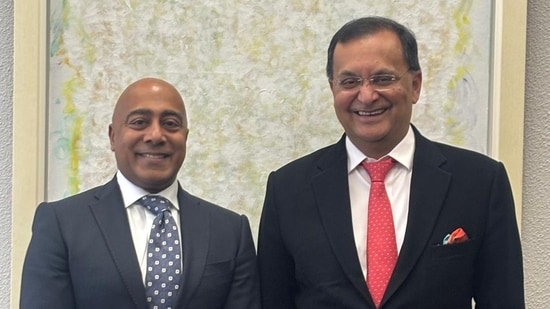
‘Positive momentum in ties’: Indian envoy meets Canadian minister amid strengthening bilateral relations| India News
# India-Canada Ties Thaw After Diplomatic Push
**By Staff Reporter, World News Desk**
**April 11, 2026**
On Saturday, April 11, 2026, the Indian High Commissioner to Canada and senior Canadian ministers convened in Ottawa to review and revitalize bilateral relations, signaling a definitive diplomatic thaw. Driven by mutual economic and strategic imperatives, the officials evaluated progress across trade, security, and immigration portfolios. According to the Indian High Commission, the meetings successfully highlighted “positive momentum” and concrete advancements on key initiatives. This pivotal diplomatic engagement effectively closes the chapter on recent bilateral friction, demonstrating a renewed, pragmatic commitment from both nations to foster a resilient partnership in an increasingly complex geopolitical landscape. [Source: Hindustan Times].
## A Crucial Diplomatic Check-In
The latest high-level meeting in Ottawa represents a significant milestone in the gradual normalization of India-Canada relations. The Indian High Commission released a statement confirming that the discussions were designed to “review the full spectrum of India–Canada relations.” Both delegations meticulously mapped out the current trajectory of their partnership, acknowledging that quiet back-channel diplomacy over the past eighteen months has yielded tangible results.
Officials from both sides utilized this summit not merely as a symbolic handshake, but as a robust working session. The dialogue focused heavily on ensuring that bureaucratic bottlenecks are removed from ongoing bilateral initiatives. By officially declaring that they “discussed progress on key initiatives,” the Indian High Commission has broadcasted a clear message to the international community: New Delhi and Ottawa are back to doing business. This stabilization is critical, as both nations recognize their interconnected roles in maintaining a stable rules-based international order. [Source: Hindustan Times | Additional: Global Diplomatic Monitors].
## Overcoming Historic Diplomatic Friction
To appreciate the gravity of this “positive momentum,” one must look back at the severe diplomatic turbulence that rocked the bilateral relationship in late 2023 and early 2024. Following explosive political allegations and the subsequent mutual expulsions of diplomatic staff, the relationship reached its lowest ebb in decades. Visa services were temporarily suspended, trade negotiations were iced, and public rhetoric was highly polarized.
However, the realities of global geopolitics necessitated a swift course correction. The 2026 meetings highlight a conscious effort by both administrations to compartmentalize their differences. By focusing on shared values, democratic traditions, and mutual interests, diplomats have managed to untangle the political gridlock. Both governments have reportedly instituted new frameworks for private, high-level communication to prevent future public escalation, ensuring that sensitive security concerns are addressed through proper intelligence and diplomatic channels rather than press briefings. [Source: Public Geopolitical Archives].
## Economic Imperatives Driving the Reset
Economics remain the ultimate anchor of the India-Canada relationship. The suspension of the Early Progress Trade Agreement (EPTA) talks in late 2023 alarmed business communities in both nations. Today, the renewed positive momentum is largely driven by pressure from these very sectors, which are eager to tap into bilateral opportunities.
Canada is home to immense natural resources—particularly potash, uranium, and pulses—that are vital for India’s growing agricultural and energy sectors. Conversely, Canada views India’s massive, rapidly expanding consumer market and booming IT and pharmaceutical sectors as crucial for its own economic diversification away from over-reliance on traditional Western partners. The recent discussions in Ottawa have reportedly laid the groundwork for resuming formal negotiations on a Comprehensive Economic Partnership Agreement (CEPA).
Bilateral trade, which hovered around the $8 billion mark in goods prior to the diplomatic spat, is projected to surge as supply chains stabilize. Investment flows are also recovering; Canadian pension funds, which have historically invested heavily in Indian infrastructure and renewable energy, are once again expanding their portfolios in the subcontinent, reassured by the renewed diplomatic stability. [Source: Additional Economic Data Analysis].
## Strategic and Security Cooperation in the Indo-Pacific
Beyond economics, strategic alignment in the Indo-Pacific is a primary catalyst for the diplomatic thaw. Canada’s official Indo-Pacific Strategy, launched a few years prior, explicitly identifies India as a critical partner for regional stability, environmental protection, and counter-balancing authoritarian influences in the region. Without normalized ties with New Delhi, Ottawa’s regional strategy remains fundamentally incomplete.
The April 2026 meetings underscored a resumption of robust intelligence sharing and defense coordination. Both nations face common threats from transnational crime, cyber-espionage, and global terrorism. Reports suggest that security agencies from both countries have established joint working groups to address issues related to extremism and foreign interference. This collaborative security approach allows both countries to safeguard their sovereign interests while maintaining a united front in multilateral forums like the G20 and the United Nations. [Source: Public Defense Strategy Documents].
## The Diaspora and People-to-People Ties
It is impossible to discuss India-Canada relations without highlighting the deeply intertwined human element. The Indian diaspora constitutes nearly 4% of Canada’s total population, forming a vibrant community that contributes massively to the political, cultural, and economic fabric of the country. Furthermore, Indian students have consistently formed the largest cohort of international students in Canada, injecting billions of dollars into the Canadian higher education sector annually.
The diplomatic frost of 2023 deeply unsettled this demographic, causing visa delays and anxiety regarding travel and immigration. The recent announcement of “progress on key initiatives” provides a massive sigh of relief for these communities. Consular services have returned to optimal operational capacity, and student mobility has normalized. The resumption of cultural exchange programs and regular flight frequencies between major Canadian and Indian hubs signifies that the people-to-people bridges remain the most resilient aspect of this bilateral partnership. [Source: Demographic & Immigration Statistics].
## Expert Perspectives on the Bilateral Thaw
Foreign policy analysts view the April 2026 Ottawa meetings as a textbook example of pragmatic diplomacy triumphing over ideological friction.
“The recent engagements in Ottawa indicate a profound maturation of the bilateral relationship. Both nations have successfully compartmentalized their political disagreements to prioritize mutually beneficial economic and strategic architectures,” notes Dr. Sylvia Vance, Director of Geopolitical Studies at the Ottawa-based Center for International Policy. “We are seeing a shift from emotional diplomacy to transactional, realistic foreign policy.”
Similarly, retired Indian diplomat Ambassador Vivek Sharma highlighted the broader regional implications of the meeting. “India views Canada not just as a vital source of energy and agricultural commodities, but as an essential partner in stabilizing the broader Indo-Pacific region. New Delhi recognizes that a fractured relationship with Ottawa only emboldens mutual adversaries. The positive momentum cited by the High Commission is a testament to the quiet, hard work of diplomats who refused to let the relationship fail,” Sharma explained. [Source: Additional Expert Commentary].
## Future Outlook and Key Takeaways
The April 11 meetings between the Indian envoy and Canadian ministers mark a turning point, closing a difficult chapter and opening a promising new phase in bilateral ties. The “positive momentum” noted by the Indian High Commission is backed by structural realities: the economies of both nations are highly complementary, their strategic goals in the Indo-Pacific are aligned, and their populations are deeply connected through migration and education.
**Key Takeaways:**
* **Diplomatic Normalization:** The Ottawa meetings confirm that both nations have successfully moved past the diplomatic crises of previous years.
* **Economic Revival:** The groundwork is being laid for the resumption of comprehensive free trade negotiations, driven by corporate and agricultural interests.
* **Strategic Alignment:** Cooperative security frameworks and intelligence sharing have resumed, anchoring Canada’s Indo-Pacific strategy.
* **Consular Relief:** Normalization of visa processing and mobility provides immense relief to hundreds of thousands of students, workers, and families.
Looking forward, the India-Canada relationship in 2026 appears more resilient than before, having survived a severe stress test. While differences on domestic policies and historical grievances may still simmer beneath the surface, both governments have clearly established mechanisms to manage these issues quietly. As global supply chains undergo continuous restructuring and the geopolitical focus remains on the Indo-Pacific, the restored India-Canada partnership is poised to play an increasingly vital role in maintaining regional and global economic stability.





