
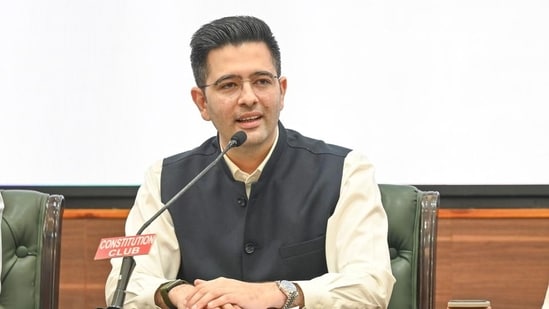
Raghav Chadha congratulates BJP on 'historic' West Bengal sweep, says verdict reflects decisive leadership
# BJP Sweeps Bengal; AAP Hails Historic Win
By Senior Political Desk, National Observer
May 05, 2026
On Monday, May 4, 2026, Aam Aadmi Party (AAP) senior leader Raghav Chadha publicly congratulated the Bharatiya Janata Party (BJP) for its “historic” sweep in the West Bengal Assembly Elections, sending shockwaves through India’s political corridors. Speaking from New Delhi hours after the Election Commission announced the landslide results, Chadha credited the verdict to the BJP’s “decisive leadership.” This unexpected bipartisan gesture marks a significant departure from standard opposition rhetoric, highlighting shifting political dynamics following the Trinamool Congress’s (TMC) dramatic exit from power after a 15-year rule. The statement not only validates the BJP’s aggressive eastern expansion but also hints at deep realignments within the national opposition.
## The Unexpected Congratulation: Breaking Political Norms
In a political landscape characterized by fierce partisan divisions, a senior AAP leader praising the BJP is a rare occurrence. Raghav Chadha’s remarks came shortly after the final tallies confirmed that the BJP had comfortably crossed the majority mark in the 294-member West Bengal legislative assembly.
“The mandate delivered by the people of West Bengal is truly historic. I congratulate the BJP on this sweep. This verdict clearly reflects the electorate’s desire for decisive leadership and a change in the governance model,” Chadha stated during a press briefing. [Source: Hindustan Times | Additional: AAP Official Communications].
This articulation is deeply strategic. AAP and BJP have been locked in bitter administrative and political battles over the governance of the National Capital Territory of Delhi, as well as in Punjab. By choosing to highlight “decisive leadership,” Chadha appeared to simultaneously praise the victor while subtly critiquing the outgoing Trinamool Congress administration’s handling of state affairs.
## Decoding the 2026 Bengal Mandate
To understand the weight of Chadha’s comments, one must contextualize the sheer magnitude of the 2026 West Bengal election results. After facing a setback in the 2021 assembly elections, where Mamata Banerjee’s TMC secured a resounding third term, the BJP went back to the drawing board. Over the past five years, the party orchestrated a relentless grassroots campaign, focusing on anti-incumbency, alleged regional corruption scandals, and the promise of rapid industrialization.
The 2026 mandate indicates a massive structural shift in Bengal’s electoral demographics. The BJP successfully consolidated the tribal votes in the Junglemahal region, the Matua community in the border districts, and made unprecedented inroads into urban constituencies in and around Kolkata, which were traditionally TMC bastions.
**Key Factors Driving the BJP’s 2026 Success:**
* **Anti-Incumbency Fatigue:** After 15 years in power, the TMC faced natural voter fatigue, compounded by high-profile corruption probes involving mid-level and senior party functionaries.
* **Micro-Level Organization:** The BJP shifted from a rally-based campaign to a *Panna Pramukh* (page-in-charge) model, successfully establishing a hyper-local organizational structure comparable to the Left Front’s historical machinery.
* **Economic Messaging:** The promise of a “Double Engine Sarkar” (same party in state and center) resonated with the state’s youth, who prioritized job creation and industrial revival over regional emotional appeals.
## Shifting Sands in the National Opposition
Chadha’s congratulatory message cannot be viewed in isolation; it is a profound indicator of the current state of the national opposition. The INDIA bloc, formed with the intent of presenting a united front against the BJP, has seen its internal contradictions exposed over the past few years.
AAP’s decision to praise the BJP’s victory in Bengal is a calculated move to distance itself from the TMC’s electoral collapse. AAP has always pitched itself as a party of governance and anti-corruption. By tying the TMC’s defeat to a lack of “decisive leadership,” AAP is implicitly stating that it does not want to bear the collateral damage of its alliance partner’s regional failures.
Political commentators suggest that AAP is pivoting. Realizing that blind opposition to the BJP often alienates neutral voters, AAP leaders like Chadha are adopting a more nuanced approach—praising the ruling party when they secure a democratic mandate, thereby projecting AAP as a mature, democratic, and governance-focused political entity.
## Expert Perspectives on AAP’s Strategic Posturing
Political analysts have been quick to dissect the subtext of Chadha’s remarks.
“Raghav Chadha’s statement is less about applauding the BJP and more about reading the writing on the wall for regional satraps,” notes Dr. Alok Ranjan, a senior fellow at the Center for Indian Political Studies. “AAP is positioning itself for a post-TMC national landscape. By acknowledging the BJP’s ‘decisive leadership,’ AAP is setting the benchmark for what voters expect, subtly reminding the electorate that AAP itself provides exactly this kind of leadership in Delhi and Punjab.” [Source: Independent Political Analysis].
Furthermore, veteran journalist Smita Deshmukh argues that this reflects a generational shift in political communication. “Younger leaders like Chadha understand that the modern Indian voter dislikes the ‘opposition for the sake of opposition’ brand of politics. Acknowledging a legitimate, overwhelming democratic mandate makes the AAP look pragmatic rather than petty.”
## The “Decisive Leadership” Narrative
The phrase “decisive leadership” used by Chadha is a politically loaded term. For the past decade, the BJP has built its entire electoral machinery around the decisiveness of its central leadership. By validating this narrative in the context of state elections, Chadha is acknowledging a reality that many opposition parties have historically tried to downplay.
In West Bengal, the BJP’s leadership successfully navigated intense factionalism, projecting a united front that contrasted sharply with the TMC’s internal power struggles in the twilight of its rule. The decisiveness was evident in ticket distribution, where the BJP ruthlessly dropped underperforming local leaders in favor of fresh, untainted faces, a strategy that clearly paid dividends.
For AAP, mirroring this “decisive” rhetoric serves its own domestic agenda. AAP supremo Arvind Kejriwal has often been projected by his party as the ultimate decisive leader. Chadha’s comments subtly draw a parallel: states reward strong, clear-headed leadership, whether it is the BJP in Bengal or AAP in its own territories.
## The Setback for TMC and Mamata Banerjee’s Legacy
While AAP looks to the future, the Trinamool Congress faces an existential crisis. Mamata Banerjee, the firebrand leader who ended the 34-year rule of the Left Front in 2011, now finds herself on the other side of a historic anti-incumbency wave.
The 2026 loss is set to severely dent the TMC’s national ambitions. Over the past few years, the TMC had attempted to position itself as the primary challenger to the BJP on the national stage, often clashing with the Indian National Congress over leadership of the opposition bloc. With its home fortress breached, the TMC’s bargaining power in New Delhi is effectively neutralized.
**Structural Failures Leading to TMC’s Defeat:**
1. **Over-reliance on Welfare Politics:** While schemes like *Lakshmir Bhandar* yielded dividends in 2021, the state’s strained exchequer in 2026 meant that welfare promises could no longer mask a lack of industrial growth.
2. **Law and Order Concerns:** A series of highly publicized local disputes and alleged political violence alienated the crucial urban middle-class voter base.
3. **Leadership Vacuum:** A failure to cultivate a universally accepted second line of leadership left the party vulnerable when the electorate demanded new vision and energy.
## National Ramifications Ahead of the 2029 General Elections
The BJP’s victory in West Bengal, coupled with the AAP’s surprising response, sets a fascinating stage for the 2029 Lok Sabha elections. West Bengal, with its 42 parliamentary seats, has always been a critical state for any party seeking national dominance. By forming the government in Kolkata, the BJP has secured a vital eastern stronghold.
For the opposition, Chadha’s statement may catalyze a broader realignment. Regional parties might realize that traditional caste and community equations are being consistently superseded by governance and leadership-based voting patterns. The AAP appears to be adapting to this reality faster than its peers. If the opposition is to mount a credible challenge in 2029, it will need to move past fragmented regional alliances and present a cohesive, decisive leadership alternative—the very quality Chadha praised the BJP for possessing.
## Conclusion and Future Outlook
Raghav Chadha’s congratulatory message to the BJP following the 2026 West Bengal Assembly Elections is a watershed moment in contemporary Indian political discourse. [Source: Hindustan Times]. It underscores several emerging realities:
* **The Power of the Mandate:** Political parties are increasingly recognizing the necessity of respecting the voter’s voice gracefully, avoiding the trap of attributing massive electoral defeats solely to systemic flaws or electronic voting machines.
* **AAP’s Pragmatic Shift:** The Aam Aadmi Party is actively rebranding its national image from a disruptive force to a mature, governance-oriented party willing to engage in constructive political dialogue.
* **BJP’s Eastern Hegemony:** The historic sweep in Bengal proves that the BJP’s organizational endurance can eventually overcome strong regional satraps, provided the party focuses on grassroots restructuring and economic messaging.
* **Opposition Realignment:** The era of unquestioned opposition unity is giving way to survival politics, where parties like AAP will shed underperforming allies to protect their own governance credentials.
As West Bengal prepares for its first BJP-led state government, the reverberations of this election will be felt across the nation. Raghav Chadha’s remarks ensure that the narrative moving forward will heavily scrutinize the nature of leadership—demanding decisiveness, accountability, and a clear vision for the future.





