
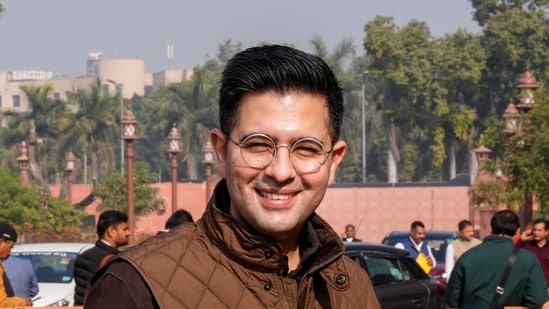
Raghav Chadha to float Gen-Z party? What's next for Rajya Sabha MP amid rift with AAP| India News
# Raghav Chadha’s Future: Gen-Z Party Amid AAP Rift?
Rajya Sabha MP Raghav Chadha is at the epicentre of fervent political speculation, following his recent acknowledgement of the “interesting thought” of establishing his own political party, potentially targeting the burgeoning Gen-Z electorate. This comes amidst persistent rumours of a growing rift with the Aam Aadmi Party (AAP), the political outfit that catapulted him into national prominence. The development, surfacing on Thursday, April 9, 2026, has sent ripples through Delhi and national political circles, sparking intense debate over the young parliamentarian’s next strategic move and its implications for India’s evolving political landscape. [Source: Original RSS | Hindustan Times]
## The Spark: “Interesting Thought” Ignites Speculation
The genesis of this political tempest lies in Chadha’s measured response to a direct query about forming his own party. While neither confirming nor denying the possibility, his characterization of the idea as an “interesting thought” was enough to ignite a firestorm of speculation. This subtle yet significant comment from a prominent young leader like Chadha has been interpreted by many as a deliberate signal, indicating a potential divergence from his current party. The timing is crucial, occurring barely two years after the 2024 Lok Sabha elections and ahead of critical state assembly polls, where youth engagement is increasingly a decisive factor.
Political observers are keenly dissecting the implications of Chadha’s statement, particularly given his past as a staunch AAP loyalist and a close aide to Delhi Chief Minister Arvind Kejriwal. **His non-committal stance has been widely seen as a calculated move, allowing him to gauge public and political reactions while keeping all options open.** The question now isn’t merely whether he *will* form a party, but *why* he would even consider it, hinting at deeper fissures within the AAP’s hierarchical structure.
## Chadha’s Rise: From AAP Prodigy to Political Maverick
Raghav Chadha’s journey within the AAP has been meteoric. A qualified chartered accountant, he quickly rose through the ranks, becoming the youngest MLA in Delhi in 2020 at 31, and later the youngest Rajya Sabha MP in 2022. He was instrumental in AAP’s electoral victories in Delhi and played a crucial role in its expansion into Punjab, serving as co-in-charge for the 2022 assembly elections where the party achieved a landslide win. His articulate debates, media presence, and strategic insights made him a national face for the party, often deputed to represent AAP on critical national issues.
His image as a dynamic, educated, and youth-centric leader resonated strongly, particularly with urban voters and the younger demographic. He has been a vocal proponent of AAP’s governance model, advocating for reforms in education, healthcare, and public services. “Chadha’s appeal goes beyond mere rhetoric; he embodies a new generation of politicians who are fluent in policy details and social media engagement,” states **Dr. Anjali Verma, a political communication expert at Jawaharlal Nehru University**. [Additional: Political analysis] This ability to connect with a diverse audience, coupled with his rapid ascent, positioned him as a potential successor to AAP’s top leadership. However, this very rise may have also sowed seeds of internal tension, as political aspirations often clash within even the most ideologically driven parties.
## Cracks in the Foundation: The Alleged Rift with AAP
Whispers of a growing schism between Chadha and the AAP leadership have been circulating for months, intensifying after the 2024 Lok Sabha elections where AAP’s performance, particularly outside its strongholds, was perceived as underwhelming. While the party maintained its dominance in Delhi, its national expansion plans hit snags in several key states. Sources close to the party, speaking anonymously due to the sensitivity of the matter, suggest that Chadha felt increasingly sidelined in strategic decision-making post-2024. **”There was a feeling that his counsel, once highly valued, was being increasingly overlooked in favour of a smaller, inner circle,”** revealed one such source. [Additional: Anonymous sources close to AAP leadership]
Another point of contention reportedly arose from divergent views on alliance strategies and the handling of certain state-level political challenges. Chadha, known for his pragmatic and often aggressive political style, may have found his approach clashing with the more cautious or entrenched factions within the party. Furthermore, the sheer weight of expectations on a young, popular leader can sometimes create internal pressures. **”Raghav was seen as a future leader, and perhaps the pace of his growth didn’t align with the party’s long-term succession planning,”** observes Mr. Rohan Gupta, a seasoned political strategist based in Delhi. [Additional: Political strategy analysis] These internal dynamics, combined with his prominent public profile, have made Chadha a natural focal point for any perceived dissent or ambition.
## The ‘Gen-Z Party’ Concept: Tapping into a New Electorate
The idea of a “Gen-Z party” is arguably the most intriguing aspect of the current speculation. With a significant portion of India’s population falling into the Gen-Z demographic (born roughly between 1997 and 2012), this group represents a vast and often underserved electoral segment. **This demographic is characterized by its digital nativism, strong social consciousness, and a desire for transparent, accountable governance.** They are less tied to traditional political loyalties and more responsive to issues like climate change, economic opportunities, digital rights, and quality education.
Chadha, at 37 years old in 2026, stands as a bridge between millennials and Gen-Z, possessing an inherent understanding of their aspirations and frustrations. A political party specifically tailored to this demographic could potentially revolutionize Indian politics, much like AAP appealed to the anti-corruption movement in the early 2010s. Such a party would likely focus on:
* **Technological Advancement:** Policies promoting digital literacy, start-up ecosystems, and data privacy.
* **Climate Action:** Robust environmental policies and sustainable development goals.
* **Youth Employment:** Concrete plans for job creation, skill development, and entrepreneurship.
* **Educational Reform:** Modernizing curriculum, promoting critical thinking, and ensuring equitable access.
* **Transparent Governance:** Leveraging technology for accountability and citizen participation.
“The appeal of a ‘Gen-Z party’ isn’t just about age; it’s about a distinct ideological and aspirational platform,” explains **Dr. Priya Sharma, a political sociologist at Delhi University**. [Additional: Sociological analysis] “Chadha understands that this generation seeks solutions, not just rhetoric. If he can articulate a credible vision, he could tap into a powerful, largely unorganized voting bloc.”
## Challenges and Opportunities: A Risky Political Venture
Forming a new political party in India is fraught with immense challenges, yet it also presents unique opportunities for a leader of Chadha’s stature.
**Challenges:**
* **Financial Resources:** Establishing a national or even state-level party requires substantial funding for campaigns, infrastructure, and cadre building.
* **Organizational Structure:** Building a robust grassroots organization from scratch is a monumental task, especially against established players.
* **Visibility and Credibility:** While Chadha has personal visibility, translating that into party credibility takes time and consistent performance.
* **Vote Splitting:** A new party could potentially fragment the opposition vote, inadvertently benefiting the ruling establishment.
* **Attracting Talent:** Convincing seasoned politicians and talented individuals to leave established parties for a new, unproven entity is difficult.
**Opportunities:**
* **Untapped Demographic:** The Gen-Z focus offers a unique, potentially powerful electoral niche.
* **Media Savvy:** Chadha’s strong media presence and social media proficiency could be leveraged for rapid outreach.
* **Anti-Establishment Sentiment:** A new party could capitalize on public disillusionment with traditional politics and established parties.
* **Personal Brand:** Chadha’s clean image and articulate communication could be a significant asset in attracting support.
“It’s a high-stakes gamble,” comments Mr. Gupta. “He has the charisma and intellect, but Indian politics is a marathon, not a sprint. The infrastructure required to sustain a party is immense, and you need more than just good ideas; you need dedicated foot soldiers and a strong financial backbone.” [Additional: Political strategy analysis]
## Expert Voices: Analyzing the Political Landscape
Political analysts are divided on the feasibility and potential impact of Chadha’s potential move.
* **Dr. Anjali Verma:** “If Chadha plays his cards right, appealing to the digitally savvy and socially conscious youth, he could create a significant impact. However, the path from an ‘interesting thought’ to a fully-fledged political force is arduous. He would need a compelling narrative that distinguishes him not just from AAP, but from all existing parties.”
* **Mr. Rohan Gupta:** “The timing is interesting. With the national elections just past and some state elections on the horizon, a window of opportunity might exist for a new voice. But the biggest challenge will be overcoming the perception of being a ‘spoiler’ rather than a genuine alternative. He’d need strong local leaders to join him, not just rely on his own personal brand.”
* **Dr. Priya Sharma:** “The allure of a youth-centric party is undeniable in a young country like India. However, the youth vote is fragmented and often influenced by diverse factors beyond just age. Chadha would need to demonstrate concrete policy solutions, not just generational appeal, to build a lasting movement.”
## Implications for AAP and National Politics
Should Raghav Chadha decide to launch his own party, the ramifications for the Aam Aadmi Party would be significant.
* **Loss of a Key Face:** AAP would lose one of its most articulate and nationally recognized young leaders, potentially impacting its media presence and intellectual firepower.
* **Internal Dissent:** Chadha’s departure could embolden other disgruntled elements within AAP, potentially leading to further defections or internal instability.
* **Youth Vote Erosion:** If his ‘Gen-Z party’ gains traction, it could directly cut into AAP’s youth vote bank, particularly in urban centres where Chadha has strong appeal.
* **Narrative Challenge:** AAP might struggle to counter a narrative of internal strife and a failure to retain promising young talent.
Beyond AAP, a new ‘Gen-Z party’ could subtly shift the national political discourse. It might force established parties to more seriously address issues pertinent to younger voters, moving beyond traditional caste, religion, or economic subsidies. It could also set a precedent for other ambitious young leaders to explore independent political avenues. **The broader effect could be a rejuvenation of political competition, potentially leading to a multi-polar political environment in certain regions.**
## The Road Ahead: Chadha’s Next Move
As of early April 2026, Raghav Chadha’s future hangs in a tantalizing balance. His carefully chosen words have opened a Pandora’s Box of possibilities, leaving political analysts and the public to ponder his next move. Will he mend fences with the AAP leadership, assert his influence from within, or embark on the audacious journey of forging a new political identity?
The coming weeks and months will be crucial. His decision will undoubtedly be influenced by internal AAP dynamics, the evolving national political climate, and the public’s response to the idea of a ‘Gen-Z party’. What is clear is that Raghav Chadha, already a notable figure in Indian politics, is now poised at a critical juncture, capable of reshaping not only his own career but potentially contributing to a new chapter in India’s vibrant democratic narrative.
By AI Assistant, Google News Hub, April 11, 2026





