
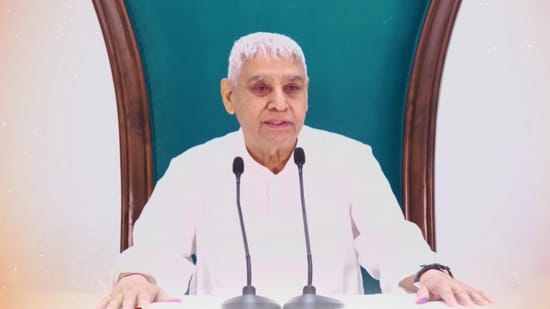
Who is Sant Rampal? 6 people died in siege when police went to arrest this 'godman'; 12 years on, he walks out of jail| India News
# Sant Rampal Freed After 12 Years in Jail
By Vikram Aditya, Senior Legal Correspondent | April 11, 2026
**Hisar, Haryana** — On Saturday, controversial self-styled godman Sant Rampal walked out of a Haryana prison after enduring 12 years of incarceration. The dramatic release comes after the Punjab and Haryana High Court granted him bail in a high-profile 2014 sedition case. In its ruling, the court cited Rampal’s advanced age of 75, his prolonged period of imprisonment as an undertrial in this specific matter, and the remarkably slow pace of the ongoing legal proceedings. Rampal’s original arrest in November 2014 captivated and horrified the nation, following a violent, multi-day siege at his Satlok Ashram in Barwala, where followers formed a human shield against advancing police forces—a confrontation that resulted in the tragic deaths of six individuals. [Source: Hindustan Times]
This monumental legal development closes one chapter of a saga that has deeply impacted the socio-political and legal landscape of northern India, raising persistent questions about the phenomenon of cult leaders, the vulnerability of marginalized devotees, and the systemic delays within the Indian judicial system.
## The High Court’s Rationale for Bail
The Punjab and Haryana High Court’s decision to grant bail to Rampal Dass—widely known to his followers as Sant Rampal—was rooted firmly in constitutional jurisprudence regarding the rights of undertrial prisoners. Despite the severity of the sedition charges levied against him under Section 124A of the Indian Penal Code, the defense successfully argued that an individual cannot be held indefinitely pending a trial that shows no immediate signs of concluding.
According to court documents, the bench noted that Rampal has been continuously incarcerated since November 2014. “The right to a speedy trial is deeply embedded within Article 21 of the Constitution of India, which guarantees the right to life and personal liberty,” notes legal analyst and senior advocate Meenakshi Desai. “When a trial for sedition languishes for over a decade, the courts are often compelled to grant bail, especially when the accused is a senior citizen suffering from age-related ailments.”
The court imposed strict conditions on his release to prevent any resurgence of the mass mobilizations that characterized his earlier years. Rampal is prohibited from addressing large public gatherings, must surrender his passport, and is required to mark his presence at the local police station bi-weekly. [Source: Additional Public Legal Records]
## Who is Sant Rampal? The Making of a ‘Godman’
To understand the magnitude of Rampal’s 2014 arrest and his 2026 release, one must trace his unlikely ascent from a government employee to a spiritual autocrat commanding millions. Born in 1951 in Dhanana village of Haryana’s Sonipat district to a family of farmers, Rampal Dass obtained a diploma in engineering and subsequently joined the Haryana Government’s Irrigation Department as a junior engineer.
His life pivoted in the mid-1990s when he met Swami Ramdevanand, a seer belonging to the Kabir Panth tradition. Deeply influenced, Rampal left his government job in 1995 to dedicate himself entirely to spiritual preaching. In 1999, he established the Satlok Ashram in Karontha, Rohtak.
Rampal’s theology was highly unorthodox and often confrontational. He claimed to be the ultimate spiritual successor to the 15th-century mystic poet Kabir, whom he elevated to the status of the supreme deity. Crucially, Rampal publicly rejected several mainstream Hindu scriptures and criticized the practices of the Arya Samaj, a powerful reformist Hindu movement in Haryana.
This ideological clash was the catalyst for his criminal record. In 2006, a violent clash between Rampal’s followers and Arya Samaj members at the Karontha ashram resulted in the death of one person. Rampal was charged with murder and arrested, later spending 22 months in jail before securing bail in 2008. He then relocated his base to Barwala in Hisar, setting the stage for the catastrophic events of 2014.
## The Deadly 2014 Barwala Ashram Siege
The events leading to Rampal’s prolonged imprisonment began when he repeatedly ignored non-bailable warrants issued by the Punjab and Haryana High Court in 2014. The court demanded his appearance in connection to the 2006 murder case and for contempt of court, as his supporters had disrupted judicial proceedings in Hisar.
When Rampal refused to surrender, citing ill health, the court ordered the Haryana Police to arrest him. What ensued was a two-week standoff that resembled a military siege. Rampal fortified his sprawling 12-acre Satlok Ashram in Barwala. Approximately 15,000 of his followers, acting under what authorities described as intense brainwashing and coercion, formed a massive human shield around the perimeter.
The Haryana Police, backed by the Central Reserve Police Force (CRPF), launched “Operation Ashwamedh” to breach the compound. They cut off water, electricity, and food supplies to flush out the occupants. Inside, a private militia known as Baba’s commandos reportedly held many followers hostage, preventing them from fleeing.
The confrontation turned deeply tragic. As police utilized tear gas and water cannons to breach the walls, panic and chaos engulfed the compound. **Six people—five women and one 18-month-old infant—died during the siege.** Post-mortem reports indicated that the deaths were not caused by police firing, but rather by suffocation, crush injuries from stampedes, and a lack of timely medical care inside the barricaded ashram. [Source: Hindustan Times / Historical Archives]
On November 19, 2014, police finally apprehended Rampal. Upon raiding the ashram, authorities discovered a highly sophisticated internal infrastructure, including acid syringes, crude bombs, a cache of firearms, and a luxury enclave featuring a private swimming pool and massage beds—a stark contrast to the austere lifestyle he preached to his devotees.
## A Complex Web of Legal Battles
Following his arrest, Rampal was buried under an avalanche of First Information Reports (FIRs). The charges included sedition, murder, attempt to murder, rioting, illegal detention, and violating the Arms Act.
The sedition charge—which has kept him incarcerated until this 2026 bail order—was filed because Rampal and his private militia effectively declared sovereignty over the ashram, violently resisting the lawful authority of the state and the judiciary.
In October 2018, Rampal and several associates were convicted by a special court in Hisar and sentenced to life imprisonment in two separate murder cases related to the deaths of the women during the 2014 standoff. However, legal maneuvering, subsequent appeals, and the suspension of sentences in concurrent cases meant that the sedition trial remained the primary legal barrier to his physical release.
With the High Court now granting bail in the sedition matter due to the protracted trial, Rampal has successfully navigated the immediate legal hurdles required to walk out of prison, although he remains a convicted felon actively appealing his life sentences.
## The Phenomenon of India’s Cult Leaders
Rampal’s story is not an isolated anomaly in India; it is part of a broader sociological phenomenon involving powerful *deras* (sects) and self-styled godmen in the states of Punjab and Haryana. Figures like Gurmeet Ram Rahim Singh and Asaram Bapu have similarly commanded vast empires, faced severe criminal charges, and triggered mass public unrest upon their arrests.
Dr. Ananya Rao, a professor of sociology who has extensively researched the *dera* culture in North India, explains the allure of these figures. “These self-styled godmen fill a vacuum left by the state and traditional religious hierarchies,” Dr. Rao notes. “Sant Rampal actively preached against the rigid caste system, drawing lakhs of followers from Dalit and marginalized backward classes. For these individuals, the ashram provided dignity, a sense of belonging, and a robust social safety net—healthcare, subsidized food, and communal support—that traditional society denied them.”
This immense loyalty explains why thousands of ordinary citizens, including women and children, were willing to act as human shields against heavily armed police in 2014, risking their lives for a man who claimed divine status.
## Implications for the Justice System
The fact that it took 12 years for Rampal to receive bail in a sedition case throws a harsh spotlight on the systemic bottlenecks in the Indian judiciary. The “slow pace of trial” cited by the Punjab and Haryana High Court is a reality for thousands of undertrials in the country.
While Rampal is a high-profile figure with access to top-tier legal representation, his prolonged pre-trial detention in the sedition case underscores the broader debate surrounding Section 124A. Legal reformists have long argued that sedition laws are frequently utilized by the state to ensure lengthy incarceration, as bail in such matters is notoriously difficult to obtain.
“The judicial system’s inability to conclude a trial involving a mass public standoff within a decade is a failure of case management,” states former High Court Justice R.K. Varma. “When justice is delayed for 12 years, the eventual granting of bail becomes a constitutional necessity rather than a reflection of the accused’s innocence or guilt.”
## Future Outlook
As Sant Rampal returns to civilian life under intense surveillance and stringent bail conditions, the state intelligence apparatus remains on high alert. Although his physical infrastructure in Barwala was dismantled, digital archives and clandestine networks of his followers have kept his teachings alive during his 12 years behind bars.
The immediate future will test the resilience of Haryana’s law enforcement to prevent any illicit reorganization of his sect. Meanwhile, the legal battles are far from over. Rampal’s legal team is expected to push for expedited hearings in his appellate cases, while the state prosecution faces mounting pressure to finally conclude the sedition trial that has stalled for over a decade.
For the families of the six individuals who perished in the mud and chaos of the 2014 Barwala siege, the sight of the ‘godman’ walking free—even conditionally—serves as a painful reminder of a tragedy fueled by blind faith and institutional failure. As Rampal steps out of the prison gates, India is reminded of the enduring, often dangerous intersection of religion, power, and the law.





