
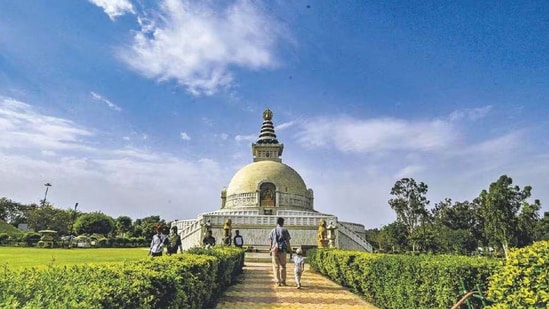
Relief over, temperature in Delhi to touch 40 degrees Celsius by April 15: IMD| India News
# Delhi Heat: Temps to Hit 40°C by April 15
**By Rajesh Kumar, Senior Meteorological Correspondent, The Delhi Herald | April 12, 2026**
Residents of New Delhi must brace for a scorching week as the India Meteorological Department (IMD) forecasts the maximum temperature to officially breach the 40-degree Celsius mark by Wednesday, April 15, 2026. Following an unusually mild late-spring period, this sudden thermal surge signals the definitive and harsh arrival of the North Indian summer. Until now, the capital’s highest temperature for the year stood at a relatively moderate 36.8°C, recorded at the Safdarjung base station on both March 11 and April 2. With dry, blistering westerly winds sweeping across the northern plains, meteorologists warn that the brief respite from extreme heat is officially over, urging citizens and civic bodies to prepare for severe thermal conditions. [Source: Hindustan Times].
## The End of a Deceptive Spring Respite
For the past several weeks, Delhiites enjoyed an unexpected delay in the onset of the traditional summer swelter. The first quarter of 2026 was characterized by a series of active Western Disturbances—weather systems originating in the Mediterranean Sea that bring non-monsoonal precipitation to northwest India. These back-to-back atmospheric events brought sporadic cloud cover, light drizzle, and strong breezes, effectively suppressing the mercury.
As a result, the highest temperature the city had seen until the second week of April was an easily manageable **36.8°C**. Nighttime temperatures also hovered comfortably in the lower twenties, leading many to hope for a delayed summer. However, the IMD has confirmed that the synoptic features over the region have drastically shifted. The protective shield of moisture-laden winds has dissipated, leaving the National Capital Region (NCR) exposed to direct solar radiation and the unforgiving advance of summer weather patterns. [Source: Hindustan Times | Additional: IMD Synoptic Weather Forecast].
“The transitional phase from spring to summer in Delhi is notoriously brief, but this year it provided a slightly longer window of comfort,” notes Dr. Kavita Sharma, an independent climatologist based in New Delhi. “However, the atmosphere is rapidly drying out. The absence of any approaching Western Disturbance means clear skies and maximum insolation, which will drive temperatures up by 3 to 4 degrees in a matter of days.”
## Meteorological Factors Driving the Surge
The leap from 36.8°C to 40°C in less than a week is primarily driven by two major meteorological phenomena dominating the northern plains: the establishment of an anti-cyclonic circulation and the onset of dry westerly winds.
An anti-cyclone currently parked over southwest Rajasthan and adjoining parts of Pakistan is acting as a massive heat dome. This high-pressure system pushes air downward, compressing and heating it while simultaneously preventing the formation of clouds. Furthermore, this system channels hot, dry winds—commonly known as the *Loo*—directly into the Delhi-NCR region.
* **Wind Direction:** North-westerly and westerly winds are carrying heat from the arid regions of the Thar Desert into the capital.
* **Lack of Moisture:** The relative humidity has plummeted to below 30% during peak afternoon hours, stripping the air of its ability to moderate temperature.
* **Urban Heat Island Effect:** Concrete surfaces and asphalt across Delhi are absorbing the intense daytime heat and releasing it slowly at night, keeping minimum temperatures uncomfortably high and preventing the city from cooling down.
## Historical Context: How 2026 Compares
Hitting 40°C in mid-April is not entirely an anomaly for Delhi, but the abruptness of the temperature spike is noteworthy. Over the last decade, climate change has visibly altered the region’s thermal baseline, making early heatwaves more frequent and intense.
While Safdarjung is the official base station, peripheral observatories like Najafgarh, Mungeshpur, and Palam consistently record temperatures 1.5°C to 2°C higher due to geographical positioning and urban density. If Safdarjung touches 40°C on April 15, residents in these outer zones will likely experience a blistering 41.5°C to 42°C.
**Recent Mid-April Temperature Milestones in Delhi:**
| Year | First Day Crossing 40°C (Safdarjung) | Peak April Temperature | Dominant Weather Factor |
| :— | :— | :— | :— |
| **2022** | April 8 | 43.5°C | Unprecedented early heatwave, zero rainfall. |
| **2023** | April 16 | 40.6°C | Delayed by late Western Disturbances. |
| **2024** | April 19 | 41.1°C | Mild El Niño influence, scattered showers. |
| **2025** | April 12 | 42.0°C | Intense Loo winds from Rajasthan. |
| **2026** | *Expected April 15* | *TBD* | Sudden anti-cyclonic blocking over northwest. |
*Data compiled from historical IMD Climate Data Archives.*
## Public Health Advisories and Preparedness
As the mercury climbs toward the 40°C threshold, the Delhi government and public health organizations are shifting into high gear. The sudden spike in temperatures poses a significant risk of heat-related illnesses, particularly for vulnerable populations such as the elderly, young children, and outdoor workers.
Dr. Arvind Mehra, Chief Medical Officer at a prominent Delhi hospital, emphasizes the danger of the sudden transition. “The human body requires time to acclimatize to extreme heat. Because the weather has been relatively pleasant, a sudden jump to 40°C shock the cardiovascular system. We expect a sharp rise in cases of heat exhaustion, severe dehydration, and heatstroke by the end of the week.”
**Key Public Health Guidelines Issued for the Week:**
* **Hydration:** Citizens are advised to consume at least 3-4 liters of water daily, supplementing with oral rehydration solutions (ORS), buttermilk, and lemon water.
* **Restricted Outdoor Activity:** The IMD and health ministries strongly recommend avoiding direct sun exposure between **12:00 PM and 4:00 PM**, the peak insolation hours.
* **Workplace Adjustments:** Construction companies and gig economy platforms (like food delivery services) are being urged to modify working hours to protect laborers from the midday sun.
Hospitals across the NCR are preemptively stocking up on intravenous fluids and ice packs, ensuring that dedicated heat-stroke wards are operational ahead of the April 15 surge.
## Strain on Urban Infrastructure and the Power Grid
The anticipated jump to 40°C will trigger an immediate and massive surge in electricity demand. As millions of households and commercial establishments simultaneously switch on air conditioners, desert coolers, and heavy refrigeration units, Delhi’s power distribution companies (discoms) are bracing for a massive test of the city’s electrical grid.
In the summer of 2025, Delhi’s peak power demand breached the historic 8,300 MW mark. While mid-April rarely sees peak summer loads, energy experts predict the demand could easily cross 6,000 MW by April 15—a sharp increase from the 4,500 MW average seen in late March.
“The grid is currently stable, but the rate of acceleration in demand is what we are monitoring closely,” states a spokesperson for a leading Delhi discom. “We have secured adequate power purchasing agreements, but local transformer level faults can occur due to sudden, continuous high loads in densely populated neighborhoods.”
Simultaneously, the heat wave will put pressure on the Delhi Jal Board (DJB). As evaporation rates in the Yamuna River and surrounding reservoirs increase, and daily household water consumption spikes, certain sectors of the city may experience dips in water pressure. Civic authorities are urging residents to use water judiciously and refrain from using potable water for washing vehicles or gardening during this dry spell.
## The Intersection of Heat and Air Quality
A lesser-known but equally dangerous consequence of soaring April temperatures is the deterioration of air quality, specifically regarding ground-level ozone. Unlike particulate matter (PM2.5 and PM10) which often plagues Delhi in the winter, summer pollution is characterized by a different chemical threat.
When intense sunlight and high temperatures bake the exhaust emissions (nitrogen oxides and volatile organic compounds) from the city’s millions of vehicles, a photochemical reaction occurs, creating ground-level ozone. This invisible, toxic gas is highly irritating to the lungs and exacerbates conditions like asthma and bronchitis.
Furthermore, the dry, fast-moving north-westerly winds are expected to lift loose topsoil and sand from the neighboring desert regions, potentially leading to localized dust storms. This combination of heat, high ozone, and suspended dust creates a hazardous atmospheric cocktail, making the ambient air dangerous to breathe even for healthy individuals. [Source: System of Air Quality and Weather Forecasting And Research (SAFAR)].
## Looking Ahead: What May Brings
If the 40°C threshold is breached by April 15 as predicted, the long-term outlook for May and June appears daunting. Extended range forecasts by meteorological agencies indicate that active Western Disturbances will remain entirely absent for the remainder of April. Without these rain-bearing systems to break the heat cycle, temperatures could steadily climb toward 42°C or 43°C before the month concludes.
Climatologists are also monitoring broad Pacific Ocean temperature patterns. With neutral conditions currently prevailing globally, the localized Indian weather systems will dictate the severity of the heat. Without a strong oceanic cooling phase to suppress the temperatures, northern India is left entirely at the mercy of the prevailing anti-cyclones and the harsh desert winds.
## Conclusion: Adapting to the Urban Boiler
The IMD’s forecast that Delhi will hit 40°C by April 15 marks the official end of the capital’s spring grace period. The transition from a pleasant 36.8°C to a searing 40°C serves as a stark reminder of the city’s extreme climatic variability.
As the mercury climbs, the focus must immediately shift toward proactive adaptation. From ensuring a robust power supply and managing water reservoirs to protecting vulnerable citizens and outdoor workers from the brutal midday sun, a coordinated response is critical. The days of mild weather are firmly in the rearview mirror for 2026; Delhi must now gear up to survive the crucible of the North Indian summer.





