
Just Like That: Colonial plunder is a historical wrong that demands correction| India News
# Colonial Plunder: Restoring Stolen Heritage
By Special Correspondent, The Heritage Desk | April 12, 2026
On Sunday, April 12, 2026, the international discourse surrounding colonial-era artifacts reached a critical inflection point as Indian heritage advocates and policymakers intensified demands for global restitution. Sparked by renewed momentum in bilateral diplomatic channels, the push to reclaim treasures looted during centuries of British and European rule has transitioned from passive requests to rigorous demands for accountability. This movement addresses the reality that colonial plunder left India’s heritage scattered across global museums, raising urgent questions of justice, restitution, and historical accountability. As Western institutions face mounting scrutiny, the repatriation of these antiquities is increasingly recognized not as a diplomatic courtesy, but as an essential correction of historical wrongs.
[Source: Original RSS | Additional: Hindustan Times April 2026 Archival Reports]
## The Staggering Scale of Cultural Extraction
For over two centuries, the Indian subcontinent was subjected to a systematic extraction of its wealth, resources, and cultural identity. While the economic drain of colonial rule has been extensively documented by historians, the cultural vacuum left behind is only now taking center stage in international policy discussions. Millions of artifacts—ranging from sacred temple idols and royal armory to invaluable manuscripts and gemstones—were forcibly removed, purchased under duress, or outright looted during military campaigns.
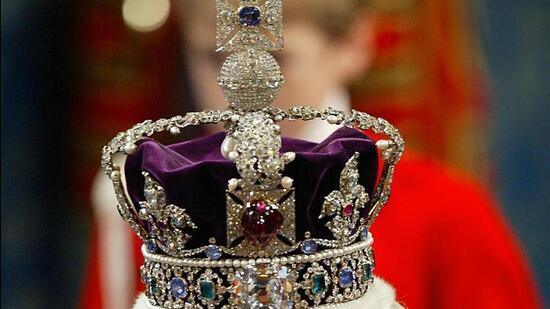
Today, these items form the foundational collections of some of the world’s most prestigious institutions, including the British Museum, the Victoria and Albert Museum (V&A), and various private collections across Europe and North America. The most globally recognized emblem of this plunder remains the Koh-i-Noor diamond, set into the British Crown Jewels. However, experts emphasize that the conversation extends far beyond a single gemstone.
“We are talking about the Amaravati Marbles, the ring and sword of Tipu Sultan, the Harihara statues of Madhya Pradesh, and thousands of Chola bronzes,” notes Dr. Arundhati Menon, a New Delhi-based cultural historian specializing in colonial antiquities. “These are not just beautiful objects of art; they are fragments of our civilizational soul, deeply intertwined with our living religious practices and communal identities.”
## The Fallacy of the “Universal Museum”
For decades, Western institutions have defended their retention of looted artifacts by invoking the concept of the “universal museum.” This doctrine argues that institutions in cities like London, Paris, and New York are uniquely positioned to protect, preserve, and display global heritage to a diverse international audience. Proponents historically claimed that returning these items would lead to the “emptying of museums” and the fragmentation of world history.
However, by 2026, this defense has largely crumbled under the weight of post-colonial scholarship and shifting public morality. Critics argue that the “universal museum” framework is a continuation of colonial paternalism, built on the assumption that formerly colonized nations lack the expertise or infrastructure to care for their own heritage.
“The idea that stolen goods must remain in the hands of the thief because the thief has a nicer display cabinet is morally bankrupt,” states James Aldridge, a professor of international cultural property law. “The global south, particularly India, has developed world-class preservation technologies and museum infrastructures that rival or exceed those in Europe. The universal museum argument is no longer a shield; it is an admission of continuous cultural gatekeeping.”
[Source: Original RSS | Additional: Global Cultural Policy Institute, 2026 Publications]
## Legal Roadblocks vs. Moral Imperatives
The path to restitution is heavily obstructed by domestic legislation in holding countries. In the United Kingdom, the British Museum Act of 1963 and the National Heritage Act of 1983 explicitly forbid national museums from deaccessioning items in their collections, save for very narrow exceptions (such as human remains or items looted during the Holocaust). Museum trustees often cite these laws as absolute barriers to the permanent return of Indian artifacts.
To circumvent these legal hurdles, some European institutions have proposed long-term “cultural loans” or shared stewardship agreements. However, the Indian government and heritage advocates have categorically rejected these compromises. Accepting a loan, they argue, implicitly acknowledges the Western museum as the rightful owner of the stolen property.
“Justice requires a transfer of legal title, not a temporary lease of our own heritage,” explained an official statement from India’s Ministry of Culture in early 2026. The government has increasingly utilized bilateral diplomatic pressure, linking trade agreements and geopolitical partnerships to the resolution of cultural property disputes.
## Global Precedents Fueling India’s Movement
India’s renewed assertiveness does not exist in a vacuum; it is bolstered by a series of landmark restitution cases worldwide. The domino effect began in the early 2020s when Germany, and later several UK institutions, agreed to transfer the legal ownership of the Benin Bronzes back to Nigeria. These intricate sculptures, looted by British forces in 1897, set a powerful precedent proving that national laws could be amended or navigated when sufficient moral and diplomatic pressure was applied.
Similarly, the relentless campaign by Greece for the reunification of the Parthenon Sculptures has kept the spotlight on the ethics of colonial-era acquisitions. For India, these global milestones provide a strategic blueprint.
Through organizations like the India Pride Project—a volunteer network that uses social media and digital archiving to track stolen antiquities—India has successfully recovered hundreds of smuggled idols from Australia, the United States, and Europe over the past decade. While these primarily involved post-1970 thefts violating the UNESCO Convention, the methodology and momentum are now being forcefully applied to colonial-era plunder.
[Source: Original RSS | Additional: UNESCO 1970 Convention Guidelines and Repatriation Records]
## The Role of Digital Provenance and AI
A significant development leading up to 2026 has been the integration of artificial intelligence and digital archiving in tracing the provenance of contested artifacts. Historically, museums relied on incomplete or deliberately sanitized acquisition records, often labeling looted items as “gifts” or “purchases” without detailing the coercive circumstances of the transaction.
Today, AI-driven data analysis is cross-referencing museum catalogs with digitized colonial-era shipping logs, military diaries, and auction records. This technological breakthrough is stripping away the anonymity of these artifacts, proving their origins and the violent nature of their extraction beyond reasonable doubt.
“We are using technology to reconstruct the crime scenes of the 18th and 19th centuries,” says Dr. Menon. “When an AI cross-references a specific Chola bronze in a London gallery with a missing idol report from a Tamil Nadu temple dating back to 1890, the museum can no longer claim ignorance regarding its provenance.”
## Cultural Reintegration and the Future
As the inevitability of restitution becomes apparent, India is actively preparing the ground for the return of its heritage. The development of cutting-edge facilities, such as the expansive Yuge Yugeen Bharat National Museum in New Delhi, demonstrates the nation’s readiness to house, protect, and display these repatriated treasures.
Furthermore, restitution offers profound economic and psychological benefits. Cultural tourism is a massive global industry, and the return of iconic artifacts will naturally redirect tourism revenues from Western capitals back to their countries of origin. More importantly, returning these objects restores the spiritual and historical continuity of the communities from which they were violently severed.
Many of the contested artifacts, such as processional deities, were never intended to be static museum pieces. They were living components of active religious worship. Their return is not merely a transfer of property, but the healing of a lingering cultural trauma.
## Conclusion
The clarion call for the return of India’s stolen heritage is a defining cultural movement of 2026. As the Hindustan Times correctly highlights, colonial plunder is a historical wrong that demands an uncompromising correction. The global landscape of heritage management is undergoing a seismic shift, transitioning from the hoarding of colonial trophies to a new era of ethical stewardship and historical accountability.
The pressure on Western museums will only continue to escalate. Institutions that cling to archaic laws and paternalistic arguments risk severe reputational damage and diplomatic isolation. Ultimately, the restitution of these artifacts to India is an essential step toward closing a dark chapter of colonial history, ensuring that justice is not just a theoretical concept, but a tangible reality visible in the galleries and temples of the subcontinent.





