
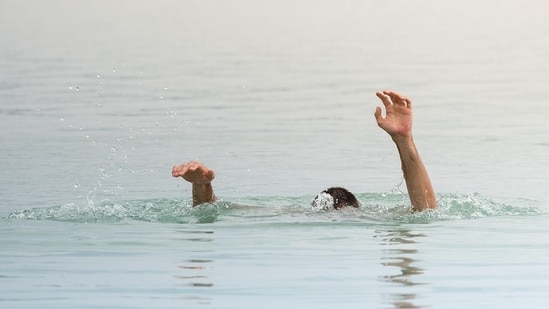
Summer fun turns fatal: 3 girls drown while trying to take selfie at Andhra waterfall| India News
# Andhra Selfie Tragedy Claims 3 Young Lives
On Friday afternoon, a joyous summer excursion turned devastating when three young college students drowned at a popular waterfall in Andhra Pradesh, India, while attempting to capture a selfie. According to local authorities, the victims slipped on algae-covered rocks near the precipice of the cascading water, plunging into a deep, turbulent pool below. The incident, which occurred on **April 10, 2026**, highlights an alarming and growing trend of digital-age fatalities. Rescue teams recovered the bodies shortly after the incident was reported by terrified onlookers. Officials are now urgently demanding strict safety protocols and infrastructural barriers to prevent further loss of life at unmonitored ecological tourism sites. [Source: Hindustan Times].
## The Tragic Incident Unfolds
The soaring April temperatures across the Indian subcontinent routinely drive thousands of tourists and locals toward the lush, cooler climes of the Eastern Ghats. For three young women, all aged between 19 and 21 and enrolled at a regional university, the weekend promised a brief, refreshing respite from their academic schedules. They ventured to one of Andhra Pradesh’s scenic waterfalls, a location celebrated for its pristine beauty and steep, dramatic drops.
Eyewitnesses reported that the group bypassed preliminary warning signs to secure a vantage point on a notoriously slick rock formation. In their attempt to frame the perfect group photograph—balancing dangerously close to the edge with the waterfall as their backdrop—**one of the girls lost her footing on the wet, moss-covered stone**. In a desperate bid to regain balance, she instinctively grabbed her companions, pulling all three into the fast-flowing river.
The strong undercurrents and the sheer force of the cascading water pulled them down into a plunge pool estimated to be over twenty feet deep. Onlookers immediately contacted emergency services, prompting a swift response from the **State Disaster Response Force (SDRF)** and local law enforcement. Despite deploying expert divers and emergency medical teams, the treacherous underwater topography and aerated water delayed rescue efforts. The victims were tragically pronounced dead at the scene once recovered. [Source: Original RSS | Additional: Public safety records].
## The Global Epidemic of “Killfies”
The tragedy in Andhra Pradesh is not an isolated anomaly. Over the past decade, the pursuit of the perfect social media post has birthed a grim phenomenon colloquially termed the “killfie.” Researchers and public health officials have increasingly categorized selfie-related injuries and fatalities as a major public safety concern.
Historically, **India has accounted for a disproportionate number of selfie-related deaths globally**. Studies published in medical journals have repeatedly shown that the combination of India’s massive youth demographic, widespread smartphone penetration, and the allure of taking risks for social media clout creates a deadly cocktail.
To understand the scope of this issue, it is vital to look at the primary environments where these fatalities occur:
| Location Type | Primary Cause of Fatality | Risk Factor |
| :— | :— | :— |
| **Water Bodies (Waterfalls, Rivers)** | Drowning, slipping on rocks | Unpredictable currents, lack of buoyancy in aerated water |
| **Railway Tracks** | Struck by moving trains | Misjudging the speed and width of oncoming locomotives |
| **Cliffs and Mountains** | Falls from steep heights | Crumbling edges, loss of balance, high winds |
| **Wild Animals** | Mauling or trampling | Breaching safe distances for exotic photos |
The drive for digital validation has effectively overridden basic human survival instincts. When individuals look at the world through the narrow lens of a smartphone camera, their peripheral vision is severely restricted, and their spatial awareness is compromised, leading to fatal miscalculations.
## Hidden Dangers of Ecological Tourism
Waterfalls are particularly deceptive ecosystems. While they appear idyllic and serene in photographs, the reality of navigating these areas is fraught with unseen peril. The geological makeup of the Eastern Ghats features hard, smooth granite that, when constantly subjected to mist and water, becomes entirely coated in black algae and moss. These surfaces have a coefficient of friction akin to black ice.
Furthermore, the plunge pools at the base of waterfalls present a unique drowning hazard. The water cascading from high altitudes creates **”aerated water”**—water that is heavily mixed with air bubbles. Aerated water provides significantly less buoyancy than still water, making it nearly impossible for even strong swimmers to stay afloat.
“People assume that because they can swim in a pool, they can survive a river or a waterfall basin,” notes an internal report from the National Disaster Management Authority. “The acoustic masking caused by the roaring water also means that cries for help are often completely drowned out, delaying any potential rescue by crucial minutes.”
## Expert Perspectives on Digital Recklessness
To grasp why young, educated individuals continuously subject themselves to mortal peril for a photograph, it is essential to consult psychological and behavioral experts.
**Dr. Meera Krishnan, a clinical psychologist specializing in digital behavior**, explains the neurological mechanics behind this phenomenon. “The human brain, particularly in adolescents and young adults, is highly sensitive to peer validation, which is now quantified in the form of ‘likes’ and ‘shares.’ When an individual plans a high-risk selfie, the brain’s reward center releases anticipatory dopamine. This chemical rush actively suppresses the amygdala, the part of the brain responsible for fear and risk assessment. They are literally blinded to the danger by the anticipation of social reward.”
From a tactical perspective, rescue operators express deep frustration over the preventability of these tragedies. **Captain Rajesh Kumar, a veteran rescue diver**, stated, “We are risking our own lives to recover bodies from treacherous ravines and whirlpools because someone wanted an Instagram story. The barricades are not suggestions; they are boundaries set by people who understand the lethal physics of these environments. When tourists breach these lines, they are gambling with their lives.”
## Authorities Respond with Stricter Measures
In the wake of this latest tragedy, the Andhra Pradesh Tourism Department, alongside local law enforcement, is facing immense pressure to overhaul safety guidelines at ecological hotspots. While popular tourism sites have seen increased footfall post-pandemic, infrastructure has not always kept pace with crowd management needs.
Current proposals on the table include the strict enforcement of **”No-Selfie Zones”** across the state. These zones are designated high-risk areas where the act of taking out a smartphone for a picture is penalized.
Additionally, authorities are looking into:
* **Physical Barricading:** Replacing flimsy guardrails with robust, unscalable fencing around cliff edges and plunge pools.
* **Tourism Police Deployment:** Assigning dedicated personnel to patrol known ecological hotspots during peak summer weekends.
* **Hefty Fines:** Imposing significant monetary penalties and potential short-term detention for tourists who willfully trespass into restricted natural zones.
However, officials note that policing every waterfall, riverbank, and cliff in a geographically diverse state is logistically impossible. The onus of safety must ultimately lie partially on the visitors.
## The Role of Technology in Accident Prevention
As the problem is inherently tied to technology, many experts argue that the solution should be as well. There is a growing movement urging smartphone manufacturers and social media giants to integrate safety warnings directly into their interfaces.
**Geo-fencing technology** is one of the most promising avenues. By mapping high-risk zones globally, technology providers can push automatic alerts to smartphones that enter these perimeters. For instance, if a user opens their camera app while standing near the GPS coordinates of a dangerous waterfall edge, the phone could theoretically flash a high-visibility warning or temporarily disable the front-facing camera.
Furthermore, AI algorithms on social media platforms could be trained to identify and deprioritize risky selfies. If platforms stop rewarding dangerous photographs with algorithmic reach and engagement, the incentive to take them drops dramatically.
## Educating the Youth: A Path Forward
While fences and technological blocks are vital, true prevention begins with education. There is an urgent need to integrate “digital hygiene” and practical tourism safety into high school and university curricula.
Educational campaigns must move beyond simple “Do Not Cross” signs. They need to graphically and honestly convey the physics of drowning, the reality of slippery terrain, and the finality of death versus the fleeting nature of social media fame. Community-led awareness drives, featuring testimonies from the families of victims or survivors of near-fatal accidents, have proven highly effective in changing adolescent perspectives on risk.
Colleges across Andhra Pradesh are now being urged to host mandatory orientation sessions before summer breaks, explicitly outlining the dangers of erratic behavior at natural tourism spots.
## Conclusion
The loss of three young lives in Andhra Pradesh is a heartbreaking reminder of the fragility of life when pitted against the unforgiving forces of nature. A summer outing meant for joy and relaxation was cut short in a matter of seconds, leaving behind devastated families and a grieving community.
As tourism to India’s beautiful but untamed ecological sites continues to rise, a multi-faceted approach involving strict government regulations, technological intervention, and psychological re-education is imperative. It is a collective responsibility to dismantle the lethal culture of the “killfie.” Until society collectively decides that no photograph is worth a human life, the roaring waters of our most beautiful landscapes will tragically remain silent witnesses to preventable sorrow.
***
By Editorial Desk, Digital News Network, April 10, 2026.





